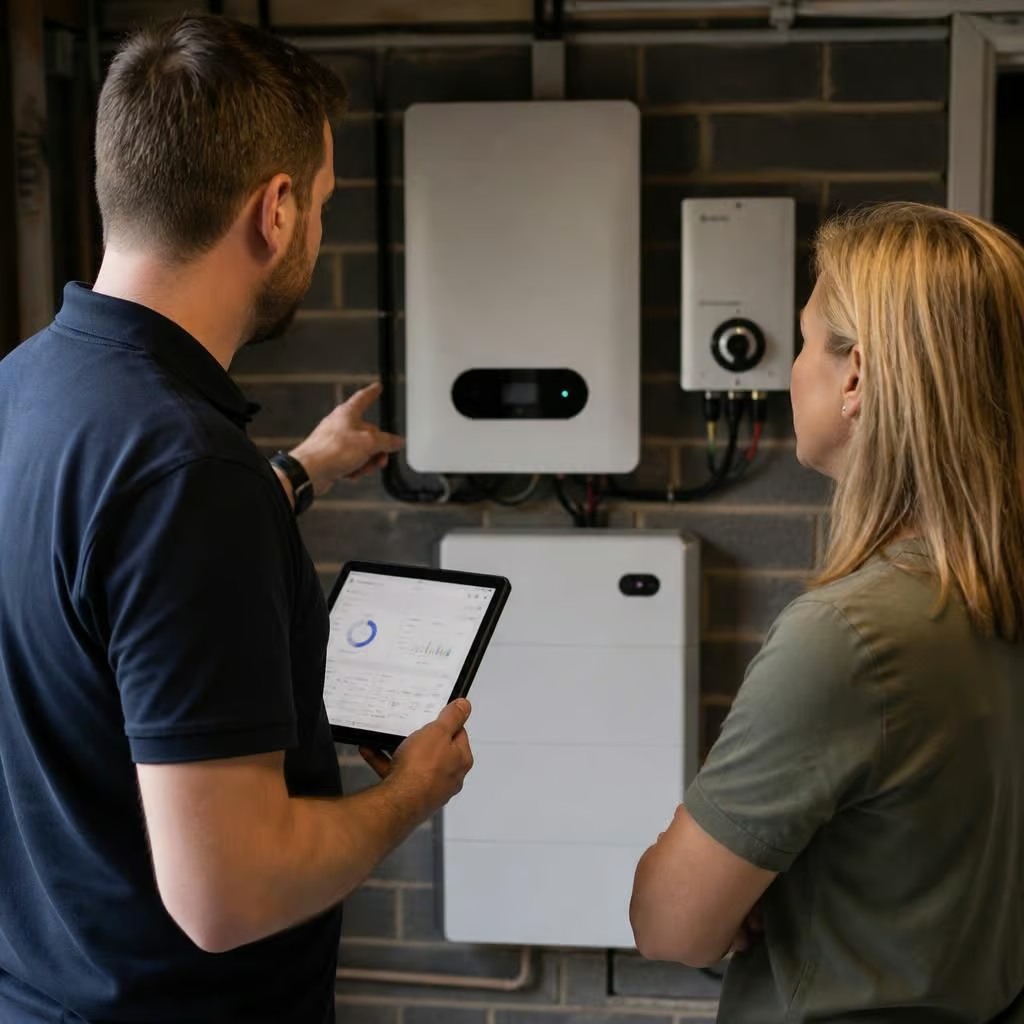
What information do you need to recommend the right solar battery?
We need your electricity usage, existing solar system details, available installation space, budget and plans for future use such as an electric vehicle or heat pump. We use this information to recommend a battery size and configuration that fits how your home generates and uses electricity.
The right solar battery depends on how your home uses electricity, not simply on the number of panels on the roof. We use your consumption pattern, generation data, electrical setup and future plans to decide the battery’s usable capacity, power rating and operating arrangement.
Start with electricity data
Annual usage gives us a starting point, but it doesn’t show when the electricity is being used. Your latest bills or half-hourly smart meter data can show whether most demand occurs during the day, after work or overnight. That matters because a battery earns its keep by storing power when generation is available or electricity is cheaper, then releasing it when your home needs it.
Large evening loads can change the recommendation. An electric cooker, immersion heater, heat pump, tumble dryer or electric vehicle may need a battery with a higher discharge power, even when the total storage capacity is modest. We look at both figures:
- Capacity is measured in kilowatt-hours and describes how much energy the battery can store.
- Power is measured in kilowatts and describes how much electricity it can deliver at one time.
A battery with plenty of capacity may still be unsuitable if its power output cannot cover the loads you want it to run.
Tell us how the solar system is arranged
For an existing installation, we need the panel capacity, inverter details, installation date and any available generation readings. The age and type of inverter affect whether the battery can connect to the existing system or needs a separate battery inverter. We also check the panel layout, because roof orientation, shading and seasonal generation affect how much surplus electricity is likely to be available.
For new solar and battery work, we consider both systems together. A larger battery is not automatically better if the panels cannot regularly fill it. Equally, a small battery may leave useful generation exported when your home could have used it later. The recommendation has to reflect the generation profile as well as the household demand.
Explain how you want the battery to operate
Some households mainly want to use more of their own solar power. Others want to charge at a cheaper time and use the stored electricity later. If export payments are important, we include the export arrangement in the assessment rather than assuming every unit should stay in the battery.
Tell us if backup power matters. A standard battery installation does not necessarily keep the house running during a power cut. Backup operation can require compatible equipment, separate circuits and additional electrical work. We can identify that requirement before the system is specified.
The installation position affects the recommendation
We need to know where a battery could be installed, although the survey confirms whether that location is suitable. We assess the wall or floor, access for installation, cable routes, ventilation, protection from damp and the distance from the consumer unit and inverter. A detached garage, outbuilding or plant room may be possible, but the cable route and environmental conditions still need checking.
Older properties often need closer attention to the existing electrical installation. The consumer unit, earthing arrangement, cable routes and available space may need upgrades before the battery is connected. We explain any associated work in the quotation instead of leaving it as an unexpected addition during installation.
Future changes can alter the useful size
An electric vehicle, heat pump, home office or change in occupancy can increase electricity demand. Tell us about plans that are reasonably likely, even if the equipment is not being installed yet. We can then avoid recommending a system that becomes restrictive after a later upgrade.
We also discuss how much of the battery’s capacity you want to reserve for particular uses. A system designed mainly for evening household demand may be different from one intended to support an electric vehicle or provide backup for selected circuits.
We turn the information into a practical recommendation
Our survey checks the information against the property. We inspect the existing solar equipment, consumer unit, meter position, proposed battery location and cable routes. We then set out the recommended usable capacity, power output, connection method, control settings and any work needed to make the installation safe and compliant.
The quotation should also make clear what is included, such as electrical alterations, monitoring equipment, commissioning and paperwork. If an existing system is not compatible with the battery you are considering, we explain the alternatives rather than assuming that replacement equipment is necessary.
For a new solar and battery installation, MCS certification means we can make a Boiler Upgrade Scheme application on your behalf only where that scheme applies to the relevant technology; it is also what makes the installation eligible for the Smart Export Guarantee. We explain the export paperwork and system requirements as part of the design, rather than treating them as an afterthought.
The best recommendation is therefore not based on a battery size chosen from a single rule. It comes from matching the storage capacity and output to your actual electricity pattern, the solar system, the property and the way you expect to use the system in future.
Your budget helps us judge whether extra storage is likely to earn its place in the system. A larger battery costs more, but may not be useful if your panels rarely produce enough surplus to fill it.
Tell us what matters most: using more of your own solar power, reducing imported electricity, charging at cheaper times or keeping selected circuits running during a power cut. We can then compare the capacity and power needed for that priority, rather than recommending the largest battery available.
Our quotation separates the battery, control equipment and any electrical alterations needed at the property. That shows which costs relate to the storage itself and which arise from making the existing installation suitable.