
How much does a 10kWh solar battery cost?
A 10kWh solar battery typically costs several thousand pounds installed, with the final price depending on the battery, inverter compatibility, wiring and any consumer unit work needed. We confirm the equipment, installation cost and likely payback for your home after assessing how much electricity you use and when your solar system produces it.
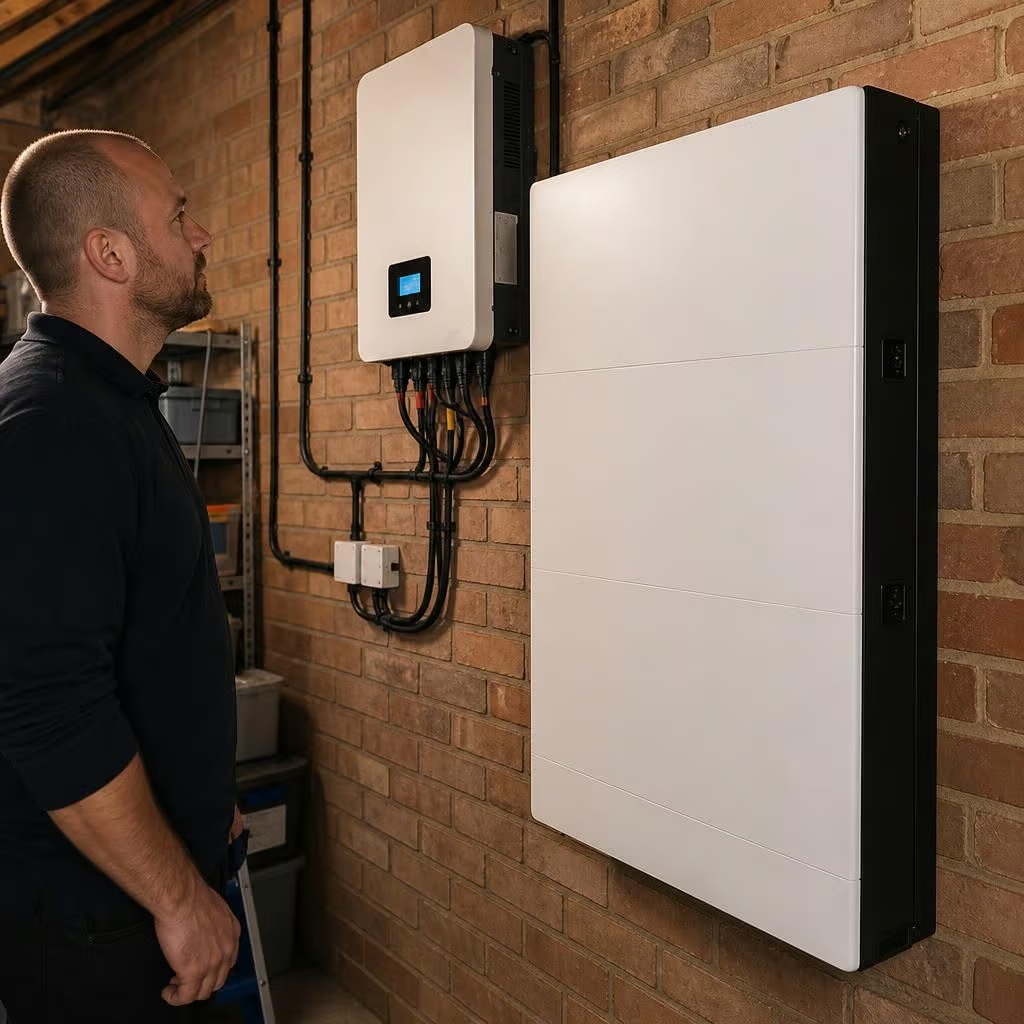
A 10kWh battery is usually chosen when a home produces more solar electricity than it can use during the day. The cost reflects more than the storage unit itself: the inverter, controls, protection, cabling and installation all affect the finished price.
What does 10kWh mean?
The 10kWh figure describes the battery’s energy capacity. It does not tell you how quickly the battery can charge or discharge. That depends on its power rating, measured in kilowatts.
A battery with a lower power rating may store enough energy for the evening but struggle to run several high-demand appliances together. We therefore look at the home’s electricity use, solar generation and larger loads before recommending a system. The usable capacity may also be lower than the headline capacity because the battery retains a reserve for protection and battery life.
What is included in the installed cost?
- The battery unit and its mounting equipment.
- A compatible inverter, or changes to the existing inverter where the system allows this.
- Battery management equipment, isolation switches and electrical protection.
- Cabling between the battery, inverter and consumer unit.
- Configuration, testing and handover of the monitoring system.
- Labour for the survey, installation, commissioning and electrical certification.
The battery location can change the labour involved. A position close to the consumer unit and inverter may need less cable and fewer alterations than a detached garage, outbuilding or distant utility room. We also allow for fire separation, ventilation, access and manufacturer requirements rather than choosing a position simply because it is convenient.
Why existing solar panels can change the price
An existing solar installation may use an inverter that cannot connect directly to a battery. In that case, we may need an additional battery inverter or a replacement hybrid inverter. The existing consumer unit, wiring and protection also need checking.
Your original solar system may have been installed under different electrical requirements, or it may not have enough space for the additional protective equipment. We identify those points during the survey so the quotation covers the work needed to connect the battery safely.
A new solar and battery installation can sometimes share equipment, design work and scaffolding. That does not automatically make a 10kWh battery the right size. A larger battery can leave more capacity unused if the panels rarely generate enough surplus energy, while a smaller battery may fill and empty more often. We compare expected generation with household demand rather than sizing the battery from the roof area alone.
Does a 10kWh battery suit an older or rural property?
It often can, but the property still needs a proper electrical assessment. Older homes may have an ageing consumer unit, long cable runs or an arrangement that needs upgrading before storage can be connected. Properties with outbuildings may need a different cable route and additional protection.
Off-grid and backup requirements need particular care. A standard solar battery stores electricity for later use but does not necessarily keep the home powered during a network outage. If backup matters, we need to specify the equipment, circuits and changeover arrangement for that purpose. We do not treat backup as an automatic feature of every 10kWh system.
How do you work out the likely savings?
The useful comparison is between the electricity your home would otherwise buy and the surplus solar energy the battery can store. We look at half-hourly or available energy-use data, the solar array’s output, household occupancy and loads such as immersion heaters, heat pumps and EV charging.
We then consider battery efficiency, the usable capacity and how often the system is likely to cycle. The result is a property-specific estimate, not a standard saving applied to every home. Electricity prices, export payments and future energy use can all change the calculation, so payback should be treated as an estimate rather than a guaranteed date.
If the battery is installed with a new solar PV system, MCS certification supports the paperwork for the Smart Export Guarantee. It also allows an eligible Boiler Upgrade Scheme application where a certified heat pump forms part of the wider project, but battery storage itself should not be assumed to qualify for a grant. Current scheme rules and supplier terms need checking before the figures are finalised.
What happens before installation?
- We discuss how much electricity the home uses and when demand is highest.
- We inspect the existing solar equipment, consumer unit, cable routes and proposed battery location.
- We check whether the inverter can accommodate the battery and identify any required upgrades.
- We explain the usable capacity, power output, monitoring and any backup limitations.
- We provide a written quotation before work starts, separating the battery equipment from any electrical alterations.
On installation day, we fit the equipment, complete the electrical tests and set up monitoring. You receive the relevant certification and an explanation of how to check charge levels, solar generation and household consumption.
A 10kWh battery is therefore best judged by its usable energy, discharge power, compatibility and expected daily use, not by capacity alone. A survey gives you the information needed to compare the installed cost with the likely benefit for your home.
When you compare 10kWh battery quotations, check that each one describes the same usable capacity and power output. A lower price may reflect a different inverter arrangement or leave electrical alterations outside the headline figure. Ask for the equipment, installation work, certification and any required consumer-unit changes to be shown separately. That makes it easier to compare like with like before choosing a system.