
What guarantees should a solar battery storage system include?
A solar battery storage system should have written guarantees covering the battery’s lifespan and performance, product faults, and installation workmanship. Check the duration, performance conditions, exclusions, claim process and whether the guarantee covers linked equipment such as the inverter and controls.
The most useful guarantee is not simply the longest term. It is a written set of promises covering the battery, inverter, installation, performance and the process for putting a problem right.
Read the guarantee alongside the quotation. A battery system is made up of several parts, and they may have different cover periods and conditions.
Battery warranty
The battery warranty should state:
- how long the manufacturer covers the unit;
- the maximum charge and discharge throughput, or cycle limit;
- the minimum usable capacity at the end of the term;
- whether the stated capacity is nominal or usable;
- which operating temperatures, charge rates and depth of discharge the warranty assumes; and
- what happens if a fault develops during the warranty period.
A term expressed only as “up to” a number of years tells you little on its own. The warranty may end when the battery reaches its throughput limit, even if the calendar period has not passed. Conversely, a battery may reach the end of its calendar term before reaching the cycle limit. Check which event comes first.
The capacity promise matters because all rechargeable batteries gradually lose usable capacity. A system that starts with a stated usable capacity may hold less energy later. The guarantee should explain the minimum capacity the manufacturer expects it to retain and how that will be measured.
Inverter cover
The inverter has its own warranty, separate from the battery. It controls the movement of electricity between the panels, battery, home and grid, so its failure can affect the whole system.
Check the inverter warranty term, whether parts and labour are included, and whether a replacement unit is covered if the original cannot be repaired. Ask us to identify the inverter warranty separately in the quotation rather than grouping every component under the word “system”.
Any communications equipment, energy meter or backup controller should also be identified. These smaller parts can affect monitoring and automatic operation, but they may have different cover from the main battery and inverter.
Installation workmanship
A manufacturer’s warranty covers a product defect. It does not usually cover a problem caused by poor installation. The quotation should therefore include a separate workmanship guarantee from the installer.
That cover should explain what happens if a cable connection is loose, protective equipment is incorrectly fitted, or the battery is mounted or configured incorrectly. It should also say who pays for the labour involved in correcting an installation fault.
Our written quotation sets out the work before it starts, including the equipment and installation scope. That gives you something specific to compare with the manufacturer’s documents, rather than relying on a general statement that the system is “guaranteed”.
Performance promises
Be cautious with claims that a battery will deliver a particular saving or pay for itself within a fixed period. Those figures depend on your electricity use, solar generation, tariff, export arrangements and how the battery is controlled.
A useful performance statement describes measurable system limits instead. It should identify the battery’s usable capacity, maximum charge and discharge power, and any restrictions when the battery is nearly full or nearly empty. It should also state what the system can do during a power cut if backup operation is included.
Backup cover does not automatically mean that every circuit in the house will remain powered. The installer should state which circuits are protected, whether the system changes over automatically, and how the battery behaves during an outage. Those details belong in the design and quotation, not in an assumption based on the word “backup”.
Conditions that can reduce cover
Most warranties contain exclusions. Read them before choosing between quotations. Common conditions relate to:
- installation by an approved or certified installer;
- operation outside the specified temperature or humidity range;
- water ingress, flooding, impact or pest damage;
- alterations made by someone other than the approved installer;
- failure to follow the required maintenance or inspection instructions;
- use with incompatible panels, inverters or control equipment; and
- changes to software, communications services or the electricity supply.
The location matters on an older or rural property. A garage, outbuilding or plant room may have wider temperature changes and more dust than an indoor utility room. We assess the proposed position and explain any installation conditions that affect the warranty. If the battery needs protection from damp, frost or excessive heat, that requirement should appear in the quotation.
Some guarantees require the system to remain connected to the internet so the manufacturer can monitor performance or provide software support. Ask what happens if the broadband connection fails, the monitoring service changes, or the manufacturer stops supporting the app. A loss of app access is not necessarily a battery failure, but the warranty should make the distinction clear.
Who handles a claim?
Find out whether you contact the installer or the manufacturer first. A good guarantee explains the claim route, the information needed, and whether the installer coordinates the diagnosis and repair.
Keep the quotation, commissioning record, serial numbers, warranty certificates and installation photographs together. The manufacturer may ask for proof of purchase, evidence of correct installation or operating data. If the system reports a fault, save the fault code and note when it appeared. Do not remove covers or attempt electrical repairs yourself.
Ask whether the remedy is repair, replacement or a credit based on the remaining value of the product. A replacement battery may be new, refurbished or a later equivalent model. The guarantee should explain whether the replacement continues the original term or starts a new one.
Transfer and ownership
If you may sell the property, check whether the guarantee transfers to the next owner. Some warranties require registration, notification of the change of ownership or a transfer fee. The paperwork should make clear whether any part of the cover ends when the original purchaser moves out.
The same point applies if the solar panels were installed earlier by another company. We check that the proposed battery and inverter are compatible, but an existing panel or inverter warranty remains subject to its own terms. The quotation should identify which equipment we are responsible for and which remains outside the new installation.
What we include in a guarantee check
Before you approve a battery installation, we compare the warranty terms with the design for your home. We check the usable capacity, expected operating pattern, inverter cover, installation conditions and backup arrangement. If a manufacturer’s guarantee has a throughput limit or a specific temperature requirement, we explain how that relates to the way the system will be used.
We also explain what the guarantee cannot promise. It cannot fix an unsuitable tariff, guarantee a particular level of solar generation, or ensure that every household appliance runs during a power cut. Those are design and usage questions, and they should be settled before installation.
A sensible quotation should leave you with a component-by-component warranty schedule, the workmanship terms, the system’s operating limits and a named claims route. That is more useful than choosing the largest number of years printed in a brochure.
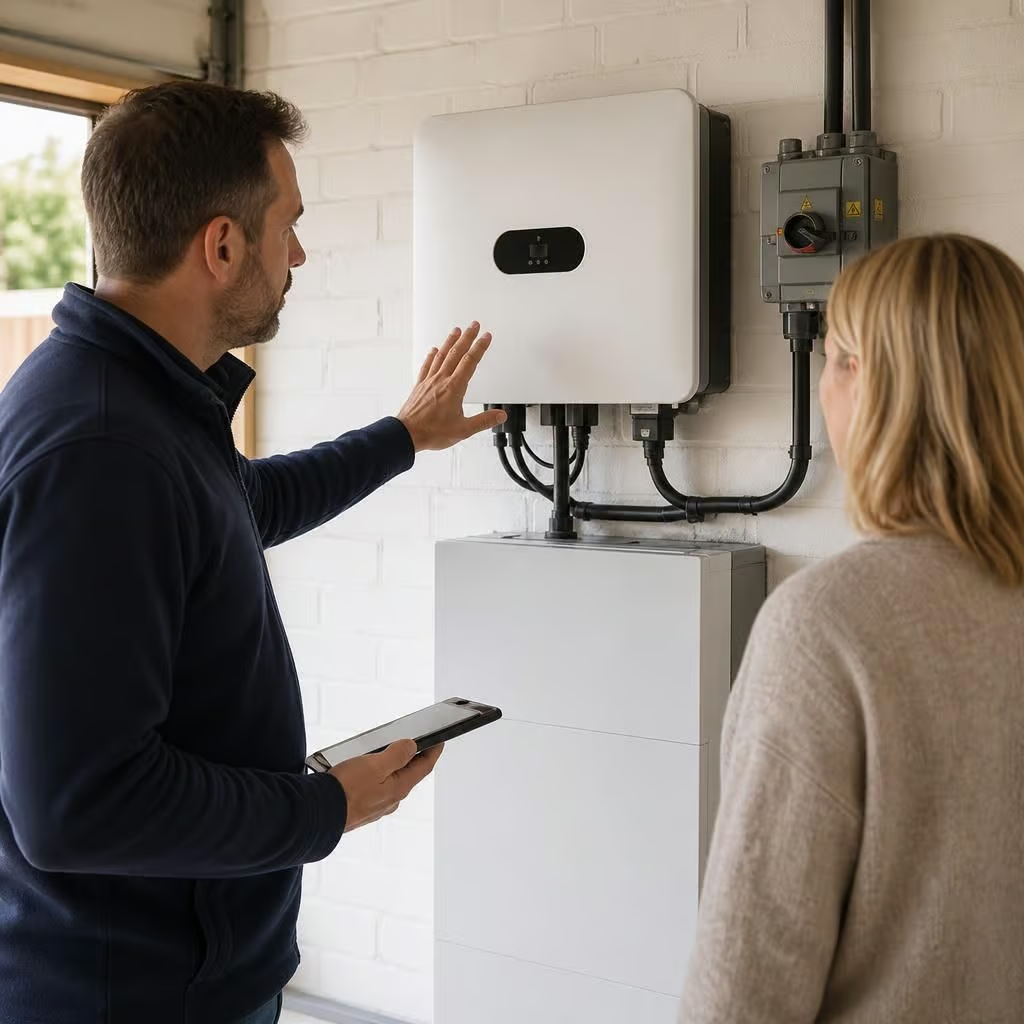
Check when the guarantee starts. Some manufacturers require the installer to register the battery after commissioning. Keep confirmation of that registration with the quotation and handover paperwork. If registration is missed, the cover may run from the manufacturing date rather than the day the system began operating at your home.
We record the equipment details and explain any registration step before the installation is signed off, so the warranty dates are clear from the outset.