
What maintenance does a home battery storage system need?
A home battery storage system usually needs little routine maintenance, but it should be monitored for performance, checked for faults and inspected safely by a qualified engineer. We review the battery, connections, controls and ventilation during servicing, helping identify problems before they affect charging or supplying power.
The maintenance schedule depends on the battery, inverter, installation and manufacturer’s instructions. Most of the ongoing care involves checking the system’s condition, reviewing its performance and dealing with faults before they affect the rest of the installation.
Keep the battery area clear
The battery needs a dry, ventilated space with access to its isolators and other equipment. Do not stack boxes against it, cover it, or use the area for materials that could obstruct ventilation. Keep water, chemicals and combustible items away from the installation.
A visual check can identify problems before they become faults. Look for:
- damage to the battery casing, inverter or visible cables;
- water, damp, corrosion or staining near the equipment;
- unusual heat, smells, sounds or vibration;
- warning lights, fault messages or repeated shutdowns; and
- loose-looking covers, damaged conduit or signs of interference.
Do not remove covers or attempt to tighten electrical connections. A home battery contains high-voltage equipment even when the solar panels are not generating power.
Use the monitoring system
The app or display should show whether the battery is charging, discharging and communicating with the inverter. Occasional changes are normal. Solar generation varies with daylight and weather, while household demand changes from day to day.
A pattern is more useful than one unusual reading. A battery that repeatedly stays at one charge level, stops discharging, loses communication or reports a fault needs investigation. We compare the monitoring data with the inverter settings, solar generation and household demand rather than treating one app reading as a diagnosis.
Internet problems can also affect an app without stopping the battery from working. If the inverter display shows normal operation but the app has stopped updating, the issue may be the connection or monitoring portal. If the equipment itself shows a fault, switch off nothing unless the manufacturer’s instructions tell you to do so and arrange a qualified inspection.
What a professional service includes
During a planned inspection, we look at the battery, inverter, isolators, protective devices and visible cabling as one electrical system. We check for signs of heat damage, corrosion, moisture, mechanical damage and loose or deteriorating connections.
We review the operating history where the system records it. That can show repeated alarms, unexpected shutdowns, abnormal charging behaviour or a change in usable capacity. We also check that the settings still match the household’s tariff, solar generation and intended use. Any changes need to remain within the manufacturer’s instructions and the design of the installation.
Testing may include electrical measurements, protective-device checks and confirmation that the battery and inverter isolate correctly. The exact tests depend on the equipment and installation. We record any defects and explain what needs attention before carrying out remedial work.
Firmware updates can improve compatibility, correct faults or change how the system manages charging. They should not be installed casually or from an unverified source. We check the manufacturer’s requirements first, since an update may alter settings or require the system to be recommissioned.
How often should it be serviced?
There is no single service interval that suits every home battery. Follow the manufacturer’s instructions and any requirements in the installation or warranty documents. A service may be appropriate when the equipment reaches the interval specified by the manufacturer, after a fault, following building work near the battery, or when performance changes without an obvious explanation.
Keep the installation certificate, manuals, warranty information and service records together. These documents help us identify the equipment and settings quickly. They also show what work has been completed if a manufacturer needs information about a fault.
Call for advice when performance changes
A battery’s usable capacity can reduce as it ages, but a sudden change should not be dismissed as normal wear. Repeated alarms, unexplained loss of stored energy, unusual charging temperatures or a battery that trips the electrical supply all need professional attention.
Stop using the system and keep away from it if you notice smoke, fire, hissing, a strong chemical smell, leaking, swelling or extreme heat. Do not touch the equipment or try to move the battery. If there is an immediate danger, leave the property and contact the emergency services. For less urgent faults, a qualified battery installer can establish whether the problem is with the battery, inverter, wiring, settings or monitoring connection.
Correct maintenance does not mean opening the battery or replacing internal parts yourself. It means keeping the equipment accessible, watching for changes, following the manufacturer’s instructions and arranging competent checks when the system shows a problem or reaches its specified service point.
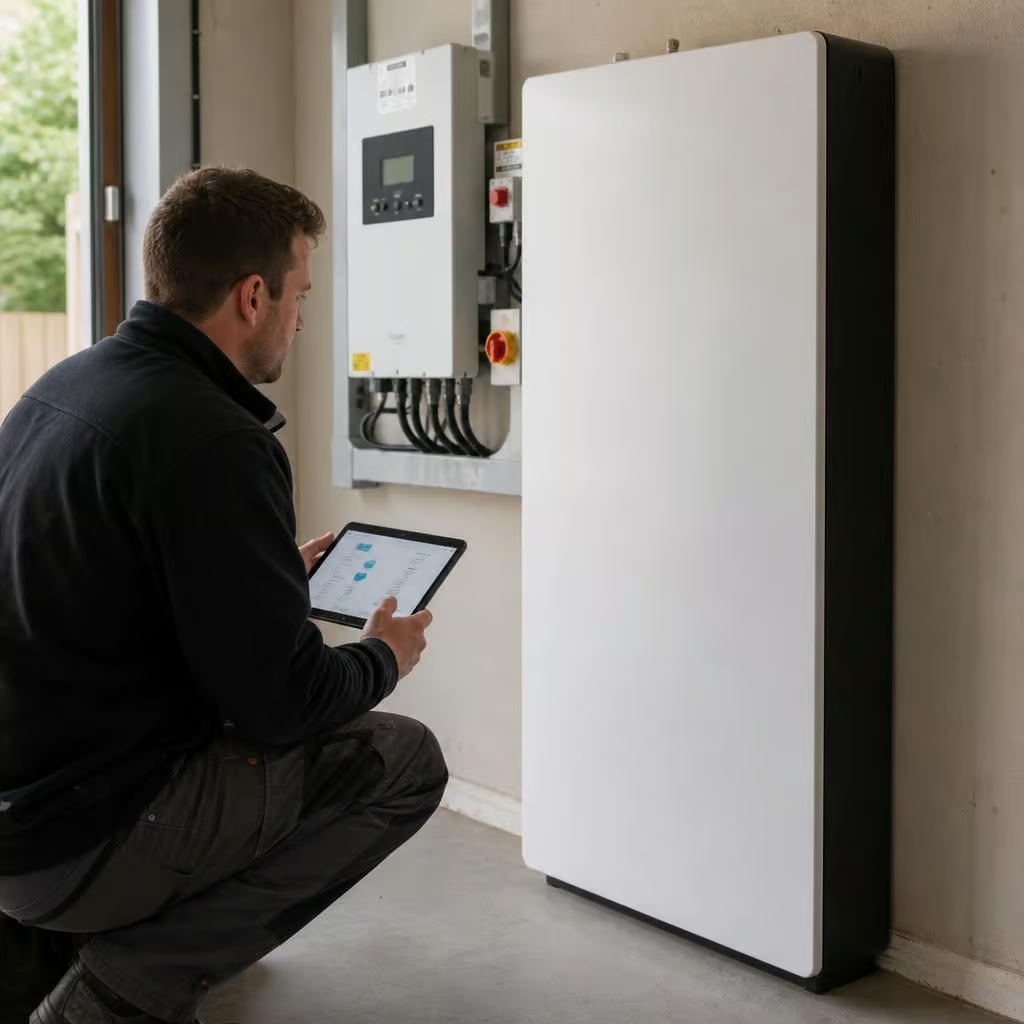
If you’ve moved into a home with a battery but have little installation paperwork, maintenance starts with identifying what is fitted. We match the battery, inverter, isolators and monitoring account to the available records, then explain any gaps that could affect future servicing.
This is particularly useful when an older system has changed hands or the original installer is no longer involved. You’re left knowing which equipment is installed, how it is intended to operate and what information to keep for the next inspection.