
Can a solar immersion heater provide enough hot water?
A solar immersion heater can provide enough hot water for some homes, but not reliably on its own throughout the year. It depends on panel output, cylinder size, hot-water demand and whether another heat source tops up the tank when solar generation is low.
Usually, yes, but not from solar power alone on every day of the year. A solar immersion heater can heat a cylinder when your panels produce more electricity than the home is using. The stored water then supplies showers, baths and taps. A separate heat source still needs to cover periods of low generation or unusually high demand.
The term “solar immersion heater” usually refers to a controller that sends surplus electricity from solar panels to the immersion element in a hot-water cylinder. Without this controller, the immersion simply draws electricity at its full rate, whether the panels are producing surplus power or not. The controller adjusts the power going to the cylinder and reduces the amount sent to the grid.
Your hot-water result depends first on how much electricity the panels generate at the time you need it. Solar output changes with the season, weather, roof orientation, shading and household demand. A bright summer afternoon may provide useful surplus, while a winter morning may provide very little. Panels can still produce electricity in winter, but not consistently enough to treat solar as the only source of hot water.
Your cylinder size also matters. A larger cylinder stores more heated water for later use, but it takes more energy to heat fully. A smaller cylinder reaches temperature sooner, but may run short after several baths, long showers or several people using hot water close together. We compare the cylinder capacity with the number of occupants, bathing habits and the output from the solar array rather than assuming a standard arrangement will suit every home.
Your hot-water schedule affects how much of the solar energy you use. Solar generation is normally strongest during the middle of the day, while many households use most hot water in the morning and evening. A well-insulated cylinder helps bridge that gap. Timed heating can also top the cylinder up at a suitable point, while the solar controller uses available surplus during the day.
Solar will not normally replace the backup heater. Your boiler, immersion timer or another heat source can bring the cylinder up to temperature when the stored water has cooled or solar output is insufficient. We set the controls so that backup heating does not run unnecessarily before the panels have had an opportunity to contribute.
Some systems heat the cylinder through a dedicated immersion element, while others work with an existing immersion. The cylinder needs a suitable element, safe wiring and controls that can handle the way surplus power is diverted. If the cylinder has no usable immersion, we assess whether changing the cylinder is practical and whether the extra work is justified.
Your existing heating system can remain in place. A solar immersion heater does not usually heat radiators, run underfloor heating or replace the boiler for space heating. It deals with domestic hot water only. This can make it useful where you want to use more of your solar generation without changing the whole heating system.
A battery can change the calculation. If the battery has priority, it may store surplus electricity before the immersion controller receives it. If hot water has priority, more surplus may go into the cylinder instead. We look at the control settings, daily electricity use and expected hot-water demand before deciding how the systems should work together.
There are practical limits to what the system can provide:
- It cannot create solar electricity after sunset or during extended periods of poor weather.
- It cannot supply more hot water than the cylinder can store.
- It cannot recover hot water instantly after a large draw unless another heat source helps.
- It should not be relied on as the only way to maintain a safe hot-water routine.
Hot-water safety remains important. Stored water needs proper temperature control, and the cylinder and controls must be compatible with the existing system. We check the thermostat, immersion protection, cylinder condition and electrical supply. We also consider the regular heating cycle needed to manage the risk associated with stored domestic hot water.
Older homes are not automatically unsuitable. The main questions are the condition of the cylinder, the available electrical capacity, the solar array and how the household uses hot water. An older electrical installation may need remedial work before the controller and immersion can be connected safely. We explain that work in the quotation rather than adding it after installation has started.
We work out the likely contribution from solar using the roof, existing generation, cylinder and household demand. The result is more useful than a general annual estimate because it shows when solar is likely to heat water and when backup heating will still be needed. If the arrangement would produce little useful hot water, we say so before recommending equipment.
When we install or alter the solar system, MCS-certified work means the installation can qualify for the Smart Export Guarantee where the relevant requirements are met. That export route matters when surplus electricity cannot be stored in the cylinder, although exporting power and heating water are separate choices made by the control system.
The sensible expectation is a cylinder that is often warmer because it has used otherwise-surplus solar electricity, with conventional heating available when demand or weather requires it. We can assess the complete setup across Warwickshire, Oxfordshire, Gloucestershire and the North Cotswolds, including the panels, controls, cylinder and existing heating arrangements.
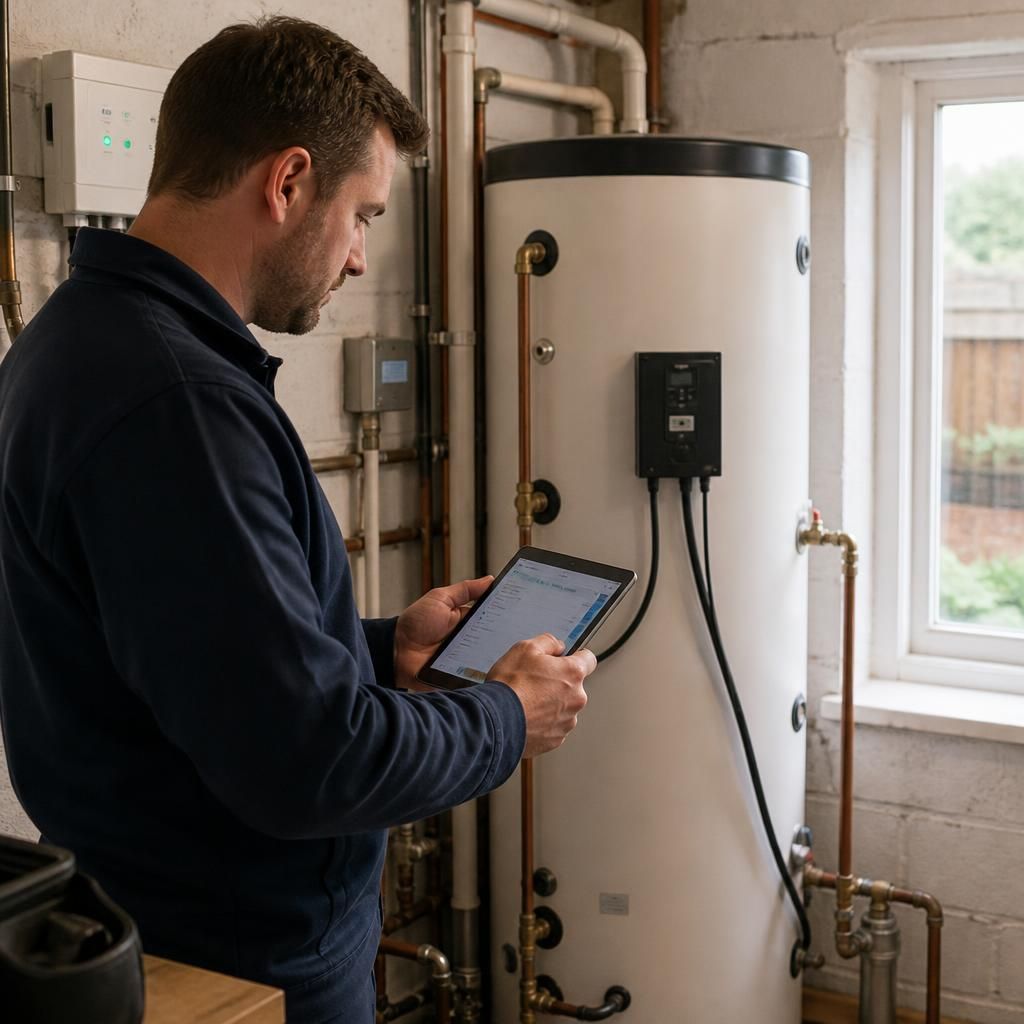
A solar immersion heater needs a hot-water cylinder to work with. If your home has a combi boiler, it usually heats water directly and has no stored cylinder, so there is no tank for surplus solar electricity to heat.
Adding a cylinder to a combi system can involve new pipework, controls and space, so it is not automatically worthwhile. We check the existing heating layout and the room available before recommending any changes. Where a suitable cylinder is already installed, the assessment is simpler and the solar controller can be matched to the existing hot-water arrangement.