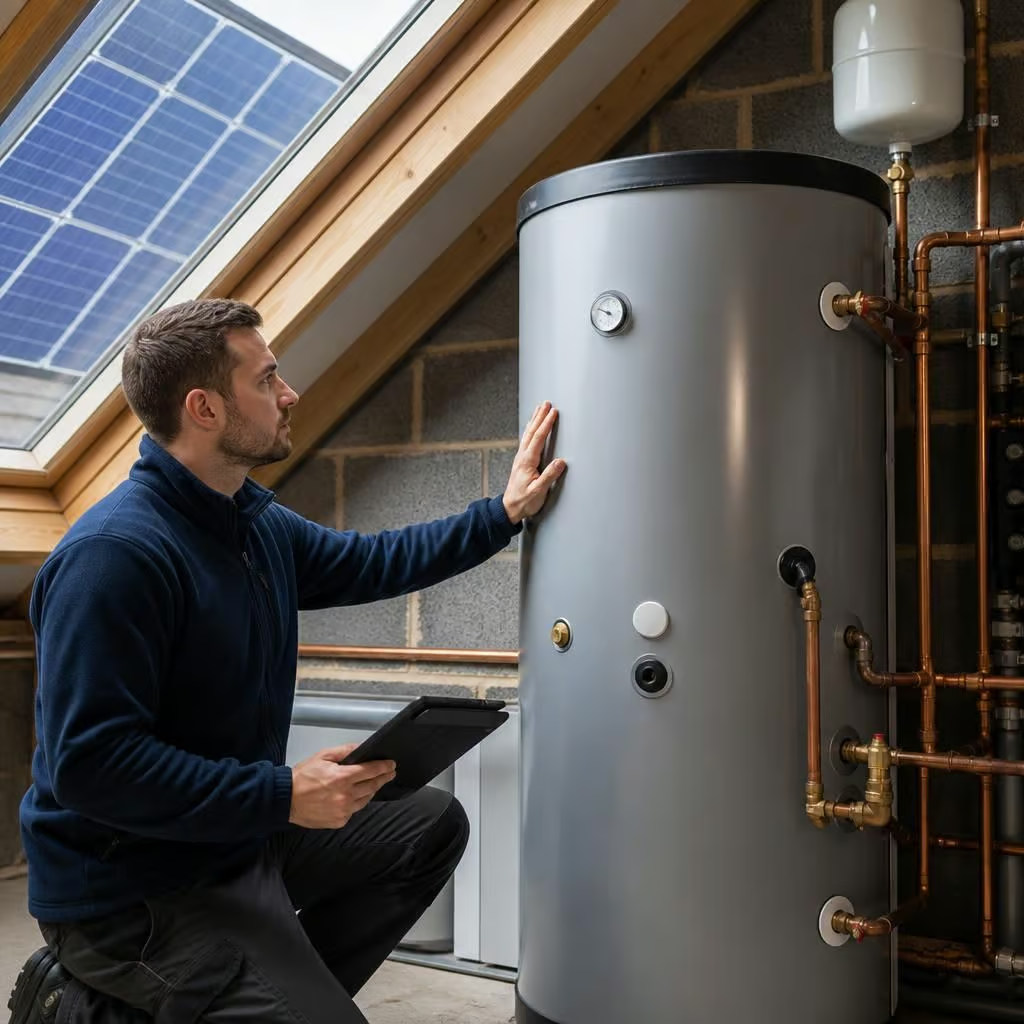
How do you size a solar hot water tank for our household?
The right solar hot water tank size depends on how many people use hot water, when demand occurs, the available roof area and how the tank will be heated when solar input is low. We size it around your household’s peak hot water demand, available installation space and existing heating system, so the stored water is useful without choosing a tank that is unnecessarily large.
The right cylinder size depends on your household’s peak hot water demand, not simply the number of people living at home. We work out how much hot water you use at the busiest time, then allow for solar input, backup heating and the cylinder space available.
Daily use matters more than occupancy alone. A household of two may need more stored hot water than a household of four if it regularly fills a bath, runs several showers close together or uses a large amount of hot water in the kitchen. We ask about bathing habits, shower types, usual times of use and how often guests stay.
Your morning routine is particularly important. Several showers taken one after another create a short period of high demand. A cylinder that copes comfortably with the total daily use may still feel too small if it cannot supply that peak without backup heating. We size around the busiest pattern rather than an average day.
The cylinder’s stated capacity is not the same as the amount of water available at the taps. Stored water is blended with cold water through a thermostatic mixing valve, so the usable supply depends on the storage temperature and the control settings. We account for this when assessing the volume needed, rather than treating the label on the cylinder as the whole calculation.
Solar input also changes the way the tank should work. The cylinder must have enough capacity to accept useful heat when the collectors are producing it, while still reaching the temperature needed for washing and bathing. A larger tank can provide more room for solar-heated water, but it also takes longer to heat and can lose more heat through its surfaces. Bigger is not automatically better.
We also check how the backup heat source will recover the cylinder. Your boiler, immersion heater or other backup may need to restore the stored supply after a busy period. If recovery is slow, a slightly different cylinder arrangement may be more practical than simply increasing the volume.
During the assessment, we look at:
- the number of regular occupants and any expected changes;
- the number and type of showers, baths and hot water outlets;
- the times when several outlets may be used together;
- the cylinder cupboard, loft or plant-room dimensions;
- the available collector area and the route for the solar pipework;
- the boiler or immersion heater that will provide backup;
- the incoming water pressure and flow rate;
- the controls needed to manage solar heating and backup heating safely.
Incoming water performance can affect the result as much as cylinder size. A larger tank will not compensate for poor mains flow at the showers. We check the existing arrangement and explain if the limiting factor is the supply, the outlets or the heating equipment.
Space can be a deciding factor in an older house, barn conversion or property with a restricted airing cupboard. We measure access as well as the final location, because a cylinder must be brought into the property and positioned safely. Pipework, valves, insulation and access for future servicing all need room around it.
The solar cylinder will normally need the correct internal coil arrangement for the heat source. We check that the collector circuit can transfer heat effectively and that the backup source can heat the water when solar production is low. Controls then give priority to available solar heat while retaining a safe backup programme.
Safety settings form part of the sizing decision. Stored water needs temperature control, and the system needs protection against excessive temperature and pressure. We include the appropriate safety devices, expansion provision and discharge arrangements rather than treating the tank as an isolated piece of equipment.
If the household changes, the calculation may change too. A new bathroom, a move to larger showers or regular guests can create a different peak demand. We can allow for planned changes where they are known, but we avoid installing a needlessly large cylinder for occasional use.
The outcome of our survey is a recommended capacity with the reasoning behind it. The quotation should show the cylinder specification, backup heating method, controls, pipework changes and any alteration needed to the cupboard or plant area. That gives you a clear basis for comparing the installation, rather than comparing tank capacities without knowing what each system includes.
Your roof may have room for several solar collectors, but that doesn’t mean the cylinder should grow in the same proportion. Collector orientation, shading and seasonal sunlight affect how much heat reaches the tank. We use those details alongside your hot water demand, so the cylinder can accept useful solar heat without being oversized for the space available.
If the collectors produce more heat than the household can use, the system needs safe controls to manage that surplus. We include the right temperature control and backup arrangements as part of the sizing decision, rather than choosing a tank by capacity alone.