
How is a solar hot water tank protected from overheating?
A solar hot water tank is protected by heat-transfer fluid, temperature controls and safety devices that stop the system adding heat when the cylinder is hot enough. If excess heat still needs managing, a heat dump and expansion vessel help control the temperature and pressure safely.
A solar hot water system is protected from overheating by allowing the collector circuit to stop transferring heat once the cylinder has reached its safe operating temperature. The system is designed to manage the resulting high temperatures without allowing hot water pressure or temperature to reach unsafe levels.
On a very sunny day, the collectors may still absorb heat after the cylinder is full. The solar controller recognises this from the cylinder and collector sensors. It then prevents unnecessary circulation. The collector fluid can become very hot while the pump is stopped, a condition known as stagnation. The sealed solar circuit, its fluid and its components must all be selected to tolerate this condition.
Solar heat transfer fluid is normally a water and glycol mixture. The glycol transfers heat from the collectors to the cylinder without mixing with the household water. It also protects the circuit from freezing in winter. Repeated exposure to excessive temperatures can cause the fluid to deteriorate, becoming darker or more acidic. That is why fluid condition and system pressure form part of planned maintenance.
The cylinder itself has separate protection from the collector circuit. Its temperature sensor tells the solar controller when there is enough stored hot water. A high-limit control can stop further heat input if the temperature rises beyond its permitted setting. The cylinder also needs correctly sized safety equipment for the pressure created as water expands during heating.
Hot water at the cylinder can be hotter than the temperature suitable for a bath or shower. A thermostatic mixing valve can blend stored hot water with cold water before it reaches the taps. This reduces the risk of scalding while allowing the cylinder to store heat efficiently. The valve must be installed, set and checked correctly rather than treated as a substitute for temperature control.
Some installations include a way to use surplus heat. Depending on the design, that may involve transferring heat to another approved part of the system or using a dedicated heat-release arrangement. The correct method depends on the cylinder, collector area, available pipework and the household’s hot water demand. A larger collector array on a lightly occupied home needs more careful planning than a system with regular daily use.
Long periods away from home deserve attention. With little hot water being used, the cylinder can remain at its upper temperature for longer. Before installation, we consider likely occupancy, cylinder capacity, collector position and how excess heat will be handled during summer conditions. That design work matters more than adding a device after the system is already installed.
Protection also depends on the layout of the pipework. The solar circuit needs suitable high-temperature components, correct insulation and routes that do not expose ordinary plumbing fittings to temperatures they cannot withstand. The cylinder, expansion equipment, discharge pipework and controls must be accessible for inspection.
During servicing, we can check the controller readings, sensor operation, system pressure, expansion vessel and safety discharge arrangements. We also look for signs that the heat transfer fluid has degraded or that a valve has discharged. If the fluid no longer provides the required protection, replacing it is safer than simply topping it up without finding the cause.
A well-designed system should therefore cope with a hot, sunny period without the household needing to switch panels off manually. The important questions for a quotation are how stagnation is managed, where surplus heat goes, how scalding is prevented and how the solar fluid and safety components will be maintained. These details are particularly important in an older property, where existing pipework and cylinder arrangements may limit the available options.
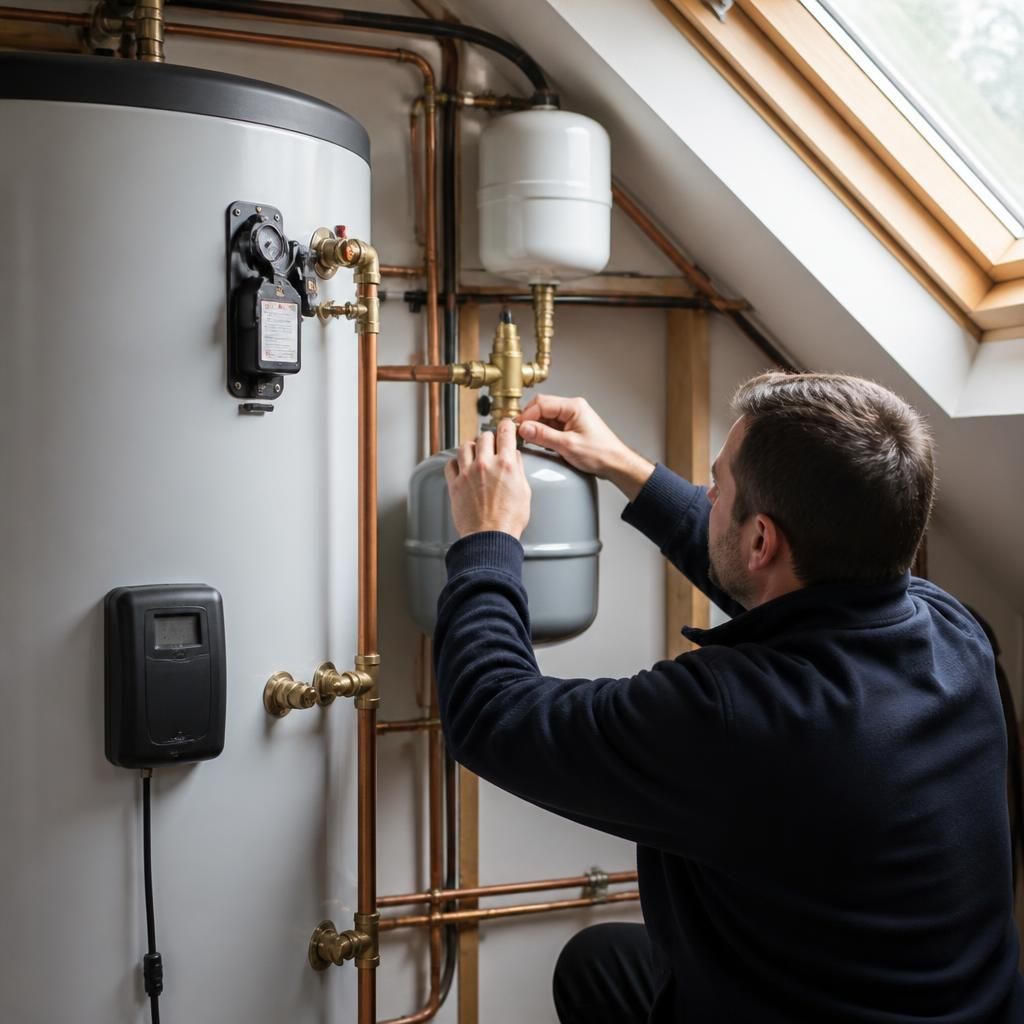
If a boiler, cylinder or control has been changed, the original overheating protection may no longer suit the system. We check that the solar controls, sensors, expansion equipment and discharge route still work together before recommending any alteration.
That matters particularly where an older cylinder or unusual pipework is being retained. The finished arrangement needs to manage surplus solar heat without relying on a manual switch or an improvised outlet.
Ask us about solar hot water tank overheating protection
If you’re considering a solar hot water tank, ask us to assess the proposed cylinder, collector area and control arrangement before work begins. We’ll explain how the design will manage excess heat and include the relevant protection in your quotation.