What should a solar hot water tank installation quotation include?
A clear solar hot water tank installation quotation should itemise the tank, solar collectors, controls, pipework, labour and any changes needed to connect the system to your home and existing heating.
It should also explain the system design, total cost, warranties, commissioning, certification and aftercare, so you know exactly what is included before work starts.
A useful quotation does more than give a total price. It shows how the proposed solar hot water system will work in your property, what the price includes, what could change it and who will look after the system afterwards.
The design basis
The quotation should explain how we have sized the system. That includes the number and type of occupants, typical hot water use, existing cylinder capacity and how often the boiler or immersion heater currently supplies hot water. A household with frequent baths has different requirements from one that mainly uses showers.
We should also record the roof or ground-mount position used for the design. Orientation, pitch, shading from trees or neighbouring buildings and the available collector area all affect the expected contribution from solar energy. If the roof has limited usable space, the quotation should say so rather than assume that every available area can be used.
The proposed equipment
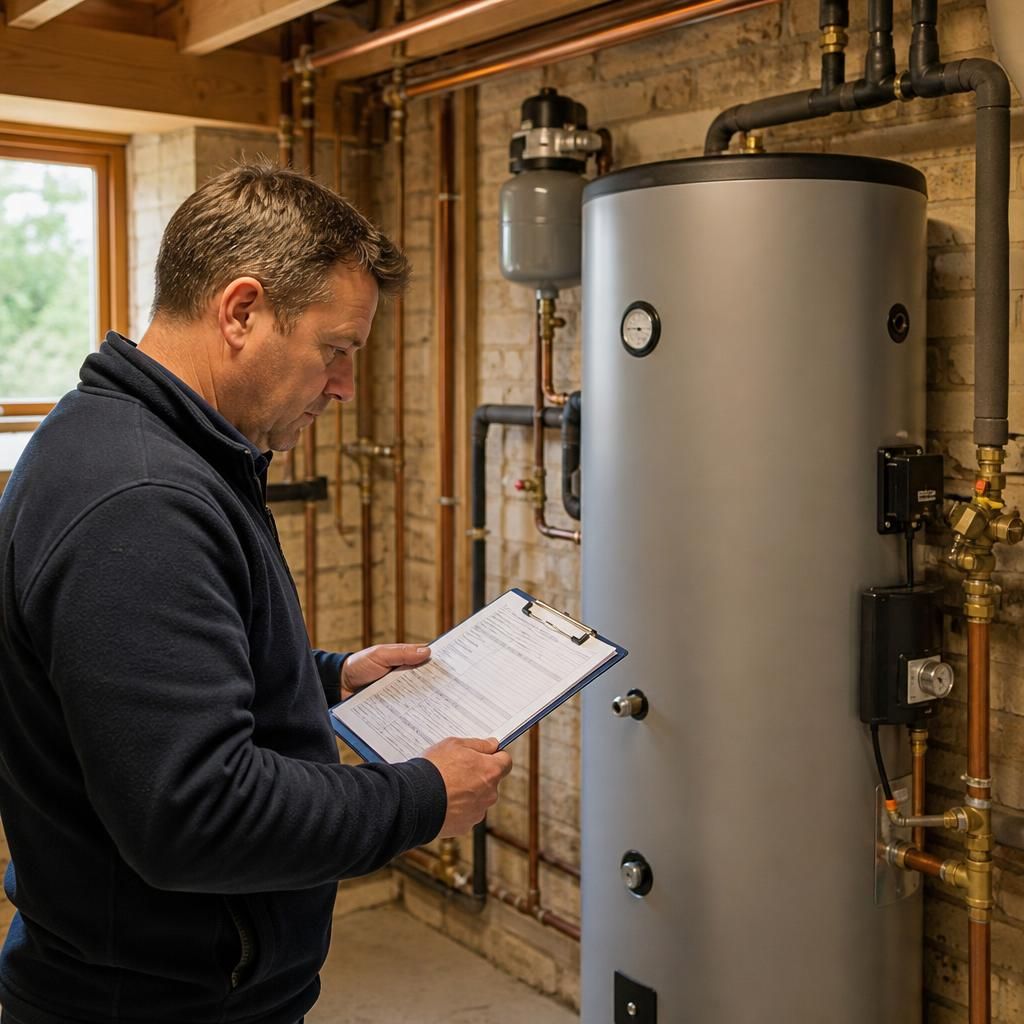
Each main component should be identified clearly. That normally includes the solar collectors, the solar cylinder or twin-coil cylinder, pump station, expansion vessel, heat-transfer fluid, sensors and system controls. The quotation should state whether the cylinder replaces the existing hot water tank or works alongside it.
It should also explain the cylinder’s usable capacity, the location proposed for it and the space needed around it. A larger cylinder may need a different airing cupboard arrangement, loft access or changes to the hot water pipework. If the existing cylinder can be retained, the quotation should explain how its coil and controls will connect to the solar circuit.
How the system connects to the rest of the house
Your boiler, immersion heater or other backup heat source still matters because solar energy varies with the weather and season. We should show which heat source will raise the water to the required temperature when solar input is insufficient. The quotation should identify the control strategy, including the temperature sensors, priority settings and any changes to the existing programmer.
If your property has an oil-fired boiler, LPG boiler or another off-gas-grid system, the quotation should make the connection method clear. We check that the boiler can operate with the proposed cylinder and that the pipework, valves and controls are suitable. Any required changes should appear as separate line items rather than being left as an assumption.
Work at the roof and inside the property
The price should describe how collectors will be mounted and how the pipework will enter the building. A quotation for a tiled roof should not quietly assume the same work as one for slate, a flat roof or a listed building. Roof access, scaffolding, flashing, replacement tiles and making good should be identified where they apply.
Inside the property, we should state the route for flow and return pipes, where the pump station and controls will sit, and how much access the installation needs. If pipework must pass through cupboards, ceilings or occupied rooms, the quotation should explain the route and the work needed to make surfaces good. It should also identify electrical work, such as a supply for the controls or immersion heater, if that is required.
What is excluded
A clear quote lists exclusions as well as inclusions. These might include structural roof repairs, asbestos removal, major rewiring, replacement of unrelated plumbing, decorating or work required after an inspection finds hidden damage. This does not mean those items will always arise. It means you can see which costs the quoted total does not cover.
Ask us to state how we would deal with concealed problems. If a damaged roof covering or unsuitable pipe route appears during the work, we should explain the approval process before carrying out additional chargeable work. A written quotation should leave no uncertainty about surprise charges.
Performance assumptions and running costs
The quotation should avoid presenting solar hot water as a fixed amount of free hot water throughout the year. We can explain the expected contribution using the property’s roof, hot water demand and backup heating arrangements, but weather and household use will affect the result.
It is also sensible to show the electricity or fuel used by the backup heat source, the controls and any pump. If the system uses an immersion heater, the quotation should explain when it operates and how you can override or schedule it. Any estimate of savings should be based on your current fuel, hot water use and heating controls, not a generic headline figure.
Commissioning and handover
The quotation should include system filling, pressure checks, air removal, controller setup and checks on the collector circuit. We should confirm that the cylinder reaches its target temperature and that the backup heat source responds correctly. The installer should also explain the normal pressure readings, warning signs and safe steps if a fault appears.
You should receive operating instructions, the control settings, equipment information and records of the commissioning checks. If the system uses antifreeze or another heat-transfer fluid, the handover information should say what it is and when its condition needs checking.
Warranties and aftercare
Separate warranties should be stated for the collectors, cylinder, controls and installation work. The quotation should explain who handles a fault, what the warranty covers and whether any registration is needed. It should also set out recommended servicing or inspection, including checks on fluid condition, pressure, valves, sensors and the cylinder’s safety controls.
We provide a written quotation before work starts, with the scope, assumptions, total cost and payment terms set out in writing. For solar thermal work, our MCS-certified renewable energy installers can also explain the system design and documentation in practical terms, particularly where the installation forms part of wider work to improve the property’s heating and hot water.
Before accepting a quote, compare the technical description as well as the total. Two prices may look similar while allowing for different cylinders, roof access, pipe routes, controls or aftercare. The better quotation lets you understand exactly what will be installed, how it will work with the existing heating system and what you will be responsible for after commissioning.
If your home is listed, in a conservation area or has a distinctive roof, the quotation should address permissions before work begins. It should state whether planning checks, building regulations and any conservation requirements are included, and identify who will prepare or submit the necessary paperwork. That prevents a low initial price from overlooking restrictions that affect the collector position or installation method.