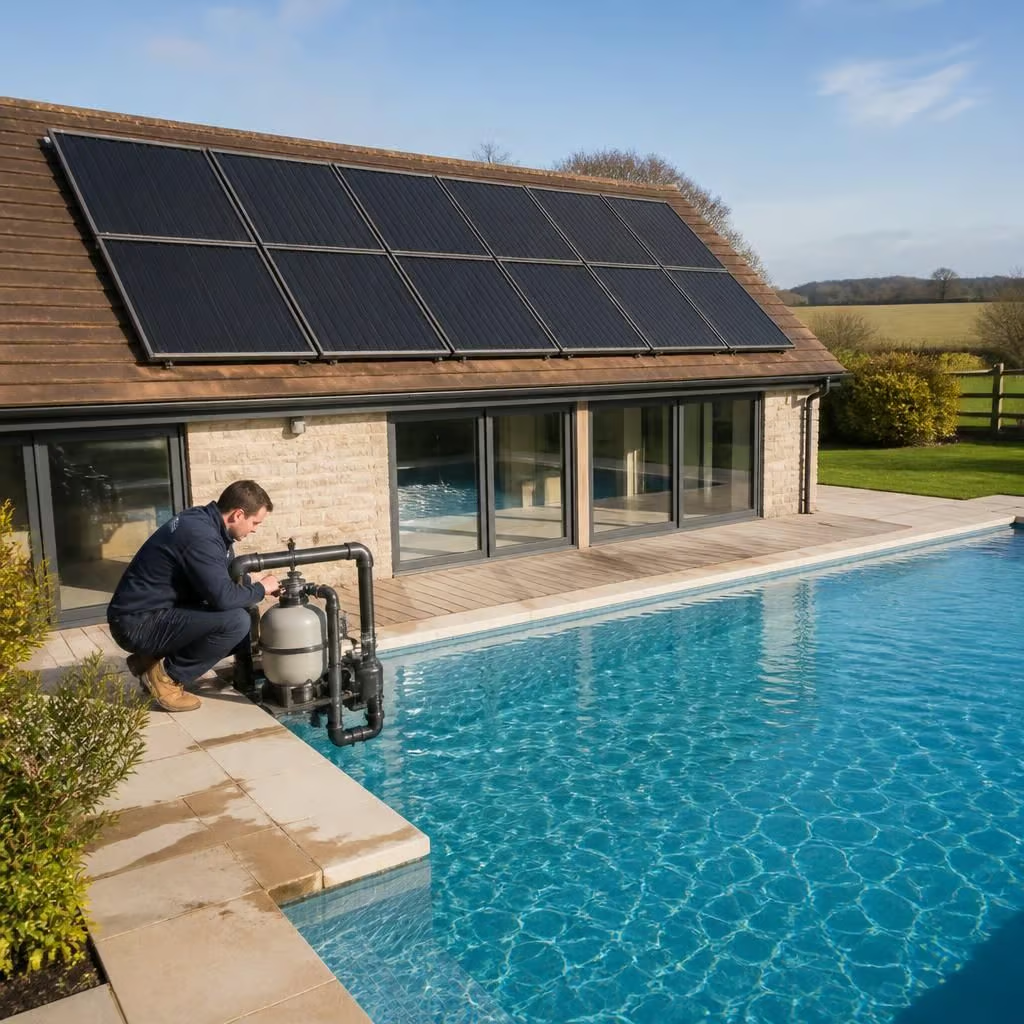
Is solar pool heating suitable for my pool?
Solar pool heating can suit many outdoor pools, provided there is enough unshaded roof or ground space for collectors and the circulation system can accommodate them. We assess the pool, available collector position, shading, cover and existing pump before advising whether it will provide useful extra warmth for your property.
Solar pool heating is usually suitable when you want to extend the swimming season rather than maintain a high pool temperature throughout the year. The best results come from an outdoor pool with room for solar collectors, manageable heat loss and a circulation system that can send pool water through the heating circuit.
The pool itself does not usually prevent installation. Liner, fibreglass and concrete pools can all work, provided we can connect the system safely to the filtration pipework. Above-ground pools need particular attention to the pump, hose connections and available mounting space. An indoor pool may also benefit, but the building’s heat loss, ventilation and roof arrangement become more important.
Your pool size affects the amount of collector area needed. A small array may add useful warmth to a compact pool, but it may have little effect on a larger pool. We look at the pool volume, depth, surrounding exposure and intended swimming season before recommending a system. This prevents the collector area from being too small for the result you expect.
Heat loss often matters more than the water temperature at the start of the day. An uncovered pool loses heat through evaporation, particularly in wind. A properly fitted pool cover helps retain the heat collected during the day and reduces the work required from any supplementary heater. If the pool has no cover, we include that limitation when we discuss likely performance.
The collectors need a clear position with useful solar exposure. A roof is not the only option. We can consider a suitable outbuilding, frame or ground-mounted position where the installation has enough space and does not create an obstruction. Nearby trees, chimneys and buildings can reduce output at different times of day, so we consider seasonal shading rather than judging the position from a single visit.
Solar pool heating works particularly well when the pool is used from spring into early autumn. It is less suitable if you want the same temperature in every season or need guaranteed heat regardless of weather. On cooler or dull days, the system may add less heat, so an existing boiler, heat pump or electric heater may still be needed for top-up heating.
Your current pump and filtration equipment may be adequate, but the heating circuit must have the correct flow and controls. We check the pipe sizes, pump capacity, filter arrangement and available connection points. The system can then direct water through the collectors when useful heat is available and bypass them when it is not. That avoids sending pool water through a cold collector unnecessarily.
Installation is normally less suitable where the only possible collector position is heavily shaded, structurally unsuitable or too small for the pool. It may also provide poor value if the pool is rarely used, has substantial heat loss or already relies on a powerful heater for short periods. We explain these drawbacks before any work is agreed.
For a pool that needs dependable high temperatures, solar heating may work better as a supporting system than as the only heat source. For a seasonal outdoor pool with a cover, practical collector space and a suitable circulation arrangement, it can be a sensible way to make the existing heating system work less often during sunnier parts of the year.
We assess the pool, plant equipment, pipework and collector position together. The recommendation then reflects how the pool is actually used, not just whether a panel can be placed on a roof.
Pool water treatment also matters when we assess suitability. Chlorinated and saltwater systems place different demands on the collector circuit, valves and connections, so we confirm that the proposed materials are appropriate before specifying the system.
Access for isolation and servicing is important too. We plan the pipework and valves so the heating circuit can be bypassed without taking the whole filtration system out of use. That gives you a practical installation, rather than collectors that are difficult to control or maintain once they’re in place.