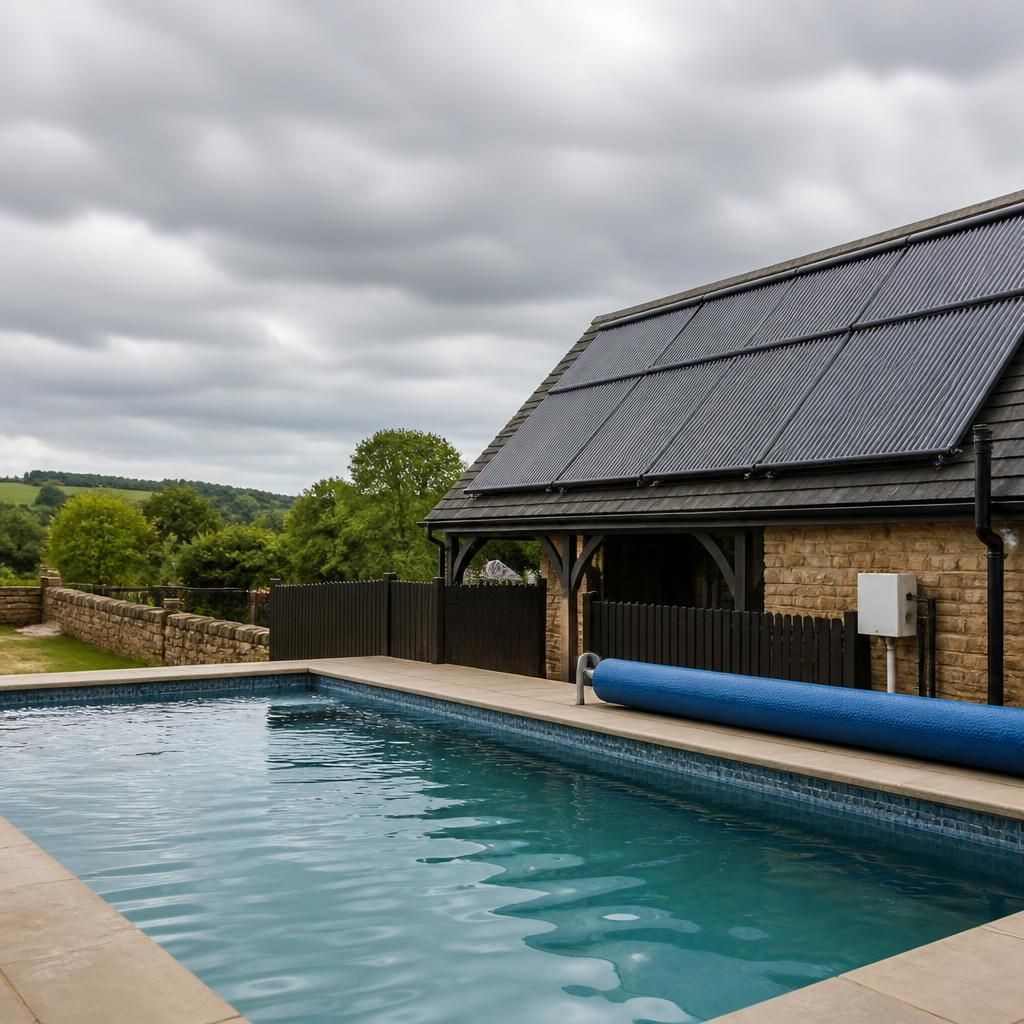
Will solar pool heating work on cloudy days?
Yes. Solar pool heating still collects diffuse daylight on cloudy days, but it produces less heat than in direct sunshine, so your pool will warm more slowly and may need supplementary heating during prolonged overcast weather.
Cloud cover reduces the energy reaching the collectors, but it does not make them inactive. Sunlight still passes through thin cloud as diffuse light, so the water can gain some heat when the sky is bright but overcast. Thick cloud, rain and cool air reduce that gain further.
The water temperature depends on more than the weather at one moment. Collector size, roof orientation, shading, wind exposure and the pool’s surface area all affect how much heat reaches the water. A well-positioned system may add useful warmth during changeable weather, while a shaded or undersized system will have less effect even on a sunny day.
Your pool can also lose more heat than the collectors provide. Evaporation is usually the biggest loss, particularly when the pool is uncovered or exposed to wind. A properly fitted cover slows evaporation when the pool is not being used, helping it hold the warmth gathered during brighter periods. It also reduces the amount of work needed from any supplementary heating.
A solar pool heating controller normally compares the collector temperature with the pool temperature. When the collectors are warmer, the system sends pool water through them. When they are no longer adding useful heat, a valve bypasses them instead. That prevents the collectors from drawing heat back out of the pool during a cool, cloudy spell.
Solar pool heating is best viewed as a way to extend the useful swimming season and reduce reliance on other heating, rather than as a source of constant heat in every type of weather. If you need the pool to reach a set temperature regardless of cloud, you may need another heat source alongside it. The right arrangement depends on how often the pool is used and the temperature you want to maintain.
During a survey, we look at the roof or ground-mounted collector position, shading from trees and buildings, pipe routes and the existing circulation equipment. We can then explain how changing weather is likely to affect the system at your property, rather than relying on a general forecast or a standard system size.
- Bright, thin cloud can still allow useful heat collection.
- Heavy cloud and rain usually mean slower warming.
- Cold wind can increase heat loss from the pool.
- A cover helps retain heat between swims and overnight.
- Collector sizing and positioning matter as much as the number of sunny days.
For the clearest assessment, compare the proposed collector position with the pool’s exposure, intended swimming season and existing heating. That shows whether solar pool heating will provide a useful contribution in your circumstances and what support, if any, may be needed during prolonged dull weather.
After a cloudy spell, the collectors may start gaining useful heat before you notice a change at the pool surface. The water warms gradually, so the system needs time to pass that heat through the pool rather than producing an immediate temperature rise.
We check how the existing circulation pump and controls will handle that gradual input. This helps the solar heating work alongside supplementary heating without asking the pool system to run the collectors when they cannot add useful warmth.