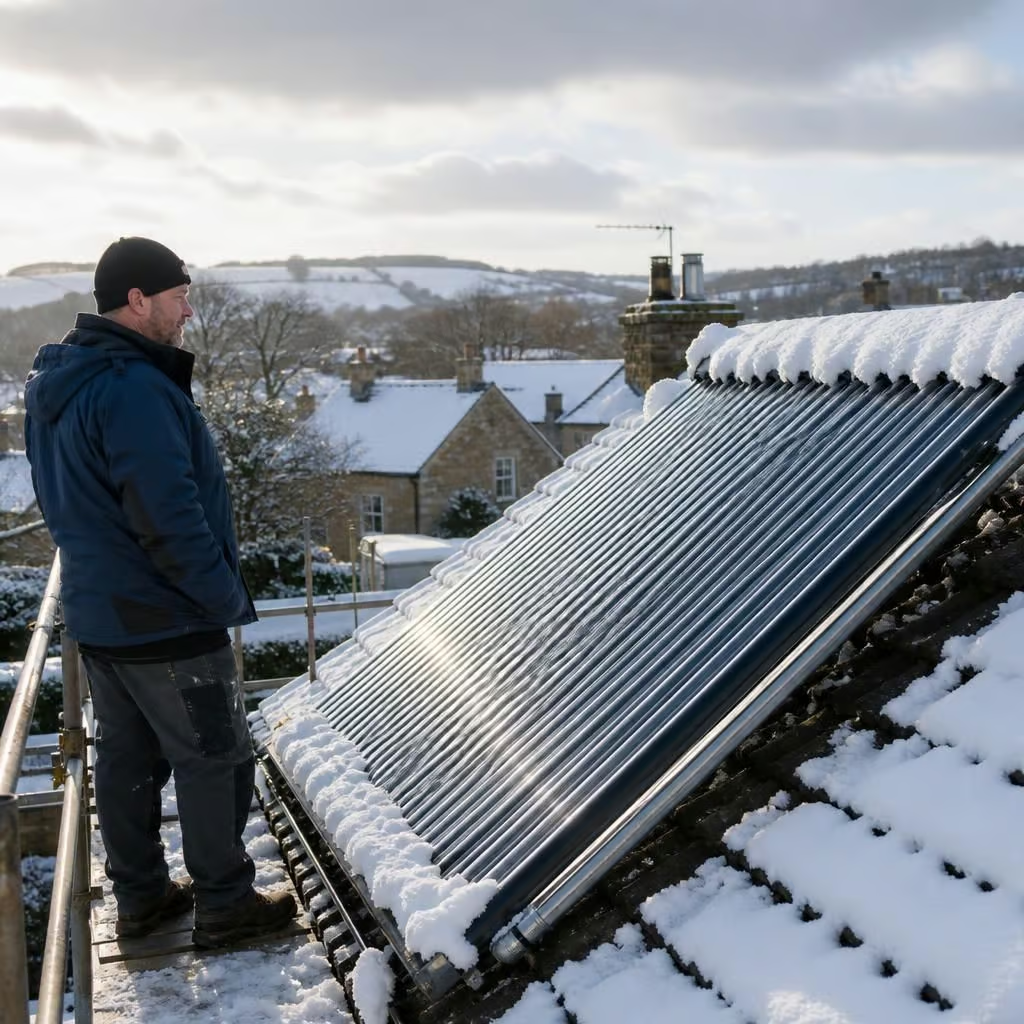
Can solar thermal panels heat water in winter?
Yes, solar thermal panels can heat water in winter, although shorter days, low sun and cloud reduce their output. Your boiler or immersion heater will still provide backup, so we assess the system and hot-water demand together before recommending it.
Winter output depends on the amount of sunlight reaching the collectors, the hot-water demand in the property and how well the system is designed. Solar thermal panels can make a useful contribution during colder months, but they will not produce the same amount of heat every day.
Sunlight still reaches the panels in cold weather. Solar thermal collectors use light rather than warm air, so low outdoor temperatures do not stop them working. Clear winter days can produce worthwhile heat, while thick cloud, shading and short daylight hours reduce the available energy.
Modern collectors can also use diffuse light, although direct sunshine gives the strongest result. A panel covered by snow will produce little heat until the snow clears. We look at roof pitch, orientation, nearby trees, chimneys and seasonal shading before recommending a system.
The system protects itself from frost. Most solar thermal installations use a sealed circuit containing heat-transfer fluid. A pump moves this fluid between the collectors and the cylinder, while controls monitor temperatures and prevent the circuit from overheating or freezing. We select and configure the equipment for the property rather than treating the panels as a standalone roof fitting.
Your hot-water pattern also affects the winter benefit. A home using more hot water during the day gives the system more opportunity to use collected heat. If demand is concentrated in the morning or evening, the controls and cylinder arrangement need to store heat effectively for later use.
Solar thermal is mainly a hot-water technology. It can raise the temperature of domestic hot water, but it usually cannot provide all the heat needed for space heating in winter. Radiators and underfloor circuits require heat at different times and often need more energy than the collectors can supply during the shorter winter day.
That does not make the system unsuitable for an older or off-gas-grid home. It may reduce the amount of fuel or electricity needed to heat water, provided the roof, cylinder and existing heating arrangement work together. We assess the whole installation, including the current hot-water cylinder, pipe routes, controls and available plant-room space.
A good design avoids expecting too much from the panels. We consider:
- how many people use the property and when hot water is normally needed;
- the usable roof area and any shading throughout the year;
- the panel type and collector position;
- the cylinder’s capacity, connections and control options;
- the route between the roof and the cylinder; and
- how the existing boiler, immersion heater or other heat source will operate alongside the solar system.
A winter survey is not intended to promise a fixed amount of heat. It shows whether the roof can receive enough sunlight and whether the rest of the system can store and use it efficiently. It also identifies practical issues such as long pipe runs, limited access or a cylinder that cannot accept solar input.
The result is usually seasonal rather than constant. Solar thermal may contribute on a bright winter day, contribute less on an overcast day and contribute nothing useful during periods of very poor light. The controls respond to the temperatures available, so another heat source can bring the water up to the required temperature when the collectors have not produced enough.
We can work out the likely winter contribution from the details of your home rather than quoting a generic saving. That assessment helps show whether solar thermal is suitable, whether changes to the hot-water system are needed and how much of the installation would be useful across the whole year.
On a cold day, the collector must be hotter than the water already stored before solar heat can be transferred. The controller compares both temperatures and runs the circulation pump only when solar input is useful.
That means the system can make use of a brief sunny period without continually circulating cooler fluid through the cylinder. Your stored water may warm gradually rather than reaching its final temperature in one burst, so the rest of the heating system can complete the job when needed.