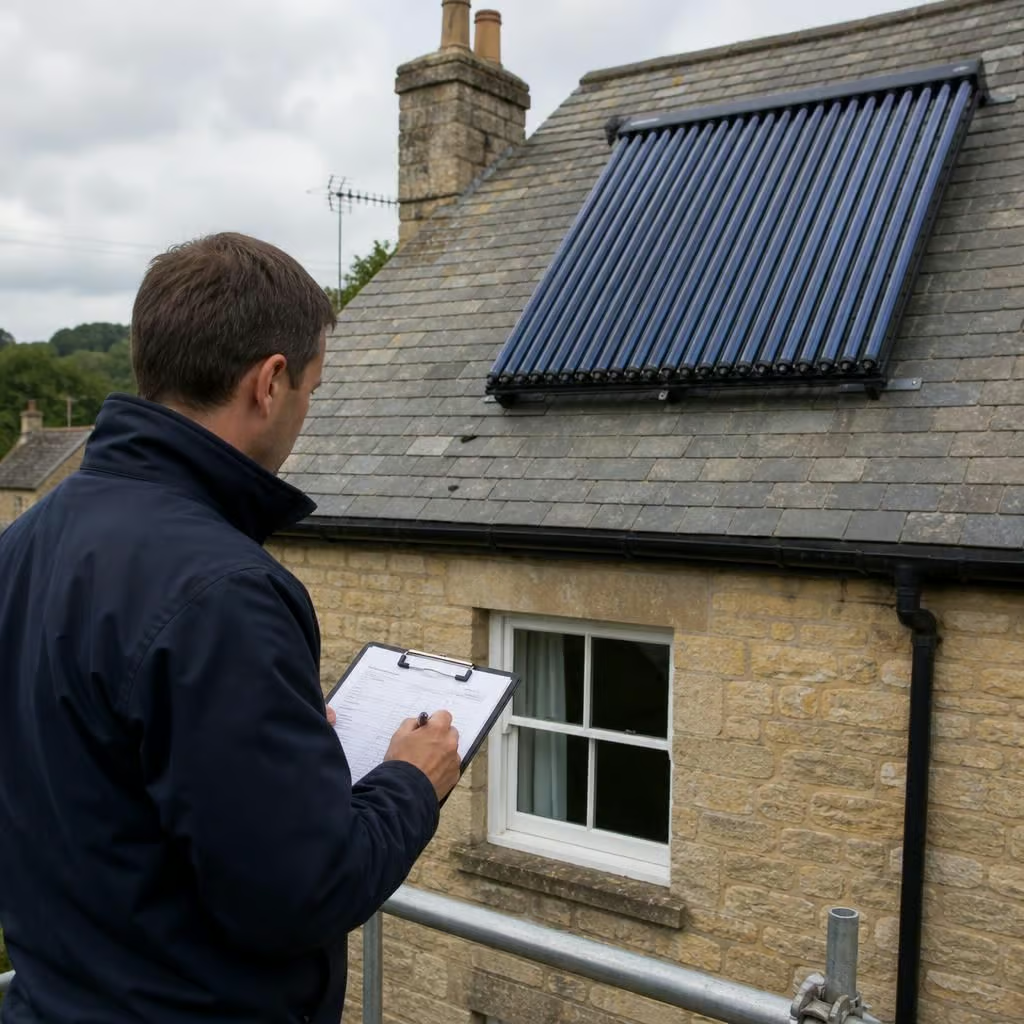
What happens during a solar thermal panel site survey?
Your roof, hot-water cylinder, pipe routes and available sunlight are checked during the survey, along with access and any practical restrictions. We then use those findings to plan a suitable solar thermal system and provide a written quotation before any work starts.
A solar thermal site survey turns an initial idea into a workable design, a clear specification and a written quotation. It shows how the system would connect with the hot-water arrangements already in the property, what preparation is needed and where the installation may not be practical.
We start with how the hot water is used. The number of occupants, bathing habits and existing heating pattern affect the cylinder size, control settings and expected contribution from the panels. Solar thermal normally supports hot-water production rather than replacing the boiler or other heat source completely, so we also establish how the property will heat water when solar energy is limited.
If the cylinder has a suitable solar coil, we check its condition, connections and controls. A cylinder with no suitable coil may need replacing before the panels can operate properly. We also check the immersion heater or backup heat source, temperature controls and safety components, so the finished arrangement can provide hot water without leaving the household dependent on sunshine.
The roof assessment goes beyond checking whether panels will fit. We consider the roof’s direction, pitch, usable area and exposure to shade from trees, chimneys or neighbouring buildings. We look at the roof covering, visible structure and likely fixing points. Older homes, barn conversions and listed buildings may need a more careful approach to fixings, appearance and planning requirements.
Where the property has roof alterations, unusual construction or a listed status, we explain any limitation that could affect the design. We do not assume that a roof is suitable simply because it has clear space. The panel position must work with the roof construction, access arrangements and the route into the building.
We then work out how the solar circuit can reach the cylinder. The survey considers the distance between the panel location and the hot-water store, the route for flow and return pipework, and the position of the pump station, expansion vessel and controls. In an older house, this may involve checking loft spaces, cupboards and service routes to keep new pipework as unobtrusive as possible.
The pipe route also affects insulation and installation disruption. We identify where pipes need to pass through walls, ceilings or floors, and whether access can be achieved without removing more of the building fabric than necessary. The quotation should make clear what preparation and making-good work the installation involves.
Shading and orientation help us estimate how the system will perform at the property. We use the survey findings to assess the useful solar gain rather than relying on a generic panel figure. A roof with some morning or afternoon shade may still be workable, but the effect needs to be included in the design. The final recommendation depends on the available sunlight, hot-water demand and backup heating arrangements together.
We also consider the panel type and number, the cylinder arrangement, controls and monitoring. The aim is to avoid installing more collector area than the property can use effectively, while providing enough capacity to make the system worthwhile for the household’s pattern of hot-water use.
The survey also checks the practical requirements for safe installation. We look at how engineers can reach the roof, move equipment through the property and work around existing services. We identify the position of isolation points and any electrical supply needed for pumps or controls. If access, roof condition or existing equipment creates a specific risk, we explain it before work is agreed.
Solar thermal systems contain a sealed heat-transfer circuit, so we account for the space and access needed for its components and future servicing. The design must also allow the system to deal with high temperatures and pressure safely. These details are part of the installation plan, not optional additions discovered after work begins.
After the visit, we set out the findings in writing. The quotation explains the proposed equipment, panel location, cylinder connection, pipe route, controls and any changes needed to the existing hot-water system. It also identifies assumptions about roof access, electrical connections and making good, so the scope is clear before installation starts.
We can then discuss the likely contribution to hot-water production using the property’s own conditions and usage. That is more useful than quoting a general saving, because sunlight, occupancy, cylinder capacity and backup heating all affect the result. If the arrangement does not make technical or financial sense, we explain why rather than forcing the design.
A site survey is not the installation itself. It is the point at which questions about suitability, disruption, appearance and integration with the existing heating system are dealt with properly. Once the specification is accepted, the installation can follow the agreed plan instead of relying on assumptions made from photographs or a brief telephone conversation.
Solar thermal works best when the system matches the household’s hot-water routine. If most hot water is needed at different times from the available sunshine, we take that into account rather than treating roof area as the deciding factor.
We use the survey to compare the likely solar contribution with the changes the property would need. That may lead to a straightforward installation, further preparation or a recommendation not to proceed. You can then judge the project from a clear design and quotation, rather than committing based on a rough estimate.