What maintenance do solar thermal panels need?
Solar thermal panels need periodic servicing rather than daily attention. We check the collector, pipework, insulation, pump, controls, system pressure and heat-transfer fluid, so faults and reduced hot-water performance can be found before they cause a larger problem.
Solar thermal systems need a planned service rather than constant attention. Most of the important work concerns the heat-transfer fluid, temperature sensors, safety components and the hot-water cylinder. A service interval should follow the equipment manufacturer’s guidance and the condition of the system, particularly if the property has hard water or the panels have experienced periods of overheating.
At home, you can check the system without touching the roof or opening any pressurised components. Look at the controller display and note any warning symbols, error messages or temperatures that seem unusual. Check the area around the cylinder, pipework and safety discharge pipe for dampness or staining. If you can safely see the roof from ground level, look for damaged tiles, loose covers or anything that has fallen against the collectors. Do not climb onto the roof to inspect the panels.
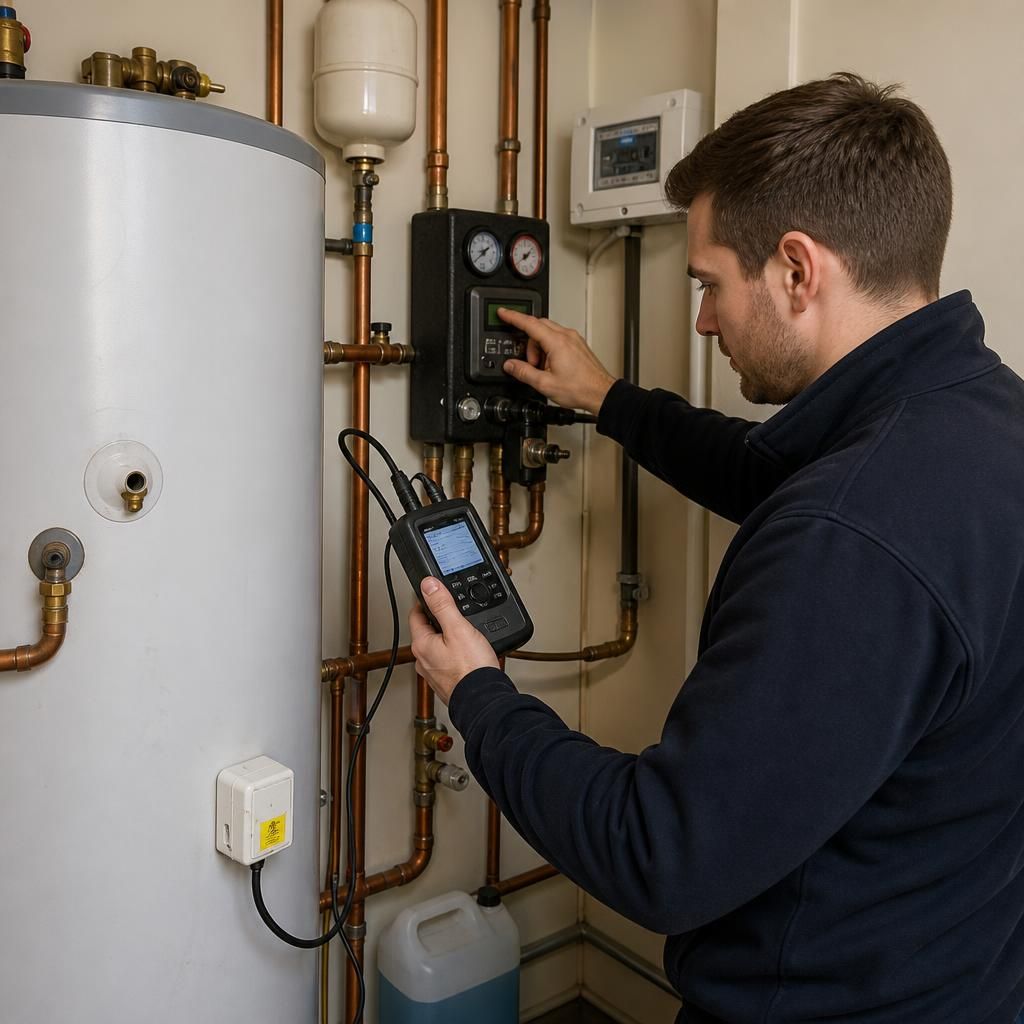
During a service, we inspect the solar circuit and test whether it is transferring heat properly. The main checks include:
- Heat-transfer fluid: We test the fluid’s concentration, condition and freeze protection. Solar fluid can degrade after repeated high-temperature cycles, becoming acidic or less effective. If its condition has deteriorated, we drain and replace it using the correct fluid for the system.
- Temperature readings: We compare the collector and cylinder sensor readings with the temperatures measured at the equipment. A sensor that has moved, failed or lost contact with the pipework can make the system start too early, stop too late or miss useful heat.
- Pipework and insulation: We inspect accessible joints, insulation and roof penetrations. Damaged insulation increases heat loss, while a poor seal around a roof penetration can allow water into the building.
- Safety protection: We check the components that protect the circuit from excessive pressure and temperature, including the discharge route and isolation arrangements. Discharge from a safety pipe should not be ignored, even if the system continues to produce hot water.
- Collector condition: We check the visible collector surface, frame, fixings and connections for damage or deterioration. We also consider whether dirt, lichen, nearby growth or new building work is reducing the available sunlight.
- Hot-water cylinder: We check the solar heating coil, cylinder controls and temperature-limiting arrangements. On cylinders that use a sacrificial anode, the anode should be inspected in line with the cylinder manufacturer’s instructions. Scaling can also reduce heat transfer in hard-water areas.
The controller should bring the solar circuit on when the collectors are warmer than the cylinder. We test this differential operation rather than relying only on the display. We also check that the system stops at the intended temperature and that the cylinder’s other heat source can still provide hot water when solar gain is low.
Solar thermal panels can reach very high temperatures when hot water is not being used. This is known as stagnation. It can occur during bright weather if the cylinder is already hot, or when occupants are away. The system is designed to manage this, but repeated stagnation can age the fluid and place more strain on seals and safety components. We look for signs of that stress and explain any adjustment that may be appropriate for the household’s pattern of hot-water use.
Cleaning is not normally a routine task if rain keeps the collector surface clear. Dust, bird deposits, leaves and lichen can reduce performance, but roof access creates a greater risk than cleaning at ground level. We assess whether cleaning is worthwhile and only recommend it where the expected improvement justifies safe access.
Some maintenance tasks are not suitable for a homeowner. The solar circuit may be hot and pressurised, and releasing the fluid can damage the system or create a burn risk. Do not loosen a joint, bleed the circuit or reset a safety device without proper guidance. A qualified engineer can identify whether a fault is electrical, hydraulic or related to the cylinder, rather than replacing parts unnecessarily.
Keep the commissioning information, fluid details and service records with the property documents. They help an engineer understand the original settings and identify changes over time. If a component needs replacing, we can check its compatibility with the existing collector array, cylinder and controller before work begins.
We service solar thermal systems as part of the wider heating installation where needed. That is useful when the solar cylinder, boiler, immersion heater or controls work together, because a fault in one part can look like a problem with the panels. You receive a written quotation before any repair work starts, so the recommended maintenance and its cost are clear before we proceed.
Routine solar thermal maintenance is usually carried out from the cylinder cupboard and accessible pipework, rather than by climbing onto the roof. Please clear access around the cylinder, controller and pump station before the engineer arrives. If the collector or roof connections need closer inspection, we assess safe access separately and explain any further work before it starts.