Is my existing cylinder suitable for a solar water heater?
Your existing cylinder may be suitable if it has a dedicated solar coil and enough capacity for the additional hot water. We check the cylinder, connections and available space, then tell you whether it can be used or needs replacing.
An existing cylinder can often stay in place, but its design matters more than its age. Solar thermal systems need a cylinder that can accept heat from a separate solar circuit, usually through a dedicated lower coil. A standard cylinder with only one coil normally cannot do this without modification or replacement.
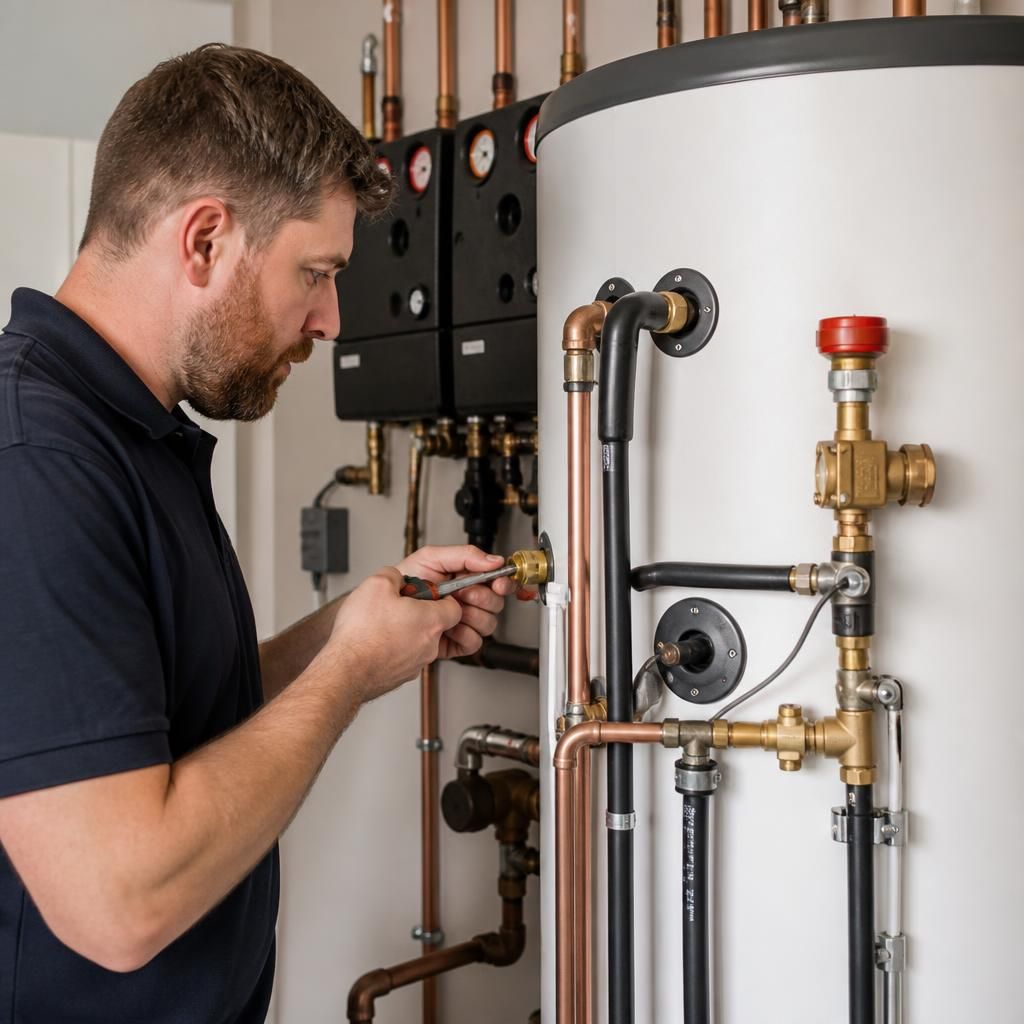
During the survey, we identify the cylinder type and trace how it is connected. We look for:
- A dedicated solar coil: this transfers heat from the solar fluid into the stored water. It is usually positioned below the boiler coil, allowing solar heat to warm the largest possible volume.
- Space for the solar controls: the cylinder needs suitable sensor pockets and connections for the temperature sensors, pump station and safety components.
- Compatibility with the existing heating system: we check how the boiler, immersion heater and hot water controls operate alongside the solar circuit.
- The condition of the cylinder and its connections: corrosion, leaking valves, damaged insulation or obsolete controls can make retention uneconomic even when the cylinder has the correct internal arrangement.
- The stored hot water capacity: the right size depends on the number of people in the property, bathing habits and the amount of hot water used. A cylinder that is already regularly depleted may not give the expected benefit from solar heating.
An unvented cylinder may be suitable if it has the correct solar coil and its safety equipment can accommodate the proposed system. We also check the expansion arrangement, temperature controls and discharge pipework. Any work on an unvented cylinder must follow the manufacturer’s requirements and the applicable installation rules.
A vented cylinder can also be compatible, provided it has the necessary coil and the rest of the system is suitable. The header tank, pump position and pipe routes need checking because solar circuits can reach higher temperatures than ordinary heating circuits.
A cylinder with an immersion heater may still need replacing. An immersion heater provides backup heat, but it does not create a solar coil. If the cylinder cannot transfer heat from the solar circuit, keeping the existing immersion heater alone will not make it suitable for solar thermal.
Solar PV and solar thermal use the cylinder differently. A PV diverter can send surplus electricity to an immersion heater, while solar thermal uses heated fluid from roof-mounted collectors and a dedicated coil. If you are considering panels that generate electricity rather than solar thermal collectors, we assess the cylinder and controls for that arrangement instead.
Replacing the cylinder does not automatically mean replacing the rest of the hot water system. We plan the new connections around the existing boiler, pipework and controls where they remain serviceable. If the cylinder is in a tight airing cupboard or an older property has difficult access, we explain the removal route and any changes before work begins.
The survey gives you a clear choice where possible: retain the cylinder with the required solar controls, or replace it with a compatible model. Our written quotation sets out any cylinder, valve, control or pipework changes before installation starts, so you can decide with the full scope in front of you.
A cylinder can be suitable on paper but still need attention before it is connected to solar thermal. We check the temperature rating, thermostat position and safety controls, because solar collectors can heat the stored water more intensely than a boiler alone.
This matters especially where the cylinder has been altered over time. Previous work may have left controls disconnected, sensors in the wrong position or valves that no longer operate correctly. We trace each part of the system during the survey and explain any corrective work before installation.