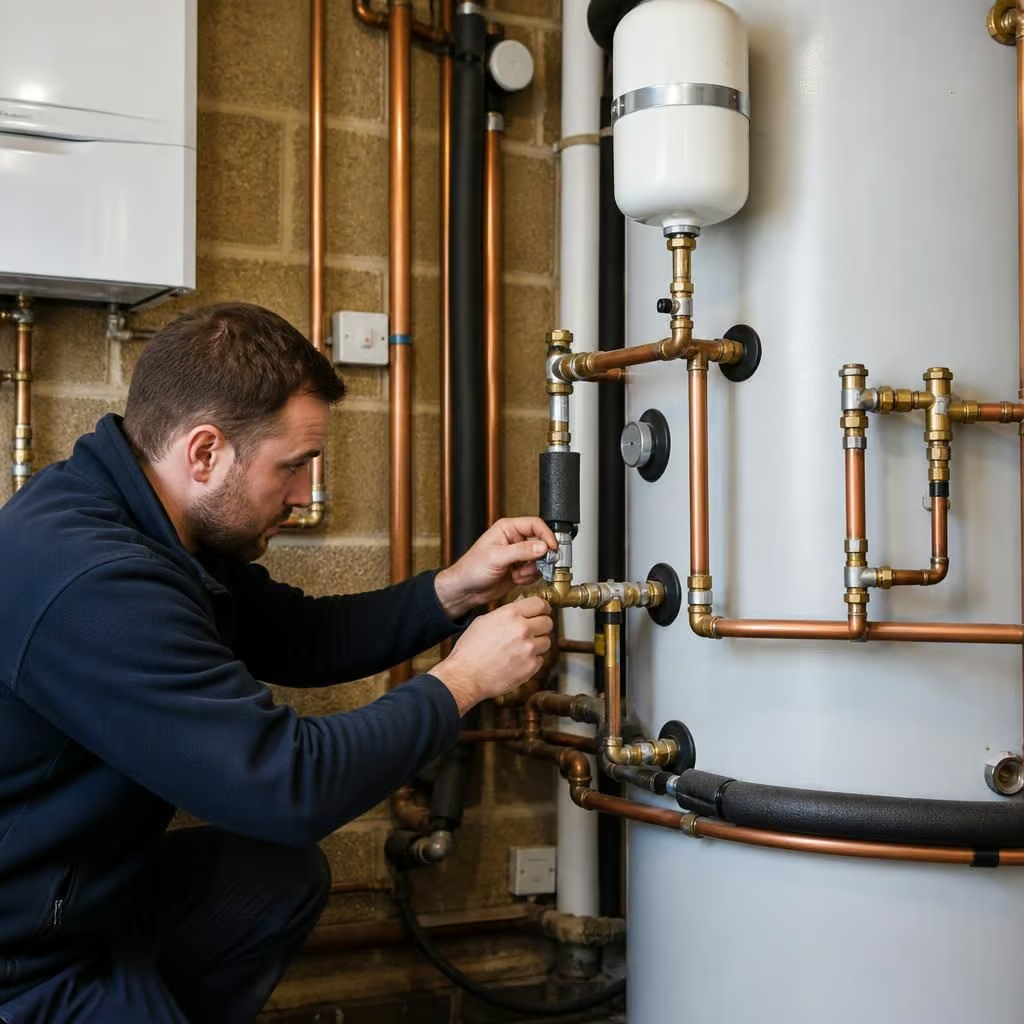
Can solar water heating work with my existing hot-water cylinder?
It may be possible to keep your existing hot-water cylinder if it has a spare coil designed for solar heating. If it has only one coil, we’ll assess the space and pipework before recommending a solar-compatible cylinder upgrade.
Solar water heating can work with an existing hot-water cylinder, but the cylinder must be designed to accept heat from the solar circuit. The key detail is usually the coil inside it, not simply its age or size.
A suitable cylinder normally has two separate coils. The lower coil receives heat from the solar collectors, while the upper coil remains available for the boiler or immersion heater. This arrangement lets solar heat warm the stored water first, with the existing heating system providing backup when required.
If the cylinder already has an unused lower coil, it may be suitable for connection. We still check its condition, capacity, coil position and the controls serving it. A coil intended for another purpose may not transfer heat effectively enough for a solar installation.
A cylinder with only one coil usually cannot accept a solar connection directly. Replacing it with a twin-coil solar cylinder is often the clearest option. That also gives the system a correctly sized heat exchanger and suitable sensor pockets for controlling the solar pump.
Your cylinder may also be unsuitable if it is corroded, poorly insulated or too small for the amount of hot water the property uses. Solar collectors produce heat at different times from your household demand, so the cylinder needs enough usable storage. We assess expected hot-water use alongside the available roof area rather than selecting a cylinder from its existing capacity alone.
Vented and unvented cylinders can both be considered, but they have different installation requirements. An unvented cylinder needs its safety controls, expansion equipment and discharge arrangements checked. A vented cylinder depends on the cold-water storage and feed arrangement serving it. We examine the whole hot-water system before deciding whether keeping the cylinder is sensible.
A combi boiler normally has no stored hot-water cylinder, so solar water heating cannot simply be connected to it. The property would need a suitable cylinder and revised hot-water pipework. That can change how the boiler supplies hot water, so we look at the existing boiler, controls, available space and the route from the cylinder to the roof before recommending an arrangement.
The cylinder location matters as much as the cylinder itself. Solar pipework must run between the collectors and the cylinder, with space for the pump station, expansion vessel, controls and insulation. If the cylinder is in a cupboard or roof space, we check that there is enough room to work safely and maintain the equipment later.
On older properties, the cylinder may be tucked away in a tight airing cupboard, or the pipework may have been altered several times. We trace the hot-water connections rather than relying on old labels. That helps us identify which pipe serves the boiler, immersion heater, taps and any existing secondary coil.
We also check how backup heating will operate. Solar water heating does not replace the boiler or immersion heater completely. The controls need to allow the solar system to heat the cylinder when useful, then bring in backup heat when the stored water is not hot enough. Correct sensor positions and time controls prevent the backup source from heating the cylinder unnecessarily before the solar system has had a chance to contribute.
If the cylinder is suitable, the work may involve connecting the solar circuit, fitting sensors and controls, checking the insulation and commissioning the system. If it is not suitable, we explain why a replacement is needed and set out the associated pipework and electrical work in the quotation before anything starts.
Changing the cylinder is more disruptive than connecting to an unused solar coil. It involves isolating the water and heating systems, draining the cylinder, disconnecting the existing connections and bringing the new cylinder into service. We plan the connection points and access during the survey so the installation does not depend on discovering the arrangement on the day.
For a property using oil or LPG, solar water heating can still work alongside the existing heating system. The important points are the cylinder arrangement, the control strategy and the available space for the solar equipment. We can assess those details during a survey and tell you if the current cylinder can be retained, adapted or replaced.
- Suitable: a sound cylinder with a dedicated solar coil, adequate storage and compatible controls.
- Usually replaceable: a single-coil cylinder, a damaged cylinder or one without suitable sensor and connection points.
- Needs more planning: a combi boiler system, a restricted cupboard, unusual pipework or an unvented cylinder requiring safety checks.
The survey outcome should identify the cylinder arrangement, the pipework changes, the backup heating method and any work needed to make the system safe and maintainable. That gives you a practical answer for the property rather than assuming every existing cylinder can be connected.
Solar water heating warms stored water rather than supplying the taps directly. That makes the cylinder the link between the collectors and the household’s hot-water routine.
A cylinder that works adequately with a boiler may still limit the benefit from solar if its internal arrangement cannot transfer heat effectively. We consider how hot water is used through the day, then explain whether keeping the existing cylinder is sensible or whether a replacement would make better use of the available solar heat.