
What maintenance will my solar hot water system need?
Your solar hot water system needs periodic professional servicing, including checks on the collectors, pump, controls, cylinder and heat-transfer fluid. We also inspect pipework and insulation, clean accessible components where needed, and identify small faults before they affect hot water production.
Solar hot water needs a planned service, but it should not need daily attention. The most important maintenance is checking the heat-transfer fluid, circulation system, controls and safety components before a small fault reduces hot water production or damages the equipment.
The service interval depends on the collector type, system design, fluid condition and manufacturer’s instructions. Many systems have a yearly check, while older installations or systems showing pressure loss may need attention sooner. We can set out the appropriate interval after inspecting the installation rather than applying the same schedule to every property.
The heat-transfer fluid needs testing. Solar thermal systems use a glycol mixture to carry heat from the roof collectors to the cylinder. Over time, high temperatures can reduce its frost protection and make it more acidic. We test its strength and condition, then recommend a replacement when the fluid no longer protects the system properly. Simply topping up an ageing mixture does not correct degraded fluid.
A fluid problem can affect more than winter performance. Poorly conditioned glycol can become thick or acidic, placing extra strain on the pump and damaging valves, seals or the collector circuit. We check for signs of this during the service and explain whether the system needs a top-up, a full flush or a fluid change.
The collector circuit must hold the correct pressure. A drop in pressure can point to a leak, air in the pipework, a faulty pressure relief valve or a problem with the expansion vessel. We inspect the pressure readings, connections and discharge pipework. We do not treat repeated pressure loss as something to keep correcting without finding the cause.
The expansion vessel absorbs changes in fluid volume as the collectors heat up and cool down. If it loses its charge, the pressure may rise when the system is hot and fall when it cools. We test and adjust it where appropriate, then check that the safety valve and associated discharge route are operating correctly.
The pump and controls determine whether collected heat reaches the cylinder. We check that the pump starts when the collector is hotter than the cylinder, runs at the right setting and stops when circulation is no longer useful. We also inspect the temperature sensors, controller display and wiring. A failed sensor can make the system circulate at the wrong time or prevent circulation altogether.
Your controller may show a fault code, unusual temperature reading or warning light. Keep a note of what appears and when it happens. That information can help us distinguish a sensor fault from a circulation or pressure problem.
The cylinder and backup heating need to work together. Solar energy will not provide the same amount of heat throughout the year, so the immersion heater or boiler remains important. We check the cylinder’s solar coil, temperature sensors, valves and backup controls. If the cylinder has a thermostatic mixing valve, we check its operation and condition as part of the hot water system.
Some homes have a cylinder that serves more than one heat source. The pipework and controls must keep the solar circuit separate from the potable water inside the cylinder. This protects water quality and allows the backup heater to operate without interfering with the collector circuit.
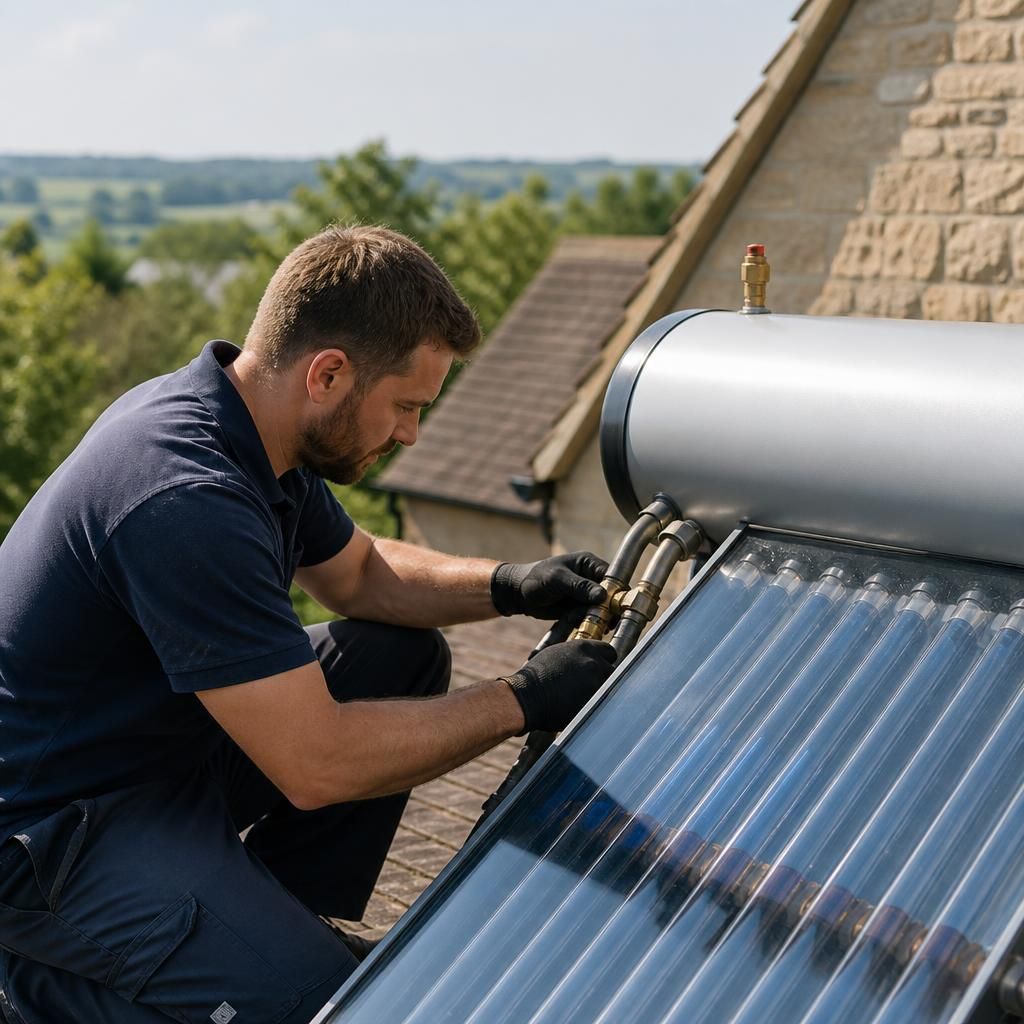
The roof collectors usually need inspection rather than frequent cleaning. Rain will remove ordinary dust, but heavy dirt, bird deposits, moss or nearby building work can reduce the available sunlight. We look for soiling, damage, loose fixings, shading changes and signs of leaks. We only recommend cleaning when the condition of the collectors justifies the access and associated cost.
Roof access can affect the work involved. A system on a steep, fragile or difficult-to-reach roof may need additional access arrangements. We explain any requirement before work starts. We also check visible insulation on external solar pipework, because damaged insulation allows heat to escape before it reaches the cylinder.
There are a few signs that should not wait for the next planned service:
- the system pressure keeps falling;
- the pump runs constantly or never runs when the collectors are hot;
- the cylinder is no longer receiving useful solar heat;
- the controller shows a fault or an unusual temperature;
- fluid appears near a valve, connection or discharge pipe;
- the solar cylinder or pipework makes repeated banging, hissing or gurgling noises; or
- the roof collectors are visibly cracked, damaged or obstructed.
Do not open the collector circuit or remove a safety valve yourself. Solar fluid can be very hot, and the circuit may be pressurised even when the pump is switched off. If the system has lost pressure, switch off the solar circulation pump only if the system instructions tell you to do so, and contact a qualified heating engineer.
Our service ends with a record of the readings, fluid condition, checks completed and any repair recommended. If a replacement part or larger repair is needed, we explain why before proceeding. You receive a written quotation for additional work, so routine maintenance does not turn into an unexpected charge.
Solar hot water maintenance is usually limited to inspection, testing and small adjustments. A fluid change, pump replacement or cylinder repair takes more planning, but the solar system can often be serviced without changing the collectors or disturbing the main roof covering.
Solar maintenance does not replace servicing the boiler or oil-fired heater that supports the cylinder. We check that the backup controls respond correctly during the solar inspection, but the combustion appliance still needs its own service and safety checks. Keeping both records together shows whether a lack of hot water comes from the collector circuit, the cylinder controls or the backup heater.