
Will my roof suit a solar hot water system?
Most roofs can suit a solar hot water system, provided they have enough unshaded space, a workable orientation and pitch, and sound roof structure. We assess the roof, shading, pipework route and hot water demand before confirming whether solar hot water will perform well at your property.
A roof can support solar hot water when the building can take the collectors and the home has space for the cylinder, controls and connecting pipework. The roof covering is only part of the decision. The existing hot water system, internal layout and future plans for the property matter just as much.
The roof structure comes first. Solar collectors and their mounting equipment add weight and create concentrated loads around the fixing points. We look at the roof construction, its age and its condition before recommending a system. Older slate roofs, ageing tiles, repaired timbers and roofs with signs of movement need particular care. If the covering is likely to need replacement soon, installing collectors first could mean paying to remove and refit them later.
On a sound pitched roof, we may use mounting equipment above the existing covering or an in-roof arrangement where the collector replaces part of the roof covering. The right approach depends on the tiles or slates, the roof construction and the appearance you want. A flat roof can sometimes accommodate collectors on a suitable frame, but we still need to consider wind loading, waterproofing and access for maintenance.
The roof must also connect sensibly to the hot water system. Solar thermal collectors heat a fluid that transfers heat to a cylinder inside the property. They do not usually replace the boiler, immersion heater or other existing heat source. Those controls provide hot water when solar input is insufficient.
Your current cylinder may not be suitable if it has only one heating coil. Solar hot water normally needs a cylinder with a dedicated coil, along with space for the pump station, expansion equipment and controls. We check the cylinder before recommending the collectors. If it needs replacing, we consider where a larger or differently arranged cylinder can go without creating unnecessary disruption.
The distance between the roof and cylinder affects the pipe route. Long or awkward routes can increase heat loss and make installation more disruptive. We look for a practical route through roof spaces, cupboards or service areas, while keeping penetrations weatherproof and insulating the solar pipework properly. A roof may be technically suitable but less attractive if the internal route requires extensive opening-up.
Roof shape and usable area affect the design. Chimneys, roof windows, dormers, valleys and raised sections can leave less uninterrupted space than the roof looks to have from the ground. We measure the area available for collectors rather than relying on the overall roof size. We also consider safe access for installation and future servicing.
Shade from nearby trees, chimneys or buildings can reduce the useful heat collected. We assess how the surrounding conditions affect the proposed collector position across the day and through the year. If only a small part of the roof is suitable, we explain what that means for the amount of hot water the system can contribute.
Older and protected properties need an additional check. Solid-wall houses, barn conversions and listed buildings can have unusual roof structures, limited service routes or restrictions on visible equipment. A conservation area or listed-building designation may affect the proposed position and appearance of the collectors. We identify the planning position before work proceeds, so the design does not depend on an approval that may not be available.
Thatched roofs need separate consideration because roof-mounted equipment and penetrations raise fire-safety and insurance issues. We do not treat a thatched property like a standard tiled roof. The survey needs to establish whether the proposed arrangement is acceptable before any quotation is finalised.
Your hot water use helps determine whether the roof is worth using. A property with regular daytime hot water demand may make better use of the heat collected than one that is empty for long periods. We consider the number of occupants, existing hot water habits and the available cylinder capacity. This helps us assess the likely contribution for your household rather than judging the roof in isolation.
We also check the condition of the roof space, the electrical supply for the controls and pump, and the position of the existing boiler or immersion heater. Any necessary changes are included in the system design rather than left for another contractor to resolve later.
The result should be a clear answer, not simply a recommendation to cover the roof with collectors. If the roof, cylinder or pipe route makes solar hot water impractical, we explain why. If the system is suitable, our quotation sets out the collector position, cylinder work, controls, pipe route and any roof repairs or alterations needed before installation.
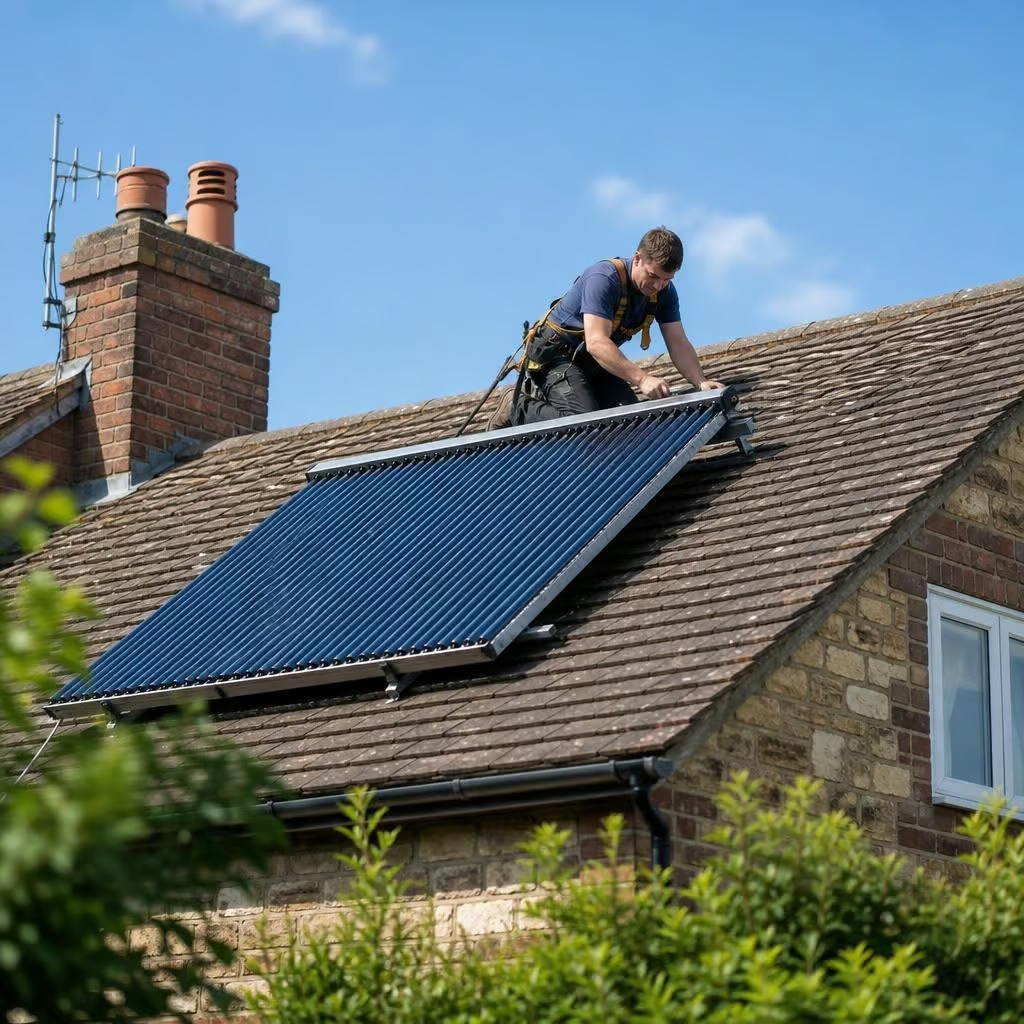
An east- or west-facing roof isn’t automatically unsuitable for solar hot water. It may collect useful heat at different times of day from a roof facing south, depending on shading, pitch and the space available.
We compare the available roof faces with how your household uses hot water, rather than judging the property from its main elevation. That gives you a clearer view of what the collectors could contribute and whether the cost and installation work make sense for your home.