Can a faulty solar inverter be repaired rather than replaced?
Sometimes. A faulty solar inverter may be repairable when the problem is wiring, ventilation, settings or a replaceable component, but a new inverter is often more sensible when its internal electronics have failed, parts are unavailable or faults keep returning.
A solar inverter can often be repaired, but only after testing shows that the inverter itself is the problem and that suitable parts are available. A failed supply board, cooling fan, display, communication component or external connection may be repairable. If the repair would be unreliable, unsupported or disproportionate to the value of the system, replacing the inverter may be the better route.
The first step is to separate an inverter fault from a problem elsewhere in the installation. A blank screen does not always mean the inverter has failed. The AC supply, circuit protection, isolators, cabling, solar strings, monitoring connection or the electricity grid can all produce similar symptoms.
We start with the symptoms you have seen, such as a warning message, reduced generation, an intermittent shutdown or no display at all. The model, serial number, installation date and any fault code help us understand what the unit can support. A screenshot from the monitoring app can also show whether the problem is continuous or linked to particular conditions.
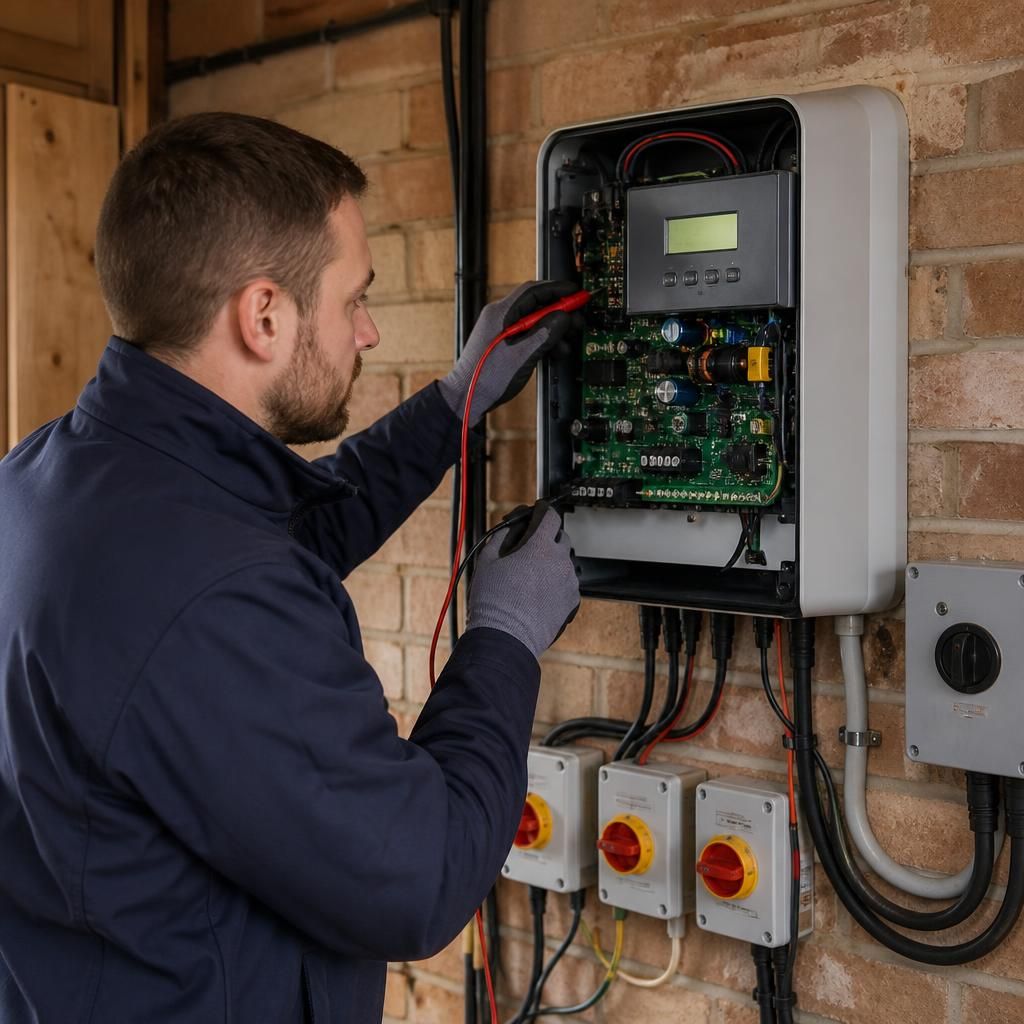
During the inspection, we test the incoming AC supply and the DC input from the panels. We also check the isolators, terminals, earthing, cable condition, ventilation and signs of heat or moisture. These tests help identify a tripped protective device or poor connection before anyone recommends an inverter replacement.
Some faults need no internal repair. A tripped breaker, failed isolator, loose connection or communication fault may be corrected without changing the inverter. A monitoring failure can make the system appear inactive even when the panels are still generating. We confirm generation at the equipment rather than relying on the app alone.
Internal repairs depend on the inverter design. Some manufacturers supply replacement boards or other service parts, while others treat the inverter as a replaceable unit. We do not recommend opening an inverter simply to reset it or inspect it. Solar DC circuits can remain live in daylight, and stored electrical energy may still be present after isolation.
Repair is more likely to make sense when the rest of the system is in good condition, the inverter has compatible support and the affected part can be replaced and tested properly. The age of the unit, the availability of parts and the likely reliability after repair all matter. A low-cost repair is not useful if the inverter is likely to develop another unsupported fault shortly afterwards.
Replacement may be preferable when the inverter cannot be economically serviced, when compatible parts are no longer available, or when the existing unit no longer suits the system. We also consider whether you want to add battery storage, change the system arrangement or improve monitoring. The right replacement must match the panel configuration, electrical supply and any battery equipment, rather than simply matching the old unit’s power rating.
A system with a separate solar inverter is assessed differently from one using a hybrid inverter or microinverters. A hybrid unit may control both solar generation and battery charging, so changing it can affect battery settings, backup functions and monitoring. With microinverters, a single panel-level fault may not justify replacing the whole installation. We identify the system layout before discussing repair or replacement.
Repair and replacement both require safe isolation and testing. After work, we check the AC and DC connections, confirm that the inverter starts correctly and verify that generation is being recorded. Monitoring may need to be reconnected or configured again. If the system exports electricity, we also check that the relevant settings and documentation remain appropriate for the installation.
Replacing an inverter does not automatically mean replacing the panels, mounting system or household wiring. In many cases, those parts remain usable. We assess their condition and compatibility first, so the quotation covers the work the system actually needs rather than assuming a full solar installation is required.
For a repair, the quotation should explain the suspected fault, the part or work involved and the testing required afterwards. For a replacement, it should set out the inverter specification, any changes to cabling or protection, monitoring arrangements and the disposal of the old unit. We provide a written quotation before work starts, with no surprise charges.
If the inverter is showing a fault, leave the equipment alone and record the display message or monitoring alert. Do not remove covers or repeatedly reset it. We can then establish whether the fault is external, repairable or better addressed with a compatible replacement, and explain the practical difference before you decide.
When an inverter is several years old, the decision depends on more than the failed component. We assess the condition of the DC connectors, isolators, cabling and protective equipment around it. A repair may keep a sound installation operating as before, while deterioration elsewhere could make replacement alone unsuitable. We list any additional safety work separately from optional improvements, so you can see exactly what the system needs.