How much does a solar inverter repair cost?
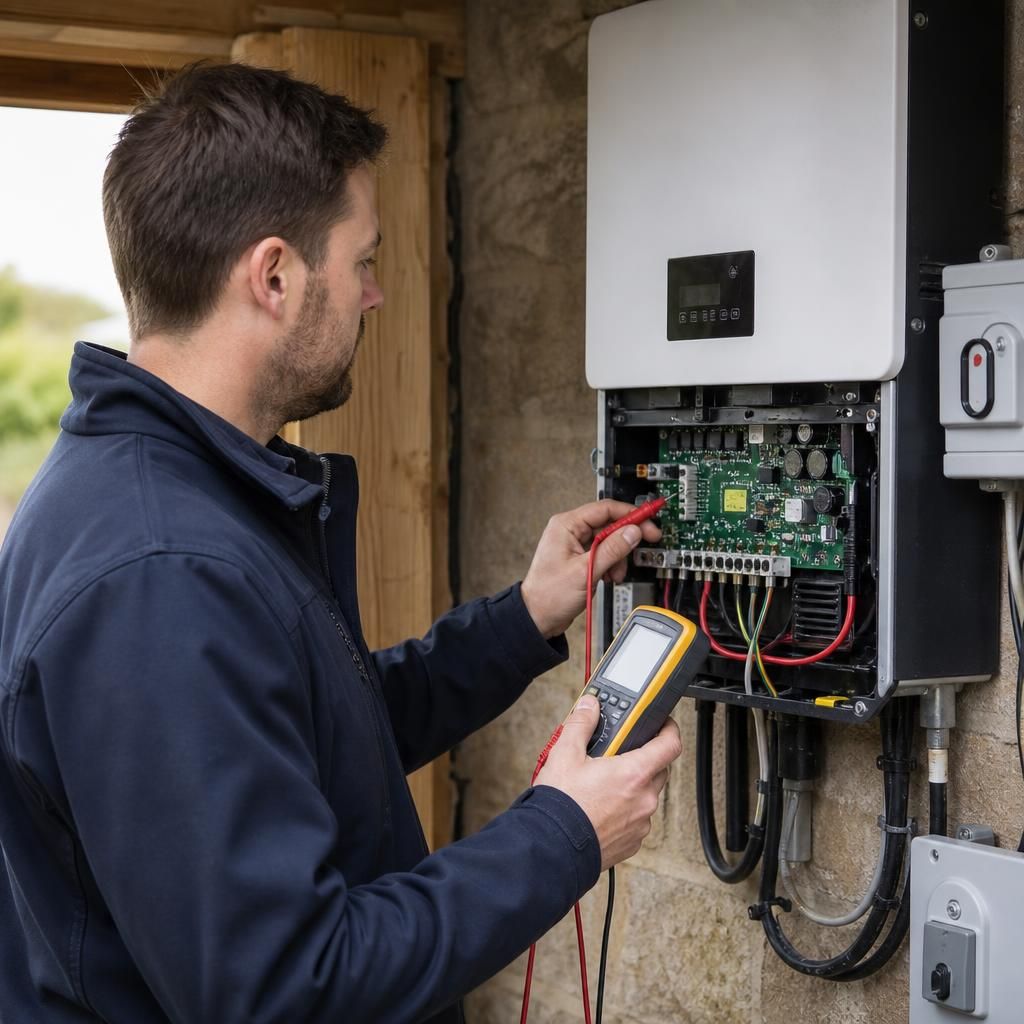
Solar inverter repair has no fixed price because the cost depends on the fault, the inverter’s age and whether parts are available. We test the system first, then explain whether repair or replacement is the sensible option and provide a written quotation before work starts.
There is no single price for solar inverter repair. A minor fault may need a small component and limited labour, while a failed control board, power stage or discontinued inverter can make replacement more sensible. We identify the fault first, check whether repair parts are available, and set out the repair and replacement options in writing.
The inverter converts the direct current from your panels into the alternating current used in the property. It also monitors the array, records faults and may control a battery or export connection. A problem in any of those functions can affect the cost of putting the system right.
What affects the repair cost?
- The fault itself: a failed display, cooling fan, communication component or terminal may be repairable. A damaged main circuit board or power section can cost more and may not be economical to replace.
- The inverter type: a standard string inverter, hybrid inverter and microinverter have different testing and replacement requirements. A hybrid unit also involves the battery connection and its control settings.
- Parts availability: older inverters may no longer have manufacturer-supported boards or fans. A repair that depends on a used or unavailable part can leave you with an uncertain outcome.
- Access: an inverter in a clear garage position is simpler to inspect than equipment in a loft, plant room or difficult external location. We also need safe access to the consumer unit, isolators, meter and, where relevant, the battery.
- Associated electrical faults: the inverter may be reporting a problem elsewhere in the system. We may need to test the DC cabling, connectors, isolators, earthing, protective devices and the supply feeding the inverter before identifying the failed part.
- System configuration: monitoring equipment, export controls and battery settings can add testing and commissioning work after a repair or replacement.
A fault code does not automatically mean that the inverter needs a new circuit board. Low generation can come from a panel or string problem, while a loss of communication may relate to the internet connection or monitoring equipment. Replacing the inverter without testing the wider installation can leave the original fault unresolved.
When is repair worthwhile?
Repair is usually worth considering when the inverter is relatively modern, the fault is clearly identified and the required part is supported. It can preserve the existing wiring, mounting position and system settings. That may avoid unnecessary changes to the rest of the installation.
Replacement deserves consideration when the unit is older, parts are unavailable, the same fault has returned or the repair cost approaches the value of a current inverter. A replacement may also be practical if you want to add battery storage, improve monitoring or replace an inverter that no longer suits the panel array.
Your existing panels do not automatically need replacing when the inverter fails. We check the array layout, panel specifications, cable routes and protection before recommending a compatible unit. If the system includes a battery, we check compatibility rather than assuming that any hybrid inverter will work with it.
What happens during a repair assessment?
- We take the inverter model, fault message, installation history and any monitoring information.
- We inspect the inverter, isolators, visible cabling and surrounding area for heat, moisture, damage or loose connections.
- We test the electrical supply and solar array safely, following the manufacturer’s requirements.
- We separate an inverter fault from a panel, cable, protection, battery or monitoring fault.
- We explain whether repair, replacement or further investigation is the sensible route.
- We provide the price and scope in writing before the agreed work starts.
The written scope should make clear whether it includes fault finding, parts, labour, testing, commissioning and removal of the old equipment. It should also identify any work that could not be confirmed until the inverter is opened or a replacement part is sourced. That gives you a clearer comparison between repairing the existing unit and installing another one.
Could the manufacturer warranty cover the cost?
Possibly. Check the inverter’s model, serial number, installation date and warranty terms before authorising a repair. Some warranties cover parts but have different conditions for labour, call-out work or installations altered by another party. We can use the available information when assessing the next step, but the manufacturer decides whether a claim is accepted.
If the inverter is discontinued, a replacement may require changes to the mounting, connectors, isolators or monitoring arrangement. We explain those changes before work begins. For a system with battery storage or export payments, the replacement also needs commissioning and documentation that match the installed equipment.
Do not remove the inverter cover or attempt to reset internal components. Solar installations can remain electrically live in daylight, even when the inverter display is blank. If you notice a burning smell, unusual heat, water ingress, damaged cables or repeated tripping, stop using the affected equipment if it is safe to do so and arrange an inspection by a qualified electrician.
Our NICEIC- and ECA-registered electricians can test the installation around the inverter as well as the inverter itself. If repair is not sensible, we can explain the practical effect of replacement on your panels, battery, monitoring and export arrangements, so the decision is based on the whole system rather than the fault code alone.
A sudden inverter failure can follow a power surge, storm damage or water ingress. Keep the fault message, monitoring alerts and installation records, and take photographs of any visible damage. That information can help establish when the problem began and whether a manufacturer or insurance claim is worth pursuing.
Don’t authorise a repair based only on a reset or a cleared warning. If the fault returns, you could pay for another visit without resolving the cause. We record the symptoms, test the installation and explain what the quoted work is expected to achieve, so you can judge the cost against the likely result.