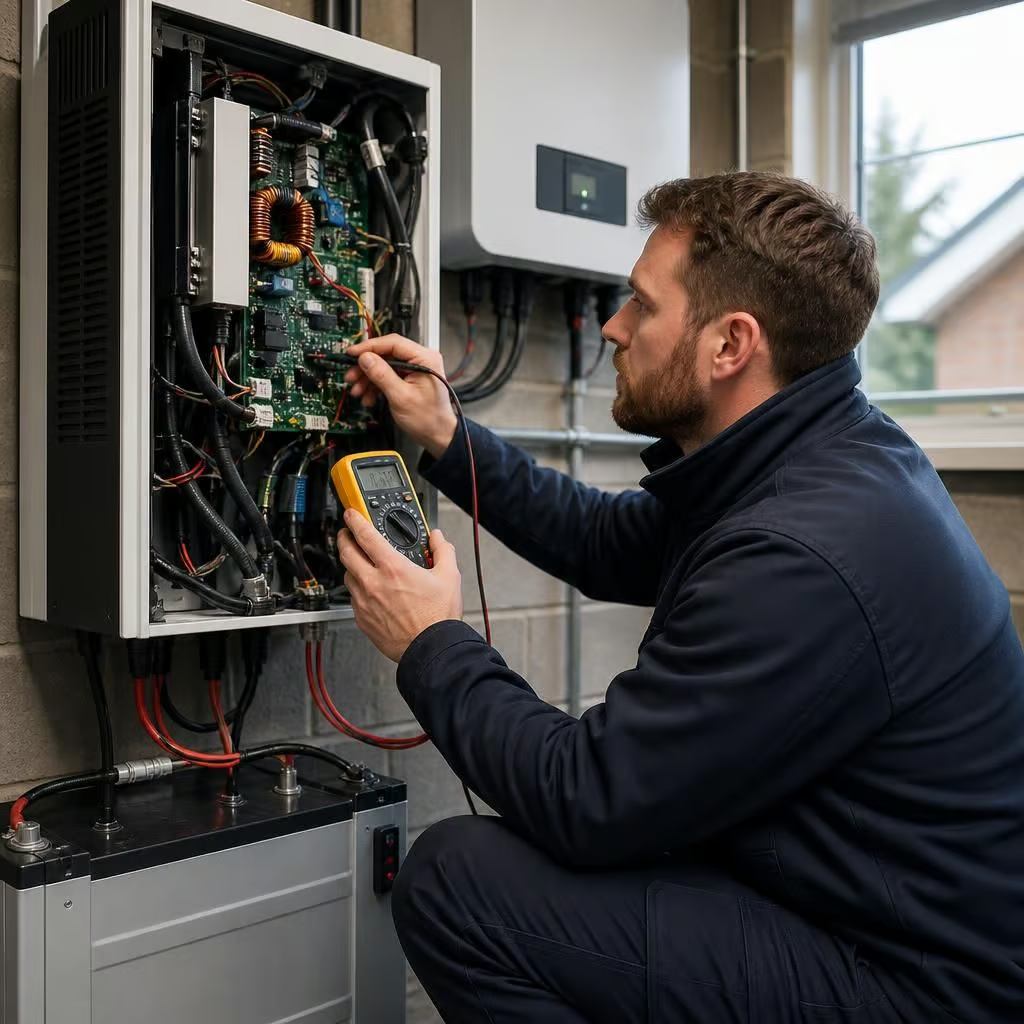
Can a hybrid inverter be repaired without replacing the battery?
Yes. A hybrid inverter can often be repaired or replaced without replacing a healthy battery, but we first test the inverter, battery, cabling and controls to identify the actual fault.
A failed inverter and a failed battery are separate faults. We replace the battery only when testing shows that it is damaged, unsafe, too degraded to operate correctly or incompatible with the replacement inverter.
The inverter controls the flow of electricity between the solar panels, battery, home and grid. A fault in that equipment can stop the whole system even when the battery itself remains usable. In some cases, repairing the inverter restores the existing system. In others, replacing the inverter is more practical than repairing its internal electronics.
What we check before recommending any replacement
If your system has stopped charging, discharging or producing usable power, we first establish where the fault sits. We check the inverter’s fault history, isolation points, cabling, communications and system settings. We also check the battery for alarms, charge level and signs that it can accept and release energy safely.
A battery that holds its charge and communicates correctly with the system may not need any work at all. A battery that appears empty may simply be disconnected from the inverter or unable to charge because the inverter has failed. Replacing it before checking those points can add cost without fixing the underlying problem.
We also look at the wider installation. Loose or damaged connections, failed protection equipment, water ingress, overheating, poor ventilation and monitoring faults can all appear to be inverter or battery failures. Finding the actual cause matters because a new inverter will not solve a problem elsewhere in the installation.
When the existing battery can usually stay
- The battery shows no fault condition and passes the relevant safety checks.
- Its charge and discharge readings are consistent with its condition.
- The proposed inverter supports the battery’s voltage range and communications protocol.
- The existing cables, isolators and protection equipment are suitable for continued use.
- The system can be recommissioned without bypassing safety controls or manufacturer requirements.
In this situation, we can focus on the inverter fault. That may mean an approved repair, a replacement inverter or corrective work on the cabling and controls. We then configure the system so the battery charges and discharges correctly rather than treating the battery as part of the fault by default.
When replacing the battery may be necessary
A battery may need replacement if it has its own persistent fault, physical damage, evidence of overheating or a serious loss of usable capacity. It may also need replacing if the original inverter is no longer available and no compatible alternative can communicate safely with that battery.
Age alone does not prove that a battery has failed. However, a system that has spent a long period unable to charge or discharge may need more careful testing before recommissioning. We explain what the test results mean and separate a battery fault from an inverter fault before recommending further work.
What changes when an inverter is replaced
Replacing an inverter is not simply a matter of disconnecting one box and connecting another. The replacement must match the solar array, battery and electrical installation. We check the system design, update the operating settings and confirm that charge limits, discharge controls and backup arrangements are correct.
Monitoring may need to be reconnected, and any export or tariff settings may need updating. If your system supplies backup circuits, we also check that the changeover equipment operates safely. These details protect the battery and ensure that the system behaves as expected after the work.
The appearance of the installation may change if the replacement unit has different dimensions or cable positions. We explain any changes before work starts. We also provide a written quotation, so you can see whether the proposed work involves repair, inverter replacement, battery replacement or additional corrective work.
Can an inverter be repaired rather than replaced?
That depends on the fault, the inverter design and the parts available. Some faults can be corrected through wiring repairs, settings, communications equipment or other associated components. Internal electronic faults may require an approved repair or a replacement unit instead. We do not recommend opening sealed equipment or carrying out unapproved repairs where that could create a safety risk or affect system compliance.
If the battery is suitable, we design the work around keeping it in service. If the tests show that it cannot safely remain connected, we explain why and set out the available replacement options. You receive the technical reason for the recommendation rather than a battery replacement being assumed from the outset.
If the system shows an inverter or battery alarm, avoid repeatedly resetting it or opening the equipment. A hybrid system can contain dangerous DC voltages even when the solar panels are not producing power.
Note the displayed fault code, take a photograph and leave the covers and battery connections alone. We use that information alongside the inverter history and test results to identify the failed part without treating the battery as faulty by default.