How much does hybrid inverter repair cost?
Hybrid inverter repair costs depend on whether the fault is in the inverter, battery connections, cabling or controls, and whether replacement parts are available. We assess the system first, then provide a written quotation so you can decide between repair and replacement before work begins.
There is no reliable flat rate for hybrid inverter repair. The cost normally includes fault diagnosis, the work needed to make the system safe, any replacement component and final testing. A simple connection or configuration fault costs less to resolve than a failed inverter control board or a problem affecting several parts of the system.
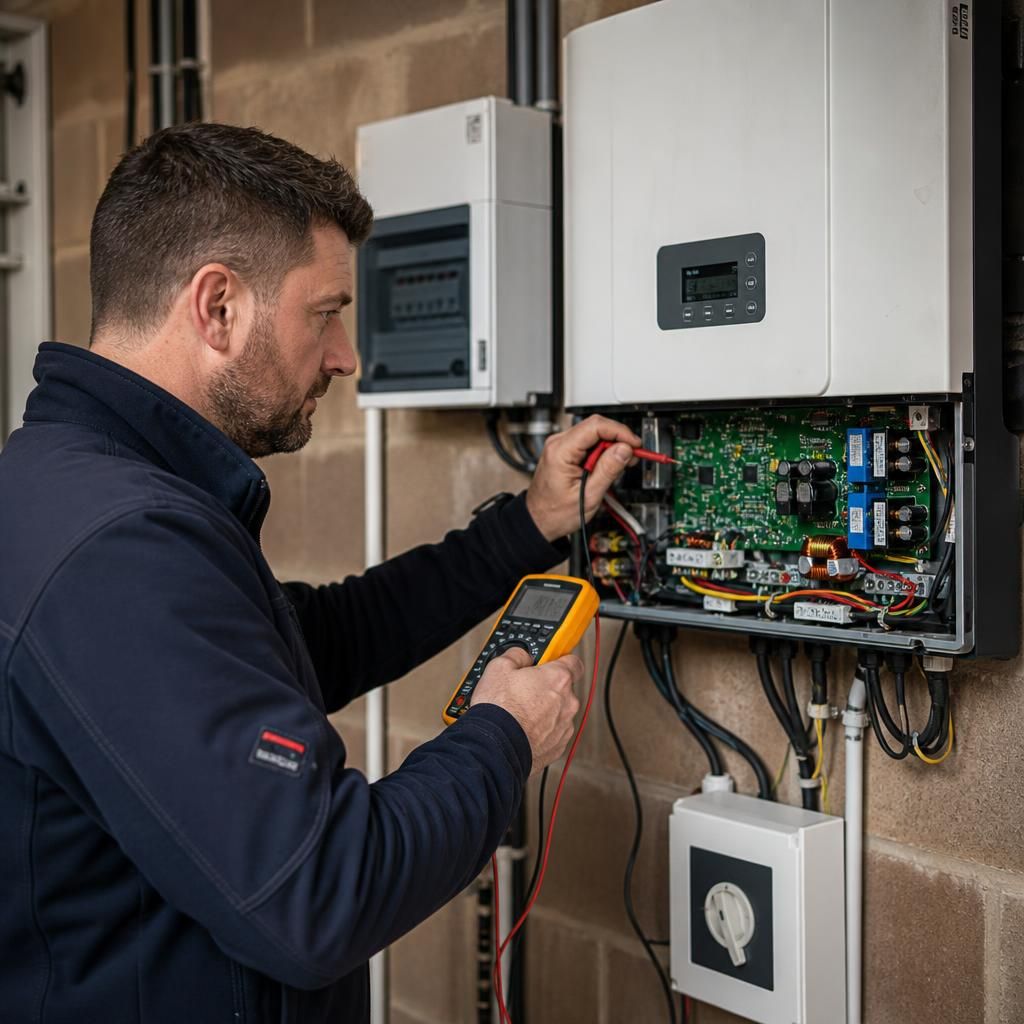
The inverter sits between the solar panels, battery, consumer unit and electricity meter. A fault in one part can produce an error on another. We therefore test the system rather than price the repair from an error code alone.
- Assessment and diagnosis: We inspect the inverter, battery connections, isolators, cables and protective devices. We also review the fault history and check whether the system is communicating correctly.
- Labour: The time depends on how accessible the equipment is and whether testing can identify the fault without removing major components.
- Parts: A replacement fuse, isolator, communication cable or cooling component is treated differently from an inverter board or complete inverter replacement. Some parts may only be available through the manufacturer.
- System testing: After the repair, we check the solar input, battery charging and discharge, export control, electrical protection and normal restart operation.
A system that stops charging the battery may have a battery fault, a communication problem or an inverter fault. A system showing no solar generation may have an issue with the DC side, isolation equipment or the inverter itself. Those possibilities have different labour and parts costs, so the first useful step is a proper assessment.
Access can affect the price too. An inverter mounted beside the consumer unit is usually easier to test than equipment in a loft, plant room or tight cupboard. We also need to allow for safe isolation and for checking cable routes where heat, moisture or rodent damage may be involved. We explain any additional work before carrying it out.
Repair is not always the cheapest long-term choice. An older inverter may need a costly proprietary part, while a replacement may restore compatibility with the battery and monitoring system more reliably. We compare the repair cost with the condition, age and remaining support for the equipment, rather than recommending replacement automatically.
If the inverter is still under warranty, using an unauthorised repair route could affect the claim. We can identify what has failed and explain whether the next step should go through the manufacturer or an independent repair. The warranty terms and available parts will determine what work is practical.
Safety matters because the system can contain live AC and DC circuits, even when the house supply has been switched off. NICEIC-registered electricians carry out the electrical testing and leave the installation operating within its protective arrangements. We do not ask you to open the inverter or disconnect the battery to help with diagnosis.
The written quotation sets out the recommended repair, parts, labour and any testing included. If the assessment finds that repair is uneconomic, the quotation can instead show the replacement route and the changes needed to reconnect the battery, solar panels and monitoring equipment.
Once the repair has been agreed, we test the system under normal operating conditions. You should then have clear information about what was found, what was changed and whether any monitoring or tariff settings need attention.
A low call-out price doesn’t always mean a lower repair cost. Some visits cover only a basic electrical check, while a hybrid inverter assessment may also need battery, solar generation and monitoring tests.
Ask whether the price includes diagnosis of the complete system, not just the inverter display. A proper comparison should show what happens if the first suspected component isn’t the cause, and whether any further visit or specialist part would be charged separately.