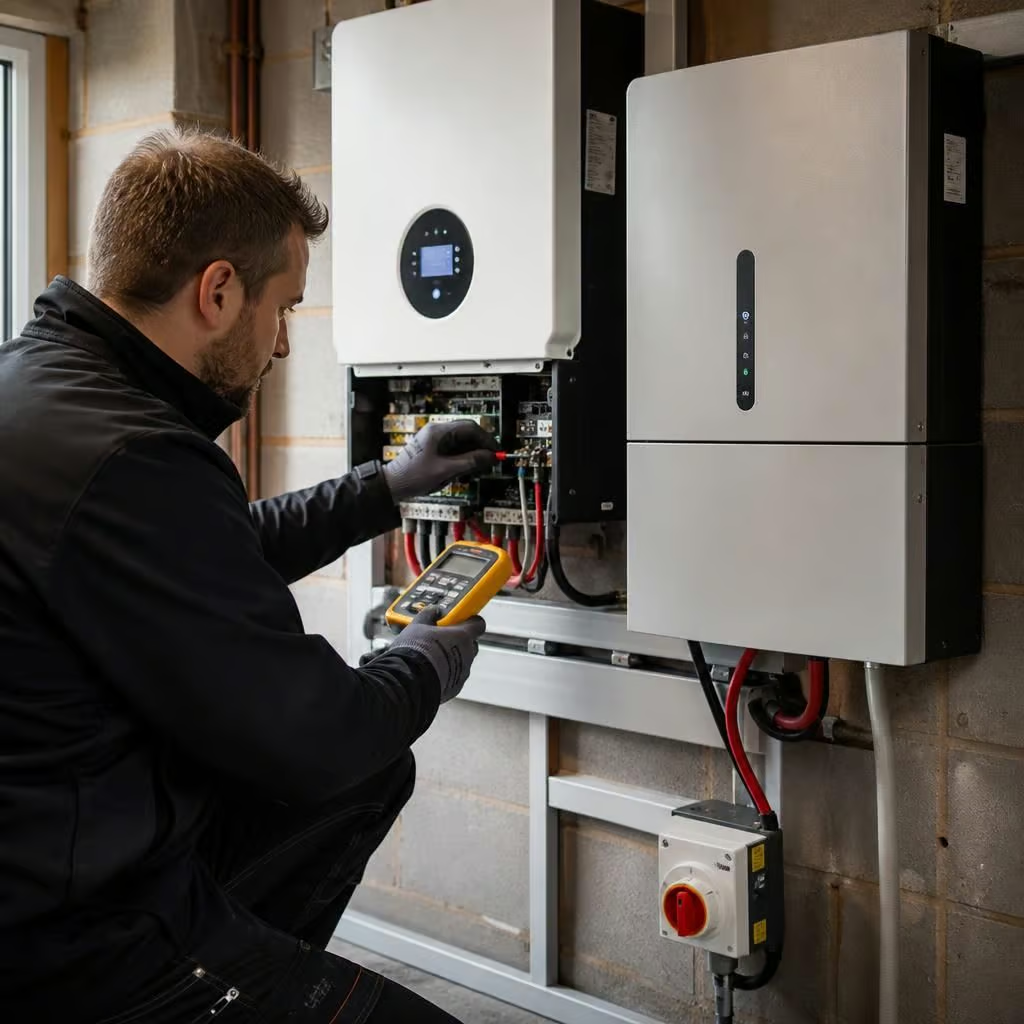
What happens during a hybrid inverter fault assessment?
If your hybrid inverter is showing a fault, we first make the system safe, then test the inverter, battery and connected circuits to identify the cause. We explain whether repair, a component replacement or further investigation is the sensible next step.
A hybrid inverter fault assessment identifies which part of the system is causing the problem and what should happen next. We separate an inverter fault from a battery, solar generation, wiring, meter or grid issue before recommending repair or replacement.
Before the assessment
Make a note of the exact message or code on the inverter display, when the problem started and whether the battery or solar panels were recently installed, serviced or altered. A photograph of the display can help us prepare.
Do not remove covers or disconnect battery cables yourself. Hybrid systems contain live AC and DC circuits, and the battery can remain an energy source even when the mains supply is off.
Establishing what has changed
We start by discussing the symptoms rather than treating the displayed code as a diagnosis. A system that stops charging may have an inverter fault, but it may also have lost communication with the battery, developed a protection fault or stopped receiving power from the panels.
We look at the system layout, recent changes and any related electrical work. On an older property, we also consider the consumer unit, protective devices, earthing and the route to the inverter. A fault can appear at the inverter even when the cause is elsewhere in the installation.
Safety and condition checks
We inspect the inverter, battery enclosure, isolators, cables and visible connections for signs of heat, moisture, impact, corrosion or loose parts. We check that the equipment is installed securely and that access remains safe.
Where testing requires isolation, we follow the correct sequence for the AC, PV and battery sides of the system. We then confirm that the system has been made safe before carrying out electrical tests. If we find damage or a condition that makes further testing unsafe, we explain that before proceeding.
Finding the source of the fault
We read the inverter’s stored events and fault history, then compare those records with what the system is doing now. We check the incoming supply, solar input, battery connection, communications and relevant protection devices.
These checks help distinguish between several common causes:
- a fault within the inverter’s power electronics or control system;
- a battery fault, low state of charge or failed communication link;
- a problem with the solar array, isolator, cable or connection;
- an electrical protection device that has operated;
- a supply, meter or grid-related issue; or
- a configuration or monitoring problem that prevents normal operation.
An error code can narrow the search, but it does not always identify the failed component. We use the code alongside test results and the system’s operating history.
What happens after diagnosis
If the cause is straightforward and a safe reset or adjustment is appropriate, we explain what we have changed and check the system’s operation afterwards. We do not repeatedly reset equipment to hide an unresolved fault.
Where a repair is practical, we explain which part or connection is involved and what access the work will require. If the battery needs separate testing, we make that clear rather than treating the inverter as the cause by default.
Replacement may be the more sensible route if the inverter is damaged, unsupported, uneconomical to repair or incompatible with the existing battery and monitoring equipment. We explain the reason for that recommendation and identify any related work, such as changes to protection, cabling or system configuration.
You receive a written quotation before chargeable work starts. It sets out the recommended work and cost, so a fault assessment does not turn into an unagreed replacement.
If the system is still under warranty
We record the inverter and battery details and avoid making changes that could interfere with the manufacturer’s warranty process. If a manufacturer inspection or replacement part is required, we explain what information is needed and which step comes next.
For a system that may need upgrading, our MCS-certified renewable energy team can also consider how the replacement fits with the existing solar generation, battery storage and export arrangements. The aim is to leave you with a clear diagnosis and a practical choice, not a guessed fault or unnecessary new equipment.
If the inverter or battery sits in a garage, plant room or outbuilding, the surroundings form part of the assessment. We look at ventilation, condensation, frost exposure and the condition of cable routes, because replacing a component without addressing the environment can lead to another fault.
If we cannot confirm safe operation, we explain which part of the system should remain isolated and what that means for solar generation, battery charging and household electricity. You’ll know what can still be used, what needs attention and why before any further work is agreed.