
Will repairing my hybrid inverter affect its warranty?
Repairing a hybrid inverter can affect its warranty if an unauthorised person opens it or uses non-approved parts, but fault assessment alone shouldn’t invalidate cover. Check the warranty terms and contact the manufacturer or installer before authorising repairs; we can help establish whether the inverter is still covered and what route to take.
Repairing a hybrid inverter does not automatically cancel its warranty. The effect depends on which warranty applies, what work is carried out and whether the manufacturer or an approved party has authorised it.
There may be more than one warranty to consider. The inverter may have a manufacturer’s product warranty, while the installation may have separate cover from the original installer. The battery usually has its own warranty too. These warranties can have different conditions, so an inverter fault does not necessarily put the battery warranty at risk.
Your paperwork should show the inverter model, serial number, installation date and warranty length. It may also explain who can inspect the equipment, which parts may be used and whether the manufacturer must approve a repair first. Some terms require faults to be reported through the original installer or the manufacturer’s service process.
A fault assessment is not the same as opening the inverter. We can begin by reviewing the error messages, system history, isolation devices, battery status and monitoring information. We also look at the installation records and ask when the fault started. This helps establish whether the issue may sit with the inverter, battery, cables, protection equipment, communications or the wider electrical installation.
That initial information can often be gathered without disturbing the inverter’s sealed enclosure. If internal work is needed, we first establish the correct route for a warranty claim. Opening the unit, changing components or altering firmware without the required approval may give the manufacturer grounds to refuse cover.
Parts matter as much as the person carrying out the repair. A replacement board, cooling fan, fuse or communications component must be suitable for that inverter and compatible with the battery system. A non-approved part can create a safety issue and may affect the remaining warranty. It can also make later fault-finding more difficult if the inverter and battery no longer operate as the manufacturer intended.
Where the manufacturer accepts the fault as a warranty matter, it may specify the testing, parts and engineer required. We follow that process rather than carrying out work that could weaken your claim. We record the fault found, the tests completed, the parts changed and the settings left in place.
The battery warranty needs separate attention. Hybrid systems share information between the inverter and battery. A repair to the inverter may affect the battery warranty if it changes charging limits, protection settings or communications. That does not mean every inverter repair invalidates battery cover. It means the battery manufacturer’s conditions should be checked before anyone changes the system.
Your installer’s workmanship cover is also different from the manufacturer’s product warranty. If the problem results from a loose connection, incorrect configuration, poor cable termination or another installation issue, the relevant responsibility may sit with the installation warranty rather than the inverter manufacturer.
If the inverter is outside warranty, repair may still be possible. We explain whether the fault appears repairable, whether a manufacturer-supported part is available and whether replacement would be more appropriate. We also consider the age and condition of the battery, because an inverter change can affect system compatibility and future support.
Before arranging an assessment, gather the inverter and battery model numbers, serial numbers, installation paperwork, warranty documents and photographs of any display messages. Do not remove covers or reset equipment repeatedly to clear an error. If there is burning, water ingress, unusual heat or a damaged cable, keep clear and arrange professional electrical advice.
After our assessment, you should know which warranty may apply, whether the system needs manufacturer involvement and what work can proceed without putting that cover at unnecessary risk. If a warranty claim is not available, we set out the repair or replacement work in a written quotation before it starts.
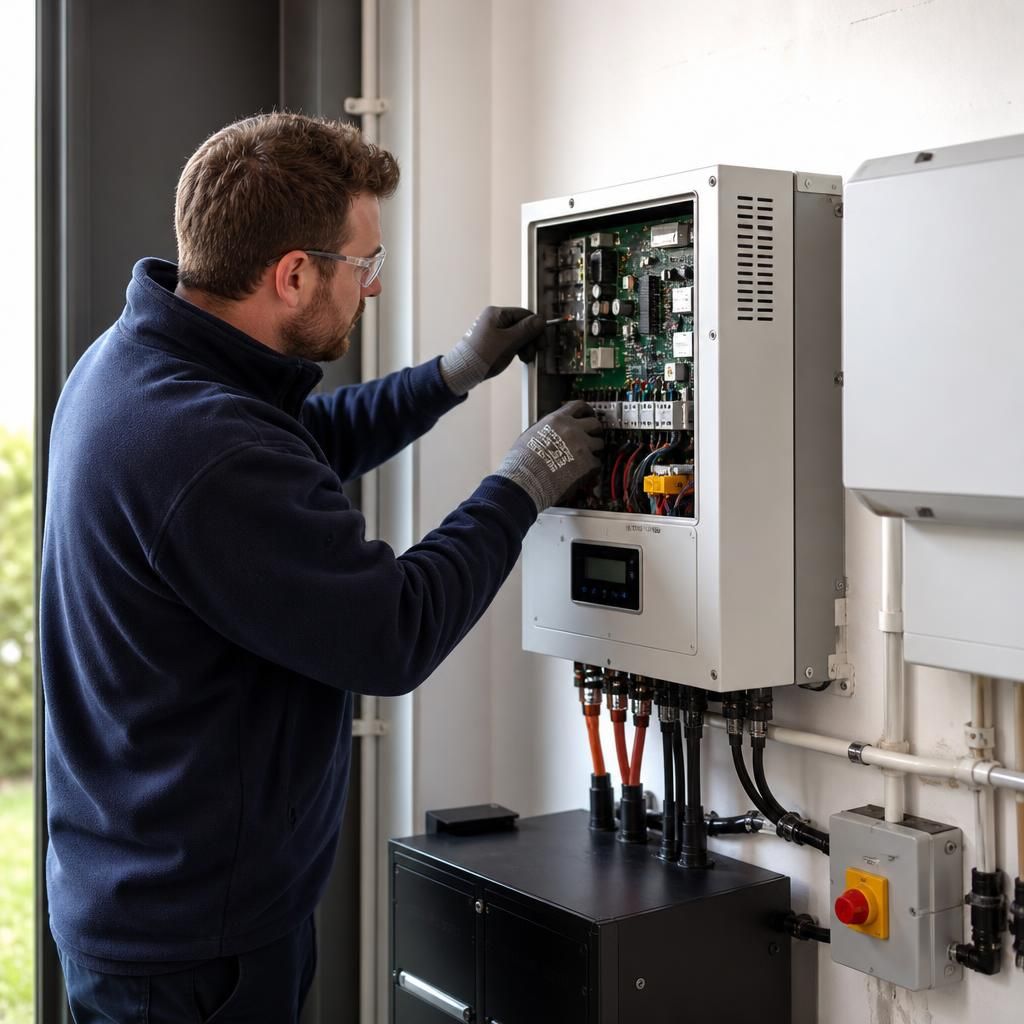
A warranty does not always cover every part of the repair. Before work is approved, ask the manufacturer or installer to confirm whether the cover includes inspection, labour, replacement parts and recommissioning.
Keep that confirmation with the system records. It should state who may carry out the work, which parts are approved and whether the repair affects the battery warranty. That gives us a clear route to follow and helps prevent an avoidable dispute over the claim or the final bill.