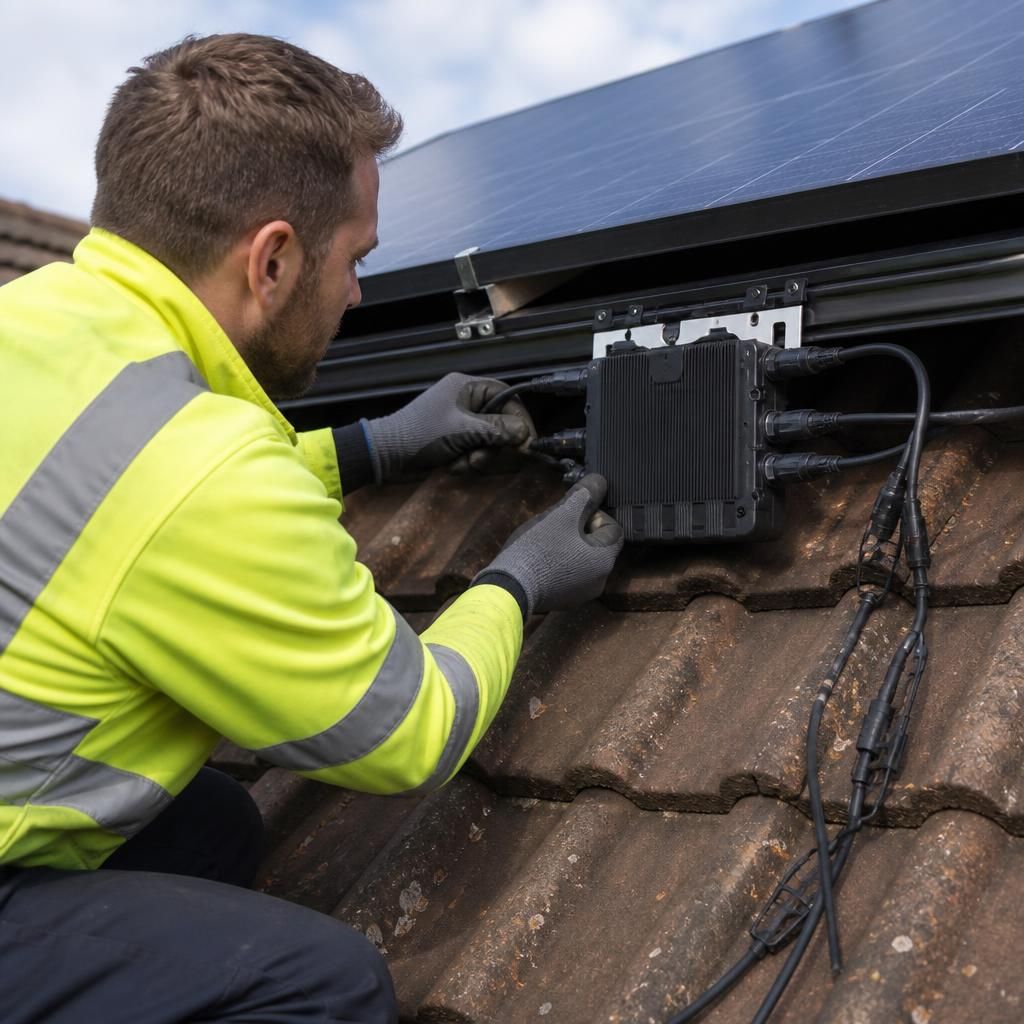
Can a faulty microinverter affect the rest of my solar installation?
Yes, a faulty microinverter can reduce or stop the output from its panel and may affect system monitoring, but it will not usually damage the other microinverters. We can test the affected unit, check the panel and cabling, and confirm whether the fault is isolated or part of a wider installation problem.
The important distinction is between a panel-level failure and a fault on shared AC equipment. A failed microinverter normally affects the panel beneath it. A problem with the AC cabling, isolator, consumer unit or monitoring gateway can affect several panels, or prevent the system from exporting electricity safely.
The effect on the rest of the installation depends on how the fault presents:
- One panel shows no production: the microinverter, panel connection or cabling beneath that panel may need investigation.
- Several neighbouring panels disappear together: the shared AC trunk cable, connector, isolator or protective device becomes more likely.
- The whole system goes offline: the fault may sit in the AC protection, inverter communications, export connection or monitoring equipment rather than in one microinverter.
- Production appears normal but readings look wrong: the monitoring system may have lost communication without the panels actually stopping generation.
A microinverter fault can also make the installation look healthier than it is. The remaining panels may continue producing, while the missing panel reduces the day’s generation every time the system operates. Monitoring data can show a gradual loss rather than an obvious shutdown, particularly when weather conditions change throughout the day.
There is also a safety question. Heat, water ingress, damaged connectors or an electrical fault can place stress on the associated cabling and protection. Do not remove a panel or reach beneath it to inspect the equipment. Solar panels can still generate electricity in daylight, even when the household display shows no output.
We start by comparing panel-level readings with the system’s overall output. We then check the accessible AC equipment, isolators, protective devices, cable routes and monitoring information. This helps separate a failed microinverter from a panel fault, a communications problem or a wider installation fault. We do not treat a single warning message as proof that the microinverter itself has failed.
Where the evidence points to one unit, the rest of the system may remain in service while the repair is arranged, provided the installation is electrically safe. If the fault involves shared wiring or protection, we may need to isolate a larger section until it has been checked. That can temporarily remove more panels from generation, but it avoids leaving a known electrical fault connected.
Access can be the practical difficulty. Microinverters are fitted beneath panels, so a replacement may require panel removal and safe access to the roof. We check the panel fixings, cable connections and surrounding equipment rather than replacing a unit without investigating the cause. If water ingress, heat damage or a damaged connector is present, replacing the microinverter alone may not resolve the problem.
After the repair, we check that the affected panel is producing, that the other panels remain visible, and that the monitoring information matches the electrical tests. You should receive a clear explanation of what failed and what was checked, rather than being left to interpret a warning notification yourself.
If the system has a battery, export meter or other connected equipment, a solar fault can also affect the information those devices receive. It does not automatically mean the battery is faulty. We assess the solar generation and connected equipment separately before recommending further work.
Send us the monitoring warning, the date the problem began and any change in the system’s display if you have them. A photograph of the accessible inverter, isolators and consumer unit can also help us understand the installation before we attend. Do not climb onto the roof or disconnect solar equipment yourself.
A microinverter fault does not normally create a chain reaction through healthy microinverters. Each unit works with its own panel, so the usual result is reduced generation from one section rather than damage to the whole array.
The shared AC route is the important exception. A problem there can disconnect several microinverters together, which is why we trace the affected circuit before treating the fault as a single-unit failure. You’re then left with a clear answer about what has stopped producing and whether the remaining installation can stay connected safely.