
How do you access a faulty microinverter beneath a solar panel?
Usually, a faulty microinverter is accessed by safely isolating the solar system and lifting or removing the panel above it. This involves roof work and live DC equipment, so a qualified solar engineer should inspect and replace it rather than attempting access yourself.
The microinverter cannot normally be reached from inside the loft. It is fixed to the roof structure beneath its solar panel, so the panel above it must be lifted carefully after the system has been made safe.
Before any panel is moved, we identify which unit is affected. A monitoring alert may point to one microinverter, but the same symptom can come from a loose connector, damaged cable, a panel fault or an issue on the AC circuit. We compare the monitoring information with electrical tests rather than replacing a unit based on an alert alone.
Access depends on the roof covering and the panel layout. On a standard tiled roof, we plan a safe route to the affected panel and protect the roof tiles and panel frame while working. A roof-integrated system, slate roof or awkwardly positioned array may need a different method. We assess that before starting, because forcing access can damage the roof or the panel.
Once the area is accessible, we isolate the relevant electrical circuits and confirm that they are safe to work on. The panel is then released from its mounting points and supported while we disconnect it from the system. Solar panels are rigid but fragile, and their cables and connectors can be damaged if the panel is dragged, twisted or rested on an unsuitable surface.
With the panel lifted, we can inspect the microinverter and its connections. We look for water ingress, heat damage, corrosion, loose plugs, cable strain and damage to the mounting hardware. We also check the panel-side connections and the cable leading back through the array. A replacement will not solve the problem if the original fault is elsewhere.
The replacement unit must match the electrical requirements of the panel and the existing installation. We check the connector type, cable arrangement, system configuration and monitoring requirements before fitting anything. This matters particularly on older arrays, where connectors, clips or cables may have become brittle through exposure to weather.
After the microinverter has been changed, we refit the panel securely and check that its cables cannot rub against the roof or sit under tension. We then test the affected circuit and the wider array. Depending on the system, the monitoring may also need the replacement unit to be recognised or configured before its output appears correctly.
- The whole roof array does not normally need to be removed. We aim to access the affected panel and keep the work limited to the relevant section.
- The panel is not a safe cover to lift yourself. It may still produce DC electricity in daylight, even when the household electricity supply is switched off.
- The fault may not be the microinverter. Testing helps prevent unnecessary replacement costs and identifies cable, connector or panel faults.
- Roof access can be the main practical issue. Fragile coverings, steep pitches and roof-integrated panels need additional care and planning.
You should not disconnect a microinverter or lift a solar panel without the right electrical and roof-access equipment. The system can remain electrically live, and a fall or damaged panel can create a much larger repair. If the monitoring shows one unit has stopped reporting, send us the alert details and any system information you have. We can then assess the likely fault, plan access and explain what needs to happen before work begins.
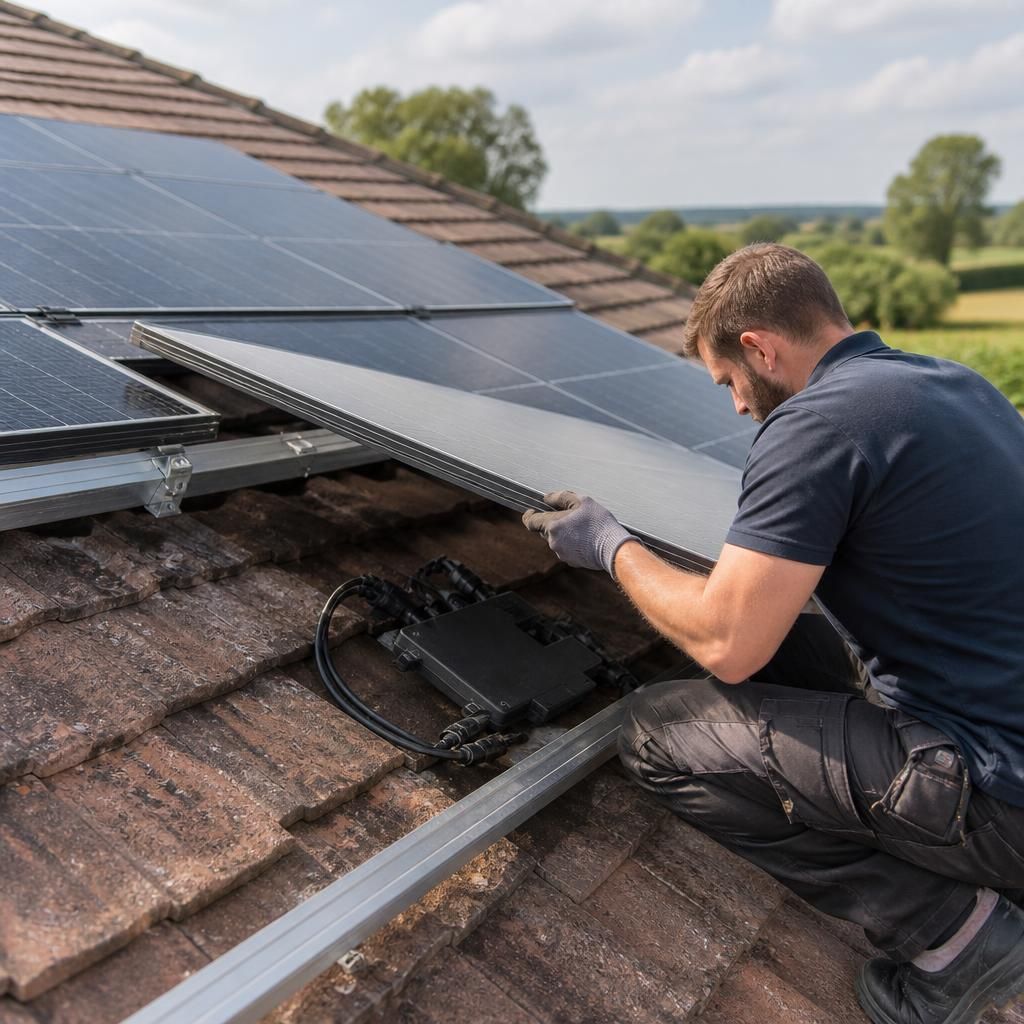
Access work should leave both the roof and the electrical system ready for continued use. We record the panel position, cable routing and connector condition before disturbing anything, then check the mounting points after refitting. That gives us a clear reference if the monitoring fault remains and helps prevent a small microinverter repair becoming a wider roof or wiring problem.