
How long does an Enphase microinverter replacement take?
An Enphase microinverter replacement is usually a short electrical job once the correct unit and safe panel access are confirmed. The total time depends on diagnosing the fault, reaching the microinverter beneath the panel and commissioning the replacement with the rest of the system.
The electrical replacement is usually completed during one planned visit. The overall timing depends on safe roof access, identifying the correct unit, and whether the system needs further testing after the change.
Before arranging the work, we confirm which microinverter has failed and check the installation around it. We look at the monitoring information, inspect the relevant circuit and establish whether the fault is limited to one unit. This avoids removing a panel when the cause is elsewhere, such as a cable, isolator or communication problem.
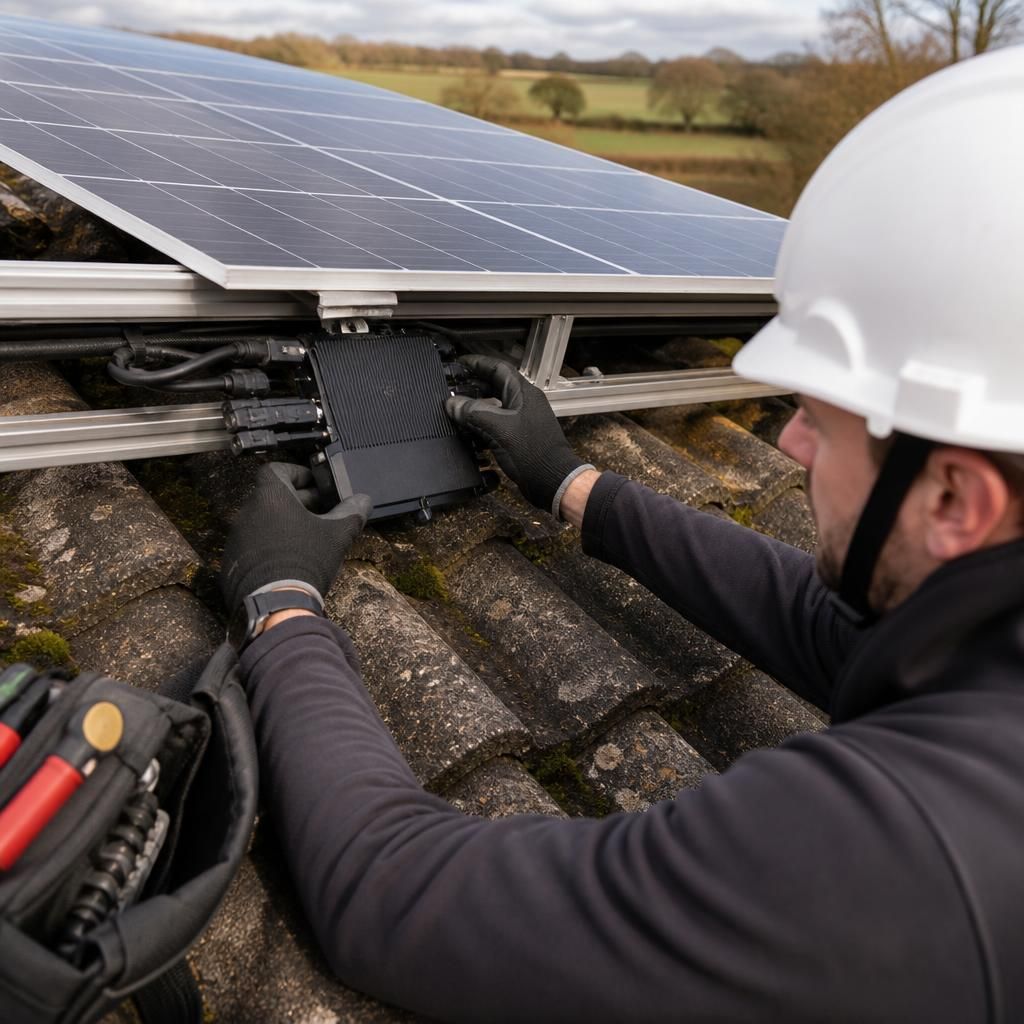
Access is often the main factor. A microinverter is normally fixed beneath its solar panel, so we need a safe way to reach the panel without damaging the roof or surrounding equipment. A low roof with suitable access may need little preparation. A steep roof, fragile tiles, a listed building or limited space around the array may require additional access arrangements before the replacement can go ahead.
The work itself involves isolating the relevant electrical circuits, reaching the microinverter, disconnecting the faulty unit and fitting the replacement. We then check the connections, secure the panel and restore the system in the correct sequence. The replacement must be compatible with the array and installed in accordance with the manufacturer’s requirements.
A unit may need to be ordered before the visit if the exact model is not already available. We confirm this when we assess the fault, rather than removing the panel and leaving the system incomplete. If the model has changed or the original unit is no longer available, we check the proposed replacement against the panel characteristics and the rest of the installation first.
Testing and commissioning can add to the appointment. We check the affected panel’s output, confirm that the microinverter communicates with the monitoring system and look for any remaining fault indication. If the monitoring platform needs an account change or a network reset, we explain what is required before the system is signed off.
Your solar generation may remain reduced until the replacement is fitted. A single failed microinverter normally affects the panel connected to it, but we still test the wider installation because a shared cable, isolator or communications fault can produce similar symptoms. Finding that distinction early helps prevent an unnecessary replacement.
After the assessment, we can tell you whether the work should be completed in one visit or needs separate access or parts arrangements. Our NICEIC- and ECA-recognised electrical work includes the testing and paperwork needed to leave the affected part of the installation safe and properly recorded.
If roof repairs, tile replacement or scaffolding are already planned, tell us before the replacement is booked. We can then consider the access arrangements alongside that work, rather than planning them separately.
That can make the appointment more straightforward, but we still need to confirm the replacement is suitable and test the system afterwards. We’ll explain any remaining monitoring issue before we leave, so you know whether the installation is fully reporting again or needs a separate account or network change.