
Will a replacement Enphase microinverter work with my existing panels?
Often, yes, but a replacement Enphase microinverter isn’t automatically compatible with every existing panel. We check the panel’s electrical ratings, the installed Enphase system and its communications equipment before confirming whether the panel can stay and which replacement will work.
In many cases, an Enphase microinverter can be replaced without replacing the solar panel above it. The panel and replacement unit still need to match electrically, mechanically and digitally. A panel’s wattage alone does not confirm compatibility.
Your panel has several electrical values that matter. We compare its maximum power, operating voltage, open-circuit voltage and short-circuit current with the replacement microinverter’s limits. We also allow for the higher voltage a panel can produce in cold conditions. A unit that appears suitable on paper may still be wrong if its operating range does not suit the panel.
The panel’s age and condition also affect the recommendation. Its original label may be faded or inaccessible, so we use installation records, photographs and electrical testing where available. If the panel model cannot be identified reliably, we do not guess. We can assess the live system and explain the level of certainty before any replacement work starts.
The connectors must match as well. The panel lead, connector type, polarity and cable condition all form part of the check. A connector that looks similar may not be electrically or mechanically compatible. We do not treat an unapproved adaptor as a substitute for confirming the correct connection.
The replacement must also fit the existing AC side of the installation. We check the microinverter’s connection to the AC cabling, earth arrangements, protective devices and the way the array is divided into circuits. This matters particularly when one failed unit sits within an older installation or alongside different microinverter models.
A model-for-model replacement is not always necessary. If the original Enphase unit is no longer available, a later compatible model may work with the panel and the rest of the array. We check the manufacturer’s technical requirements rather than assuming that a newer unit will communicate with older equipment. In some mixed systems, replacing one unit may require additional commissioning work or a wider review of the affected circuit.
Monitoring is a separate part of compatibility. Your replacement microinverter must be added to the system so that its production can be recorded correctly. We check the monitoring equipment and software arrangements, register the new serial number where required and confirm that the unit reports after commissioning. A microinverter can generate electricity while still appearing offline in the monitoring system, so both functions need testing.
We also look for faults that may have caused the original failure. Damaged DC cabling, water ingress, a poor connection, overheating or an AC-side problem can leave a replacement exposed to the same fault. Finding and correcting that cause is more useful than simply fitting another unit.
During the assessment, we review:
- the panel make, model and electrical specifications;
- the replacement microinverter’s voltage, current and power limits;
- the DC connectors, polarity, cable condition and earthing;
- the AC cabling, circuit protection and array layout;
- the existing monitoring equipment and commissioning requirements; and
- the condition of the panel, mounting area and accessible connections.
If the panel and system pass those checks, we can normally replace the faulty microinverter while retaining the panel. If they do not, we explain whether the safer option is a different compatible unit, further testing or replacement of more equipment. That gives you a clear decision before work begins, rather than finding out after an incompatible part has been installed.
We provide the recommendation and quotation after checking the actual installation. The quotation sets out the required work before it starts, including any monitoring or testing needed to leave the system operating and reporting properly.
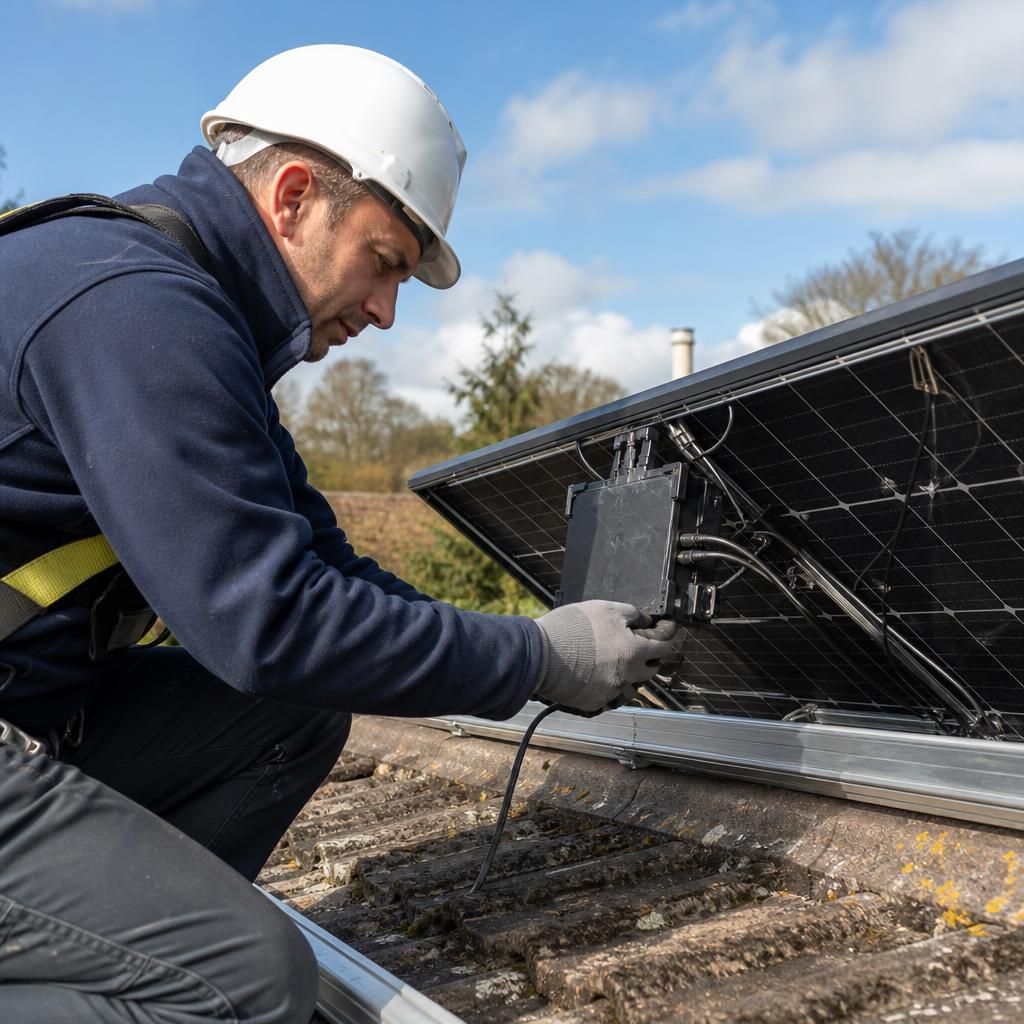
The panel and microinverter don’t need to carry the same manufacturer name. Compatibility depends on the panel’s electrical output and the microinverter’s permitted input range, not on matching logos.
That means an existing panel can often stay in place when its original microinverter is replaced. We confirm the technical match first, so the replacement is chosen for the panel actually fitted rather than for its brand or appearance.