How long does a renewable energy installation take?
The timescale runs from the initial survey and design through to commissioning, and varies with the technology and property: solar panels and batteries are usually simpler to install than an air source heat pump. We confirm the expected programme after checking the roof, electrical system, heating system, planning requirements and any grid connection work.
Solar panels and battery systems usually involve a shorter installation programme than an air source heat pump. A heat pump takes longer because we may need to alter radiators, pipework, controls and the electrical supply as well as fit the outdoor and indoor equipment. The full timescale runs from the initial survey through to testing and commissioning, not just the time spent on site.
The survey determines the realistic timetable. We inspect the roof, loft, consumer unit, meter position and cable routes for solar and batteries. For a heat pump, we also assess insulation, room heat loss, radiators, pipework, hot water requirements and the position of the outdoor unit. An older property may need more preparation than a modern home, particularly if it has solid walls, oil or LPG heating, small radiators or limited electrical capacity.
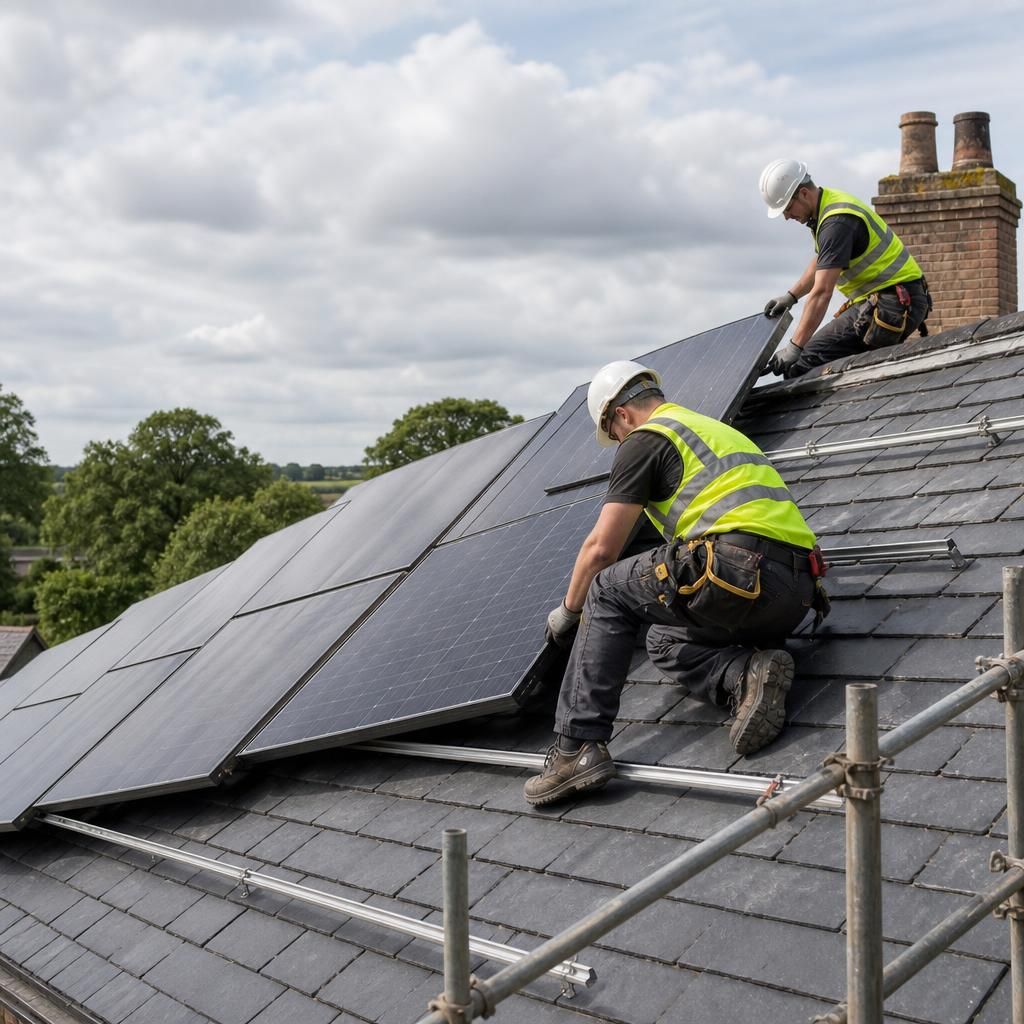
- Solar PV: A straightforward roof installation can often be completed within one working day. The work may take longer where scaffolding, roof repairs, complex cable routes or consumer unit changes are needed.
- Battery storage: A battery fitted alongside solar normally adds less installation time than a separate system. The duration depends on the battery position, cable route, inverter arrangement and the condition of the existing electrical installation.
- Solar and battery together: Installing both systems during the same project can reduce duplicated preparation and testing. We still need to check that the inverter, meter arrangement and consumer unit can safely support the complete system.
- Air source heat pumps: These usually take several days when the system includes the outdoor unit, hot water cylinder, controls, new radiators or pipework alterations. A simpler replacement may need less work, while an older heating system can require additional preparation.
Some of the elapsed time happens before installation starts. We may need approval from the electricity network operator for the proposed generation or battery capacity. Planning conditions can also affect the position of solar equipment or an air source heat pump, especially at a listed property or in a conservation area. We identify these requirements during the design process rather than treating them as an installation-day surprise.
Roof access has a direct effect on the solar programme. Scaffolding may be needed, and the roof must be suitable for the panel layout and fixing method. Trees, dormers, chimneys and nearby buildings can alter the design. If the roof needs remedial work, that should happen before the panels are fitted.
Electrical work can change the installation sequence. An older consumer unit, inadequate earthing or an unsuitable meter position may need attention before the renewable equipment is connected. We explain any required upgrade in the quotation, along with its effect on the programme. We do not connect new equipment to an installation that needs safety work first.
Heat pump projects need a more detailed heating assessment. Your existing radiators may not deliver enough heat at the lower flow temperatures used by a heat pump. We calculate the heat loss for each room and check the pipework before recommending changes. That may mean replacing selected radiators, increasing pipe sizes or moving controls. These changes add work, but they help the system heat the home properly rather than leaving the heat pump working harder than necessary.
The location of the outdoor unit can also affect the timetable. We check clearances, access, drainage, noise considerations and the route for refrigerant or heating pipework. If the unit needs a concrete base, wall bracket or a longer route through the building, we include that work in the plan.
On the installation day, we protect floors and working areas, then fit the equipment and complete the associated electrical or heating work. The system is not finished when the panels, battery or heat pump are physically in place. We test the wiring, controls, safety devices and system settings before commissioning it.
Commissioning is the final stage and should not be rushed. For solar and batteries, we check generation, battery charging and export settings. For a heat pump, we balance the heating system, set the controls and check hot water operation. We explain the controls before leaving and provide the paperwork needed for the completed installation.
Our MCS certification is important at this stage as well as during design. It allows us to make an eligible Boiler Upgrade Scheme application on your behalf for a heat pump and means an eligible installation can apply for the Smart Export Guarantee. The relevant certificates and commissioning information are completed as part of the handover.
Your quotation should separate the expected on-site installation time from the wider project timetable. It should identify surveys, approvals, scaffolding, electrical or heating alterations, commissioning and handover. We set out those stages before work starts, so you can see what may affect the date and what is included in the price.
The installation length is not the same as the disruption to your home. Solar work is concentrated around the roof, loft and electrical equipment. A heat pump installation may require access to several rooms while we connect radiators, pipework, controls and the hot water cylinder.
Before work starts, ask which rooms need access and when heating, hot water or power may be interrupted. We can then plan the work around the property and explain what to expect each day, rather than leaving the practical details unclear.