
What maintenance will a renewable energy system need after installation?
After installation, most renewable energy systems need monitoring, periodic professional checks and occasional servicing rather than daily attention. We check performance, connections, controls and moving parts where relevant, then deal with faults before they affect your energy use.
Most renewable energy systems need little routine attention, but planned checks help identify faults before they affect generation, heating or battery storage. The maintenance required depends on the equipment, its age, the installation conditions and the manufacturer’s instructions.
We set out the recommended checks after installation and can keep a record of work carried out. That gives you a clear history for warranty queries, future repairs and decisions about adding more panels or storage later.
Solar PV maintenance
Panels usually have no moving parts, so the main concerns are damage, dirt, shading and electrical faults. Leaves, moss, bird fouling or new tree growth can reduce output. We look at the panels, roof fixings, cable routes and inverter, then compare the system’s performance with what the monitoring data shows.
Heavy dirt is not always a reason to arrange cleaning. Rain removes ordinary dust, while panels on a shallow roof or beneath trees may need more attention. We can advise whether cleaning is worthwhile and identify any safety issue with accessing the roof. Do not climb onto the roof or disconnect equipment yourself.
The inverter often gives the first warning that something is wrong. Warning lights, error messages or a sudden fall in generation may point to an issue with the inverter, wiring, isolators or the wider electrical system. We trace the fault rather than treating the displayed code as the diagnosis.
Battery storage maintenance
A battery should remain within the operating conditions set by its manufacturer. Alarms, unusual temperature readings, unexplained changes in charging behaviour or a battery that stops communicating with its monitoring system need investigation.
We check the battery enclosure, isolators, cabling, ventilation and control settings. We also look at how the battery is interacting with the solar array, household demand and any export arrangement. Firmware or configuration changes should be completed through the appropriate manufacturer process, not by changing settings at random.
If a battery has been damaged, smells unusual, becomes excessively hot or shows a serious fault, keep away from it and follow the manufacturer’s safety instructions. Do not remove covers or attempt to reset electrical protection repeatedly. We can assess the installation and make it safe before carrying out further work.
Air source heat pump maintenance
Your heat pump relies on good airflow outside and clean water circulation inside. Leaves, vegetation or stored items around the outdoor unit can restrict airflow. We check the fan area, coil, drain route and supports, while taking care not to damage the fins.
Inside the property, filters, strainers, pumps, valves and system pressure all affect performance. We check the controls and heating circuit, including radiators or underfloor heating, so the system can deliver heat without working harder than necessary. A blocked filter or trapped air can cause poor circulation even when the heat pump itself is operating correctly.
Heat pumps also produce condensate during operation and may enter a defrost cycle in cold weather. We check that water can drain safely and that the controls respond as intended. Refrigerant work must be carried out by an appropriately qualified engineer, rather than treated as a routine DIY task.
How often is maintenance needed?
There is no single interval that suits every installation. The correct schedule comes from the manufacturer’s instructions, the equipment warranty, the property and how heavily the system is used. A rural property with nearby trees, animals or dust may need different attention from a clear urban roof. An older heating system may also need more checks than a new, clean installation.
We explain which tasks you can safely observe and which require an engineer. You can watch the monitoring portal, check for visible damage and keep the area around an outdoor unit or battery clear. Electrical covers, battery enclosures, refrigerant circuits and roof equipment should be left to qualified professionals.
What happens if the system develops a fault?
Start by noting the warning message, the time the problem began and any change in generation, charging or heating. A photograph of the display can help us understand the fault before we attend. Avoid repeatedly switching equipment on and off if protection has tripped.
We test the affected part, inspect related equipment and explain whether the repair involves a component, wiring, controls or a wider system issue. If a replacement part is needed, we explain the work before it starts. Written quotations are provided for planned work, with no surprise charges.
Maintenance does not prevent every failure, and it cannot correct an unsuitable system design. If performance remains poor after servicing, we look at the underlying cause, such as shading, incorrect settings, restricted circulation, an undersized electrical connection or a change in household demand.
For solar panels, batteries and heat pumps, MCS certification also matters when paperwork is needed for a grant application or Smart Export Guarantee eligibility. Keeping installation and maintenance records makes that history easier to evidence. We can review the original design, the equipment and the records together before recommending further work.
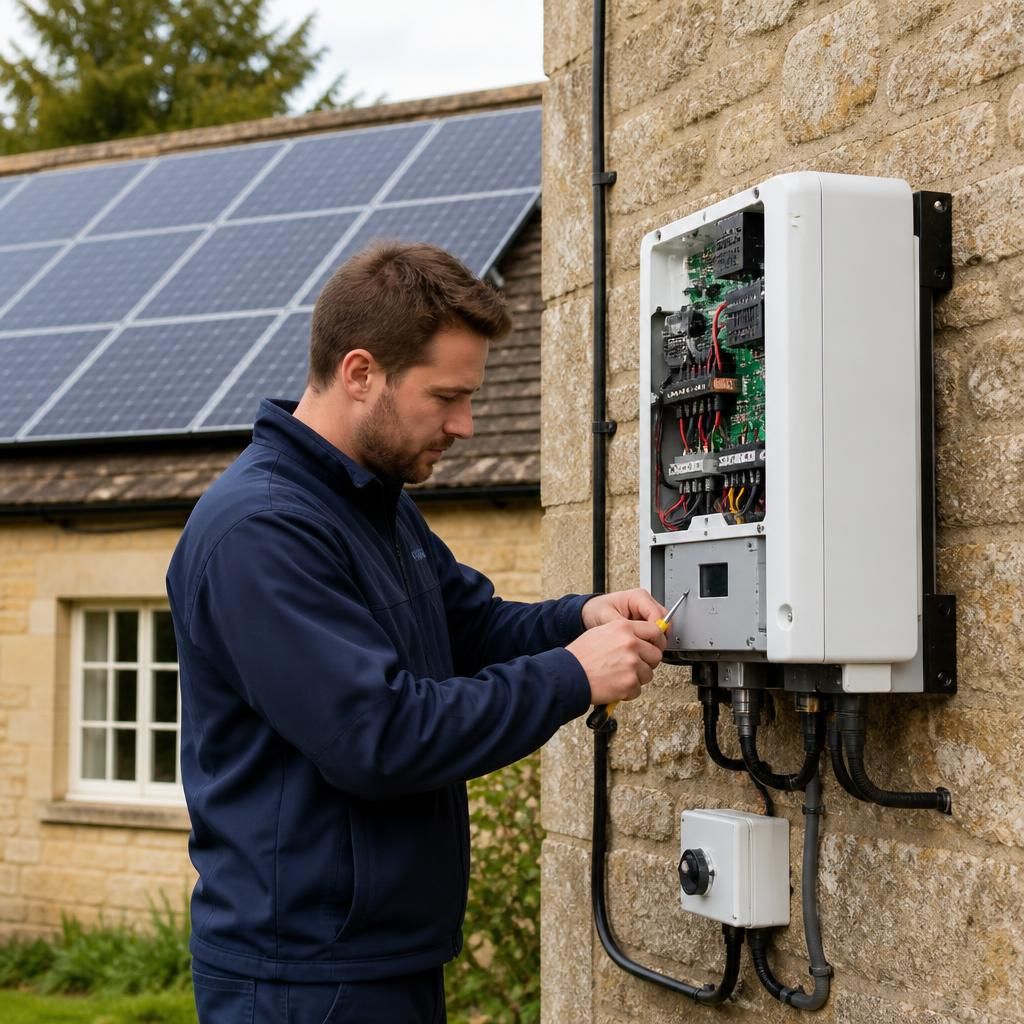
After installation, you should know what normal operation looks like. We explain the controls, monitoring readings and isolation points, then note the recommended service tasks for each part of the system.
That information helps you spot a genuine change rather than treating every message as a fault. Keep the manuals, commissioning details and maintenance notes together. If you later need a repair, we can use that information to understand the system without starting from scratch.