
What qualifications should a renewable energy installer have?
A renewable energy installer should hold MCS certification for solar, batteries or heat pumps, alongside the electrical qualifications needed to connect and test the system safely. They should also be able to survey your property, explain the design and complete the required paperwork—not simply fit the equipment.
The right installer needs more than a qualification to fit panels or connect a battery. They should be able to assess the property, design the system, complete the electrical or heating work safely, and provide the certificates needed afterwards. The credentials should also cover the technology being installed, rather than renewables in general.
Check that the certification matches the system. Solar PV, battery storage and air source heat pumps involve different design and installation requirements. An installer may be experienced with solar but not qualified to design a heat pump system. Ask which technologies the installer is certified to install and whether that certification applies to the work at your property.
For MCS-certified work, check the installer’s current certificate and its scope. MCS certification shows that the business works to recognised standards for the relevant renewable technology. It also matters if you plan to apply for the Boiler Upgrade Scheme or receive payments through the Smart Export Guarantee. An MCS-certified installer can make a Boiler Upgrade Scheme application on your behalf, and MCS certification makes an installation eligible for the Smart Export Guarantee, subject to the scheme’s other requirements.
The electrical work needs its own competence. Solar panels and batteries are not simply connected to an existing consumer unit. The installer needs to calculate cable sizes, select suitable protection, provide safe isolation and test the completed installation. The design should account for the inverter, battery, generation capacity, export arrangements and the condition of the existing electrical system.
That last point matters in older homes. An ageing consumer unit, limited incoming supply or outdated wiring may need attention before renewable equipment can be connected. We identify those issues during the survey, so necessary electrical work is considered before the installation date rather than appearing as an unexpected problem halfway through the job.
Heat pump work needs heating and design knowledge as well as electrical expertise. The installer should calculate the heat loss for each room, assess the insulation and establish whether the existing radiators can deliver enough heat at lower flow temperatures. They should also review the pipework, hot water cylinder, controls and available space for the outdoor unit.
A heat pump can be suitable for an older or off-gas-grid property, but the answer depends on the building and the proposed design. Solid walls, extensions, high ceilings and a previous oil or LPG heating system all affect the calculation. We look at the whole heating system rather than treating the heat pump as a direct boiler replacement. That may mean identifying radiator or pipework changes before a reliable quotation can be prepared.
The installer should also understand the parts of the job that sit outside the equipment itself. This includes the outdoor unit’s position, noise, condensate drainage, planning requirements and any work needed to bring the system into the property. If a gas boiler is altered as part of a hybrid or replacement heating system, the person carrying out that gas work must be Gas Safe registered. For oil-fired equipment, OFTEC registration is the relevant requirement.
Ask who will actually do the work. A company may hold the required certification while sending different subcontractors to complete the installation. That can make responsibility for design changes, testing and remedial work unclear. We use directly employed electricians and engineers, with the electrical, heating and renewable elements coordinated by the same team. This is particularly useful when a heat pump also needs radiator changes, consumer unit work or new controls.
Experience matters alongside certificates. A qualified installer should be able to explain why a particular system suits the property, where it will go and what needs changing. They should be willing to say when a roof, electrical supply or heating system makes a proposal unsuitable. A quotation that assumes every existing component can remain may look simpler, but it does not show that the design has been properly investigated.
The survey should demonstrate competence before any equipment is ordered. For solar and batteries, the installer should consider roof orientation, shading, roof condition, cable routes, inverter location, battery clearance and the existing electrical installation. For a heat pump, the survey should cover heat loss, insulation, emitters, pipework, hot water demand, controls and the position of the outdoor unit.
On a listed building, barn conversion or rural property, the survey may need more care. Restricted roof areas, thick walls, unusual construction and long routes between buildings can affect the design. We use the survey to separate essential work from optional improvements, then set out the assumptions in writing.
Good qualifications should result in clear paperwork. Before work starts, ask for a written quotation that identifies the equipment, design assumptions, included electrical or heating changes, exclusions and any planning or grid responsibilities. The price should not rely on vague allowances for items that are central to the system.
After installation, you should receive the relevant commissioning information and electrical test documentation, together with operating instructions, warranties and details of the installer’s maintenance responsibilities. For an MCS installation, the MCS certificate and any information needed for grant or export applications should also be explained. The handover should leave you knowing how to use the controls, monitor generation or storage, and contact the installer if a fault develops.
Manufacturer training can add useful product knowledge, but it does not replace the core qualifications. The installer still needs the right competence to design the complete system and connect it safely. Ask whether the person surveying the property is involved in commissioning, and who remains responsible if equipment supplied by different manufacturers has to work together.
In practical terms, look for four things: certification that covers the chosen technology, proven electrical or heating competence, a survey that deals with the actual property, and complete paperwork after commissioning. Those checks tell you more than a long list of logos. They show whether the installer can take responsibility for the system from its first design decision through to its safe operation.
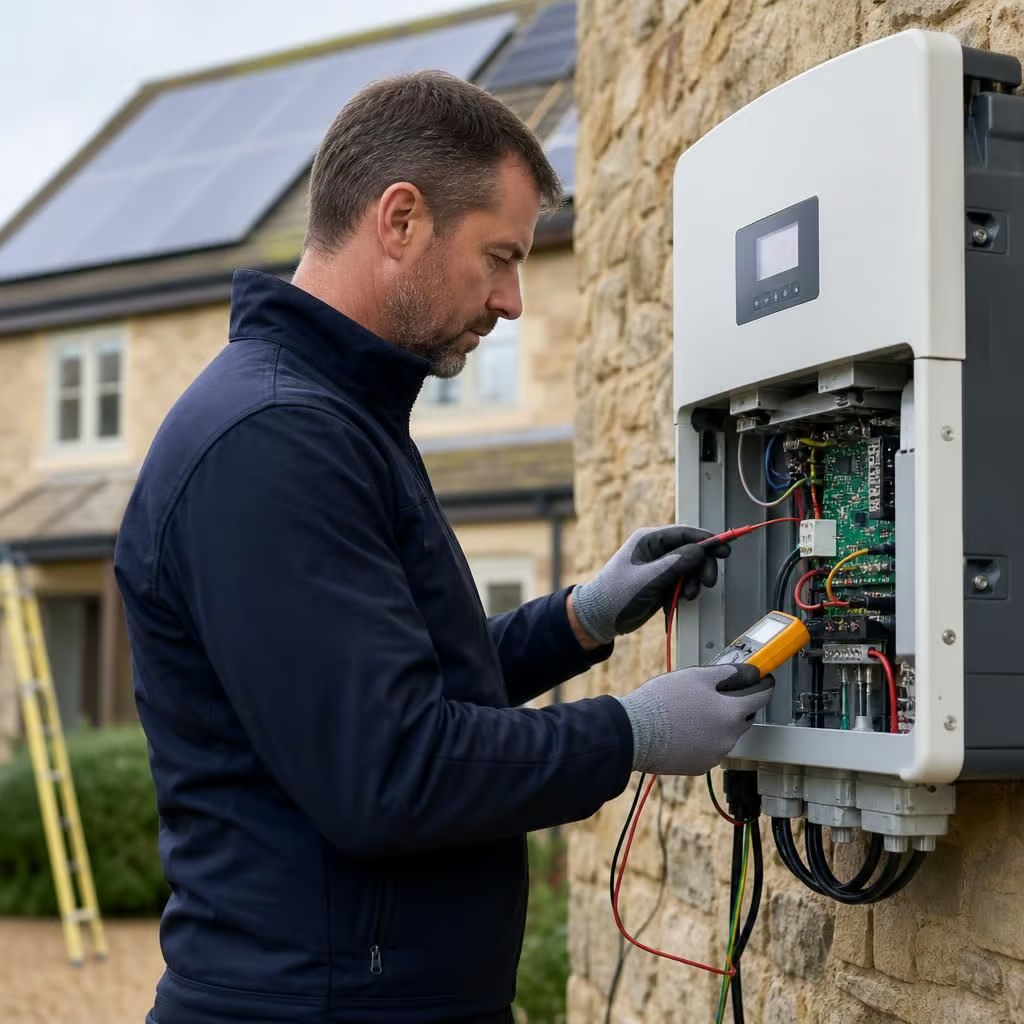
When a project combines solar panels, battery storage and an EV charger, separate certificates don’t automatically prove that the whole system has been designed properly. Ask who takes responsibility for the complete design, not just for fitting each item.
We set out how the equipment will work together, including the inverter, battery controls, consumer unit and export arrangements. That gives you one clear design to review before work starts, rather than several disconnected installation decisions.