How long does a solar inverter repair take?
A straightforward solar inverter fault can often be repaired during the diagnostic visit. If the inverter or a specialist part needs replacing, the repair will take longer while we identify and source the correct equipment.
There is no single standard timescale for a solar inverter repair. A minor fault may be corrected as part of the diagnostic visit. A failed component, unavailable part or complete inverter replacement will usually require further work after we have confirmed the cause.
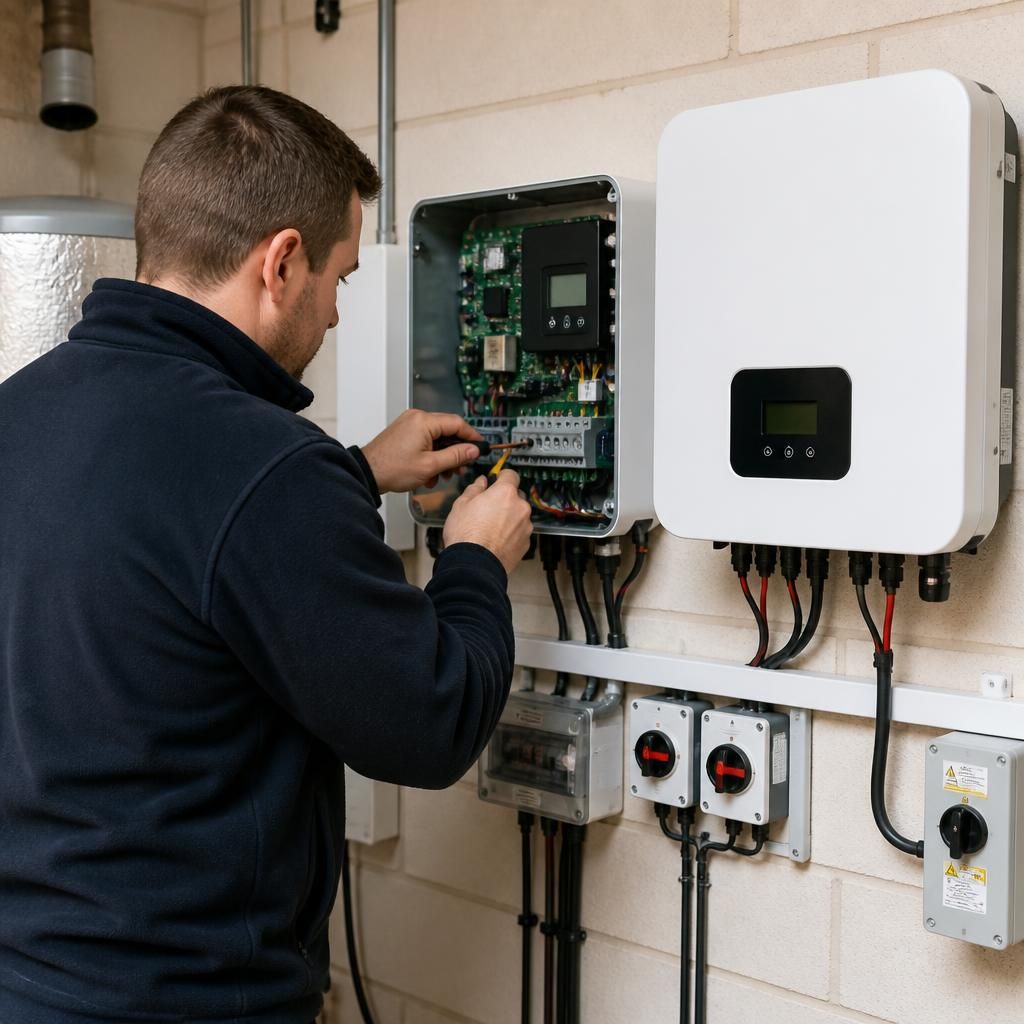
The first visit is about separating an inverter fault from a problem elsewhere in the system. We check the inverter display and stored fault codes, then test the relevant AC and DC connections, isolators, fuses, cabling and monitoring equipment. If the inverter is part of a battery system, we also check whether the battery or its communication link is causing the warning.
A blank display does not always mean that the inverter itself has failed. A tripped protective device, damaged cable, failed isolator or loss of supply can produce similar symptoms. Finding that distinction first prevents you from paying for an inverter that was not the cause.
Repairs that can be completed during the visit
- A loose or damaged connection may be corrected after the circuit has been made safe.
- A tripped device or failed isolator can be investigated and replaced where the cause is clear.
- A monitoring or communications fault may be restored without replacing the inverter.
- An incorrect setting may be identified and corrected if it is safe and appropriate to do so.
Some inverter faults cannot be repaired on site. Certain internal components are not suitable for field repair, and the manufacturer may require a replacement unit rather than a component-level repair. We explain that option before ordering anything.
Parts and replacement inverters add a second stage. We need to identify the correct equipment, confirm compatibility with the panels, battery and existing protection, and arrange the required return work. The final timescale then depends on the part or inverter being available and on any electrical or grid paperwork that applies to the replacement.
A replacement is not simply a matter of taking one box off the wall and fitting another. We check the circuit design, cable routes, protective devices, system settings and monitoring connection. The system is then commissioned and tested so that generation, export and battery operation behave as expected.
If the inverter fault has stopped generation, the lost output cannot usually be recovered after the repair. We can still check the system’s operating history and explain what the fault affected. That helps you decide whether a repair is proportionate or whether replacement is the more sensible route.
Your installation can affect the amount of work involved. An inverter in an accessible utility room is different from one mounted in a loft, outbuilding or tight cupboard. Older systems may also have equipment that needs additional checks before a replacement can be connected safely. Roof access is not automatically needed for an inverter diagnosis, although it may become relevant if testing points to the panels or roof cabling.
Solar panels can remain live in daylight, even when the inverter has stopped operating. Do not remove the inverter cover or attempt internal repairs. If there is a burning smell, visible damage, water ingress or unusual heat, keep clear of the equipment and tell us exactly what you have found.
Before the visit, a photograph of the inverter display, any fault code, the make and model, and the date the problem began can help us prepare. Details of recent electrical work, battery storage or previous fault messages are useful too. Do not reset the system repeatedly if the same warning returns.
Once we know whether the issue is a repair, a part replacement or a new inverter, we provide the work and expected timescale in writing before the repair starts. That gives you a clear choice before further cost is committed.
“Repair time” can mean two different things. The engineer may spend only part of a day diagnosing and correcting the fault, while the system remains out of service until a part or replacement inverter arrives.
We’ll separate the time needed on site from the time needed to restore generation. Once the cause is confirmed, we’ll explain both stages clearly, including anything that depends on equipment availability or further testing.