
How long does a solar PV inverter repair take?
A solar PV inverter repair may be completed during the first visit when the fault is clear and the required part is available. More involved faults, specialist components or wider electrical issues can extend the work, so we confirm the timescale after assessing the inverter and system.
A solar PV inverter repair can sometimes be completed during the assessment visit. If the fault needs a replacement part, additional electrical testing or specialist investigation, we’ll explain the extra work and arrange the next stage once the requirements are clear.
The inverter controls the conversion of electricity from your panels into usable household power. It also records faults, communicates with monitoring equipment and may work alongside a battery. That means the repair time depends on more than the visible warning light or error code.
What happens during the assessment
We start by asking what changed and checking the inverter’s display, warning lights and monitoring information. A system that has stopped generating completely needs a different investigation from one showing an intermittent fault.
We then check the electrical connections, protective devices, isolators and cabling on both sides of the inverter. We also examine the unit for signs of overheating, moisture, corrosion, physical damage or ventilation problems. These checks help separate an inverter fault from a problem elsewhere in the installation.
If the cause is straightforward and the required repair is available, we may complete the work during that visit. We’ll then test the system and check that the inverter is operating correctly before we leave.
Why some repairs take longer
- A fault needs further diagnosis. An error code can identify the affected circuit without identifying the original cause. We may need to test the panel strings, DC isolators, AC supply and communications equipment separately.
- A part is required. Some repairs need a replacement fan, circuit board, connector, isolator or other manufacturer-specific component. The next visit depends on identifying the correct part and obtaining it.
- The installation has an underlying electrical issue. Damaged cable, poor connections, water ingress or an incorrectly operating protective device must be dealt with before the inverter can be returned to service safely.
- Additional testing is needed. Where the repair affects the electrical installation, we carry out the relevant checks rather than simply clearing the fault code. This confirms that the system is safe to operate.
- The inverter is linked to a battery or monitoring platform. We may need to check the interaction between the inverter, battery controls, communications equipment and grid connection. This can add investigation time when the symptoms do not come from the inverter alone.
What can be done on the first visit
A first visit may include fault finding, electrical measurements, checking isolators and connections, correcting a loose connection, replacing an accessible component or restoring communication with the monitoring system. We’ll only treat the repair as complete after testing the affected parts of the system.
If the inverter itself has failed internally, repair may not be practical. Some units are designed for component replacement, while others need to be replaced as a complete unit. We’ll explain which option applies, rather than presenting a replacement as the only answer before the fault is understood.
What happens if a follow-up visit is needed
We’ll tell you what has been found, what still needs to be done and why. If a part is required, the quotation can identify the component and the work involved. You’ll receive the cost in writing before further work starts, with no surprise charges added later.
Where the repair changes wiring, protection or other parts of the electrical installation, our NICEIC-registered electricians carry out the required testing and explain any paperwork that follows. The aim is to leave you with a working, tested system and a clear record of what was done.
How to help avoid delays
Send us a photograph of the inverter display and any error message before the visit, if it is safe to do so. Include the inverter make and model, details of any battery or monitoring equipment, and when the generation stopped or became intermittent.
Don’t remove covers or repeatedly reset the system to try to clear the fault. Solar PV equipment can remain electrically live even when the inverter display is off. If you notice burning smells, heat, damaged cabling or water around the equipment, leave it isolated if you can do so safely and tell us what you have found.
Once we have the system details and fault symptoms, we can give you a more useful indication of whether the work is likely to be completed during the assessment or require parts and a further visit.
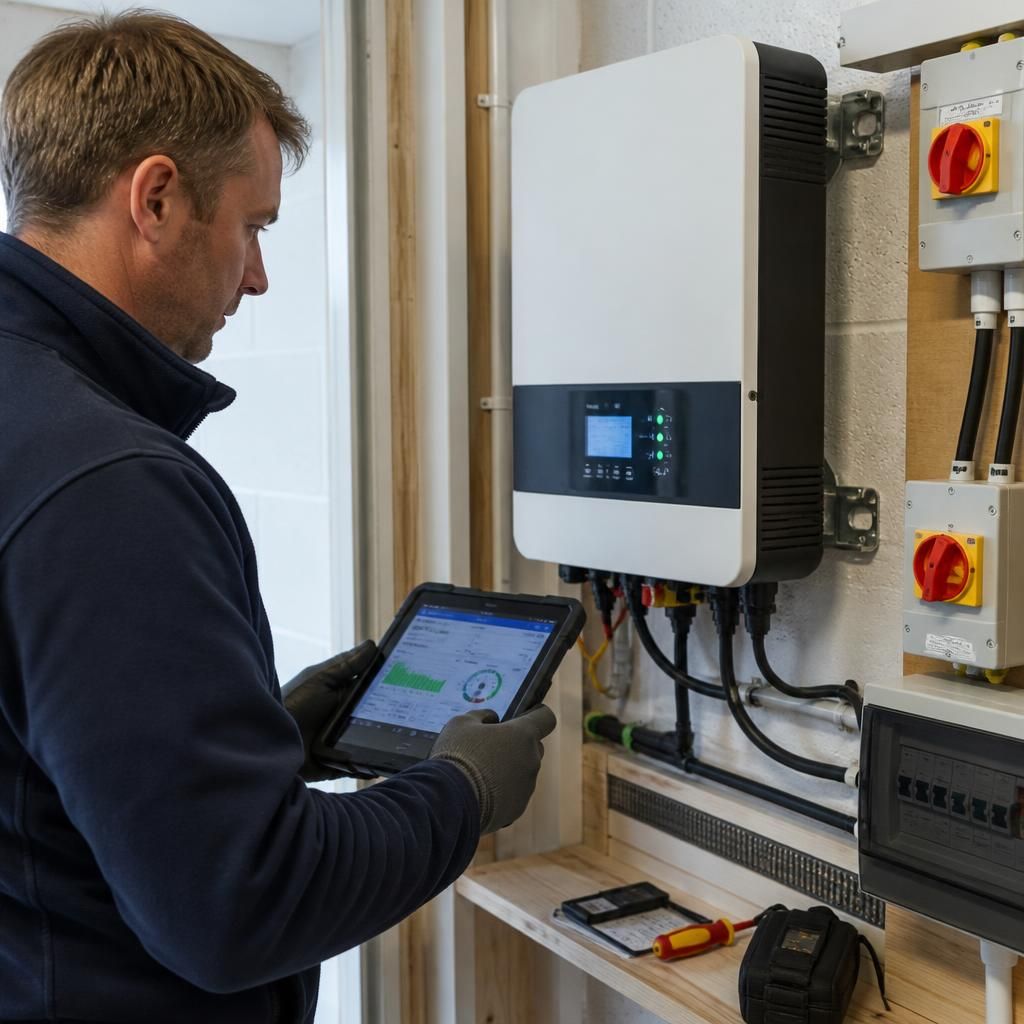
The inverter’s location can affect how much of the repair we complete during one visit. If it is in a loft, garage or outbuilding, we need clear access to the inverter, isolators and nearby consumer unit.
Move stored items and arrange access to locked areas before we arrive. That gives us room to inspect the equipment properly and reduces the risk of a return visit caused by inaccessible parts of the installation.