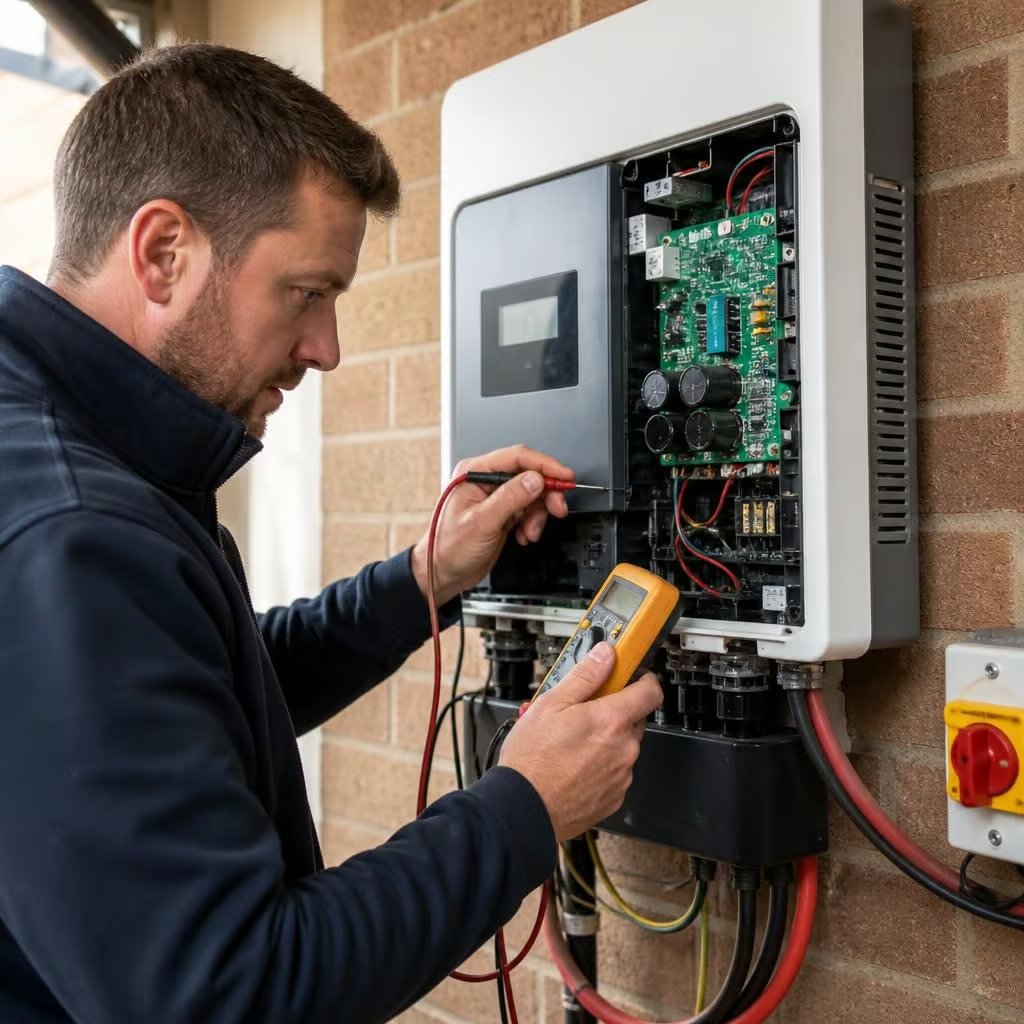
How much does solar PV inverter repair cost?
Solar PV inverter repair cost depends on the fault, the inverter’s condition and whether replacement parts are available, so we assess the system before pricing the work. If repair is not practical, we’ll explain the replacement cost and options clearly before any work starts.
There is no dependable flat price for solar PV inverter repair. The final cost depends on whether the fault is within the inverter, its wiring or protection equipment, and whether the required part is still available. A straightforward component repair may cost much less than replacing an obsolete inverter, while a system fault outside the inverter may need different work altogether.
The main parts of the cost are usually:
- Fault-finding: checking the inverter display, fault history, isolators, cables, connectors and protective devices.
- Labour: removing covers or components where permitted, carrying out the repair and testing the system afterwards.
- Replacement parts: these might include fans, display components, communication devices or internal control parts.
- Access and equipment: unusual access, damaged mounting arrangements or additional testing can affect the amount of work involved.
- System changes: a replacement may need different connectors, monitoring equipment, protection or alterations to the existing installation.
A fault code does not always identify the failed part. An inverter may show a grid fault when the problem is actually a supply issue, a loose connection or a protection device that has operated. A low generation reading may point to the inverter, but it can also come from shading, damaged cabling, a failed panel or inaccurate monitoring data. We test the system as a whole before recommending a repair.
Repair is usually worth considering when the inverter is relatively recent, the fault is clear and replacement parts can be obtained. The repair also needs to leave the system with suitable protection and reliable monitoring. Replacing a single failed part can be sensible when the rest of the inverter is in good condition.
Replacement often becomes the better financial decision when the inverter is older, has suffered repeated faults or has been discontinued by its manufacturer. A repair can restore operation but still leave other ageing components at risk. If the part has to be specially sourced, the repair may also involve more delay and labour than fitting a current model.
For a system with battery storage, the decision needs more care. The inverter may control both the solar array and the battery, so a compatible replacement must work with the existing battery, monitoring platform and electrical arrangement. A standard solar inverter cannot simply be substituted for every hybrid model. We check compatibility before including replacement equipment in the cost.
The inverter’s position can affect the practical work as well. A unit mounted in an accessible utility room is usually simpler to inspect than one installed in a cramped loft or another difficult location. Heat, damp, dust and restricted ventilation may also have contributed to the failure. If those conditions remain, a replacement inverter may suffer the same problem.
A sensible cost assessment should explain more than the price of a new box. It should set out:
- the fault found and the evidence supporting that diagnosis;
- which parts can be repaired or replaced;
- whether the inverter remains supported;
- any work needed on isolators, cabling or protective equipment;
- how the proposed repair affects monitoring and battery operation, if fitted;
- the testing and commissioning included after the work; and
- the practical difference between repairing the existing unit and replacing it.
This comparison matters on older installations. An inverter may have been installed correctly but no longer match current equipment or monitoring services. It may also have reached the point where manufacturer support is limited. We explain those limitations rather than presenting a repair as worthwhile simply because it is possible.
Some apparent inverter faults are caused by the wider electrical installation. A tripped protective device, damaged cable or poor connection can stop generation and may need attention before the inverter can be returned to service. Those checks are important because replacing the inverter alone would not correct the underlying fault.
Where replacement is the sensible route, the cost includes more than removing the old unit and connecting the new one. The new inverter must be mounted securely, connected correctly, configured for the array and tested under operating conditions. Monitoring should also be checked so that the system’s performance can be viewed after the work. If the replacement changes the system design, the effect on existing batteries, export arrangements and documentation needs to be clear before work starts.
Solar PV work affects electrical equipment that can remain energised from daylight, even when part of the system has been isolated. We use the appropriate isolation and testing procedure rather than treating the inverter as an ordinary household appliance. That approach helps distinguish a failed inverter from a fault that could damage replacement equipment.
The most useful way to compare repair costs is therefore to compare like with like. A low initial figure may exclude the part, further testing, system adjustments or commissioning. A higher figure may include a complete replacement and the work needed to leave the installation properly configured. Ask what has been tested, what is included and what happens if the suspected part does not cure the fault.
For homeowners in older or rural properties, the existing installation may have been altered over time or may use equipment that is no longer commonly supported. That does not automatically mean the whole system needs replacing. We assess the inverter alongside the array, cabling, protection and any battery before advising on the least wasteful route.
Our engineers can then set out the repair and replacement options in writing, with the work and any associated costs separated clearly. That gives you a basis for deciding whether to repair the present inverter, replace it, or investigate a fault elsewhere in the PV system.
A solar inverter fault does not always mean the whole system has stopped working. If the panels, cabling and protection remain sound, the repair may restore generation without replacing equipment that has not failed. We separate the confirmed fault from items that are only worth considering for future maintenance.
If the fault cannot be confirmed safely on the first inspection, we explain what further testing is needed before carrying out chargeable repair work. That gives you a clear choice: approve the investigation, proceed with a defined repair, or compare the cost with a replacement while the evidence is still clear.