
Can I get solar panels for free?
Solar panels are not normally installed for free. Some households may qualify for funding, while finance can spread the cost, but eligibility, system design and the total price need checking for the property.
For most homeowners, solar panels are not available at no cost. A grant may cover some or all of an installation in specific circumstances, while a finance agreement can remove the upfront payment without removing the cost.
There is no general grant that makes solar PV free for every household. Funding depends on the scheme, the property, the household’s circumstances and the work included. Schemes can also change, close to new applications or apply only in certain areas.
What funding may cover
Some government, council or energy-efficiency schemes can contribute towards renewable improvements. Eligibility may depend on factors such as household income, benefits, the condition of the property and how it is heated. A scheme may fund solar panels as part of a wider package rather than as a standalone installation.
That means a property can have suitable roof space and still not qualify. It also means that qualifying for support does not necessarily cover every cost. Roof repairs, electrical alterations, scaffolding, battery storage or work needed to bring the installation up to current standards may sit outside the funded work.
We check the current rules before treating funding as part of the financial plan. We do not describe an installation as free until the funding provider has confirmed what it will pay and what remains yours.
Why installer certification matters
If a grant or export arrangement requires an approved installer, the installation must meet that scheme’s technical and paperwork requirements. Our MCS certification allows us to make a Boiler Upgrade Scheme grant application where the scheme applies, and it makes the solar installation eligible for the Smart Export Guarantee. The Smart Export Guarantee is an export payment arrangement, not a grant, so it does not remove the installation cost.
Export payments also depend on the electricity you send to the grid and the terms available from the export tariff provider. We explain that separately from any grant or finance, so the three are not confused.
What people mean by ‘free solar’
Some companies offer solar with no initial payment under a lease, power purchase agreement or similar arrangement. That can reduce the amount paid at the start, but the panels may remain owned by another company. You may then pay for the electricity they generate, share export income or accept a long contract secured against the roof or property.
Before accepting that type of offer, check:
- Who owns the panels, inverter and battery.
- How long the agreement lasts and what happens if you sell the property.
- Whether the contract affects a mortgage or requires a buyer’s consent.
- Who pays for repairs, replacement equipment and removal from the roof.
- Who receives export payments and how the electricity price is calculated.
- Whether the panels are removed before roof repairs or a future re-roof.
A no-upfront-cost arrangement can be suitable for some households, but it is not the same as receiving a system free of charge. Compare the total commitment with the cost of owning the installation yourself.
Finance is different from funding
Finance spreads the cost across an agreed term. It can help when the property is suitable for solar but there is no grant, or when funding covers only part of the work. Interest and fees may apply, so compare the deposit, regular payment, term and total amount repayable.
Ask for the cash price and the finance price in writing. You should also know exactly what the quotation includes, such as the panels, inverter, mounting system, monitoring, electrical work, scaffolding, certification and any battery. A monthly figure on its own does not show the full cost.
The installation still needs to suit the property
Funding does not make an unsuitable roof suitable. We look at shading, roof orientation, roof condition, available space and the route for the cables. We also assess the consumer unit, earthing and the connection to the electricity supply.
An older or rural property may need electrical work before the panels can be connected. A solid-wall house, barn conversion or listed building may also need extra care with cable routes, roof fixings and planning requirements. If the roof needs repair, doing that first can prevent the panels having to come off later.
A battery may improve how much of the generated electricity the household uses, but it adds to the installation cost. We compare the battery option with the way the property uses electricity rather than adding one automatically. The same applies to an EV charger or other higher-load equipment.
How to find out what you would actually pay
- We discuss the property, electricity use and what you want the system to achieve.
- We check whether any current grant or local funding route appears relevant.
- We survey the roof and electrical installation, including access, shading and cable routes.
- We separate confirmed funding from possible funding and from any finance option.
- We provide a written quotation showing the work included and the amount left for you to pay.
If a scheme is not available, we explain the system cost and the practical alternatives instead of presenting a predicted saving as guaranteed. That gives you a clear choice between paying outright, using finance, changing the system specification or waiting for a suitable funding route.
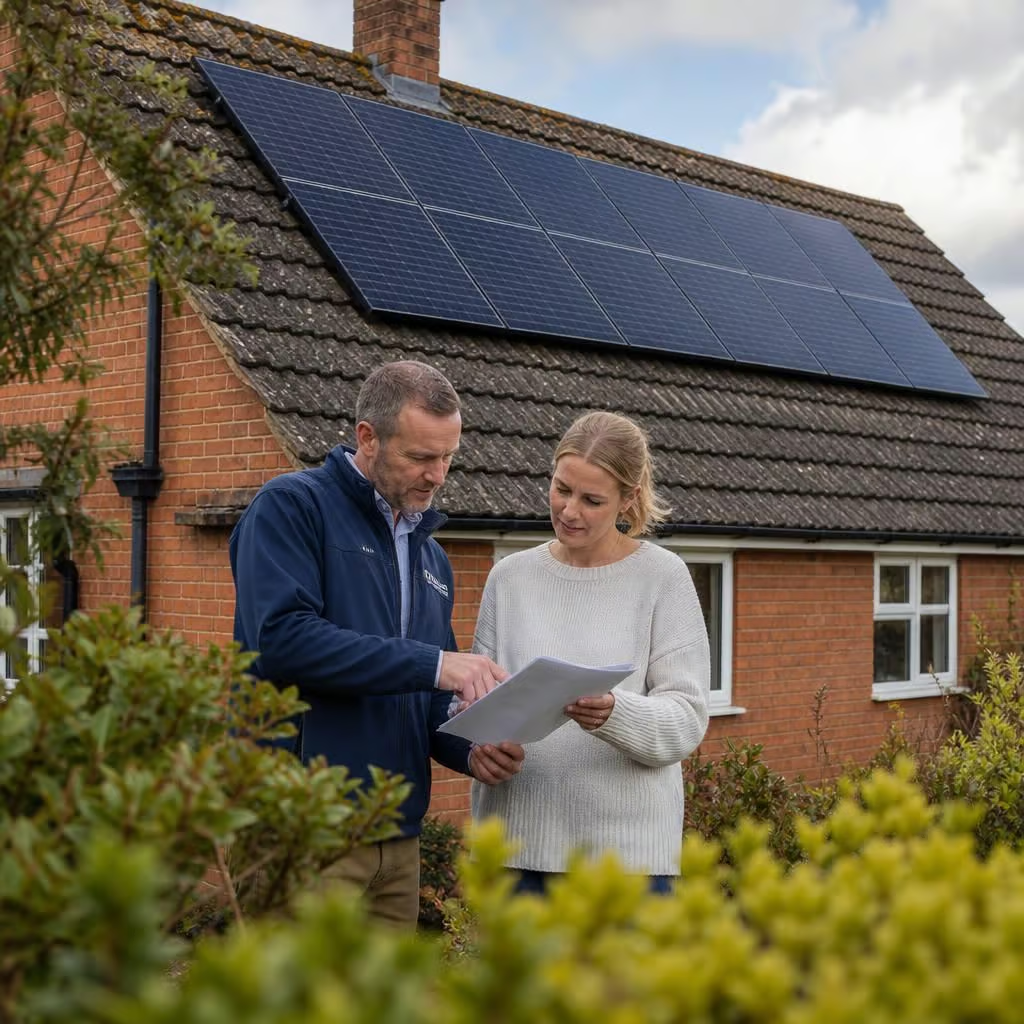
Panels can be installed without an upfront payment, but the electricity they produce is not available at every moment. Your home still draws from the grid when generation is low or demand is higher than the panels can provide.
We look at when you use electricity, rather than treating all generated power as an automatic saving. That helps show whether a battery would add useful value or simply increase the amount you borrow. It also keeps the financial comparison based on how your home operates, not on a promise that your electricity will be free.