
What electrical work is included in the solar installation price?
A solar installation price usually includes the DC wiring from the panels, the inverter connection, AC cabling to the consumer unit, isolation and electrical protection, and full testing and certification. We assess the existing consumer unit and cable routes during the survey, so any upgrade or extra electrical work is identified before we quote.
The electrical work in a solar installation price covers the equipment and labour needed to connect the generated electricity safely to the property. It is more than wiring the panels to an inverter. The price should account for the cable routes, isolation, protection, connection to the consumer unit, testing and commissioning.
Our quotation separates the standard electrical installation from work that depends on the property. That matters because a short cable route to a suitable consumer unit is very different from a long run to a detached garage, an outbuilding or a plant room.
- Solar cabling: we connect the panels in strings using solar-rated DC cable. The route runs from the roof or mounting area to the inverter, with the cable supported and protected from damage.
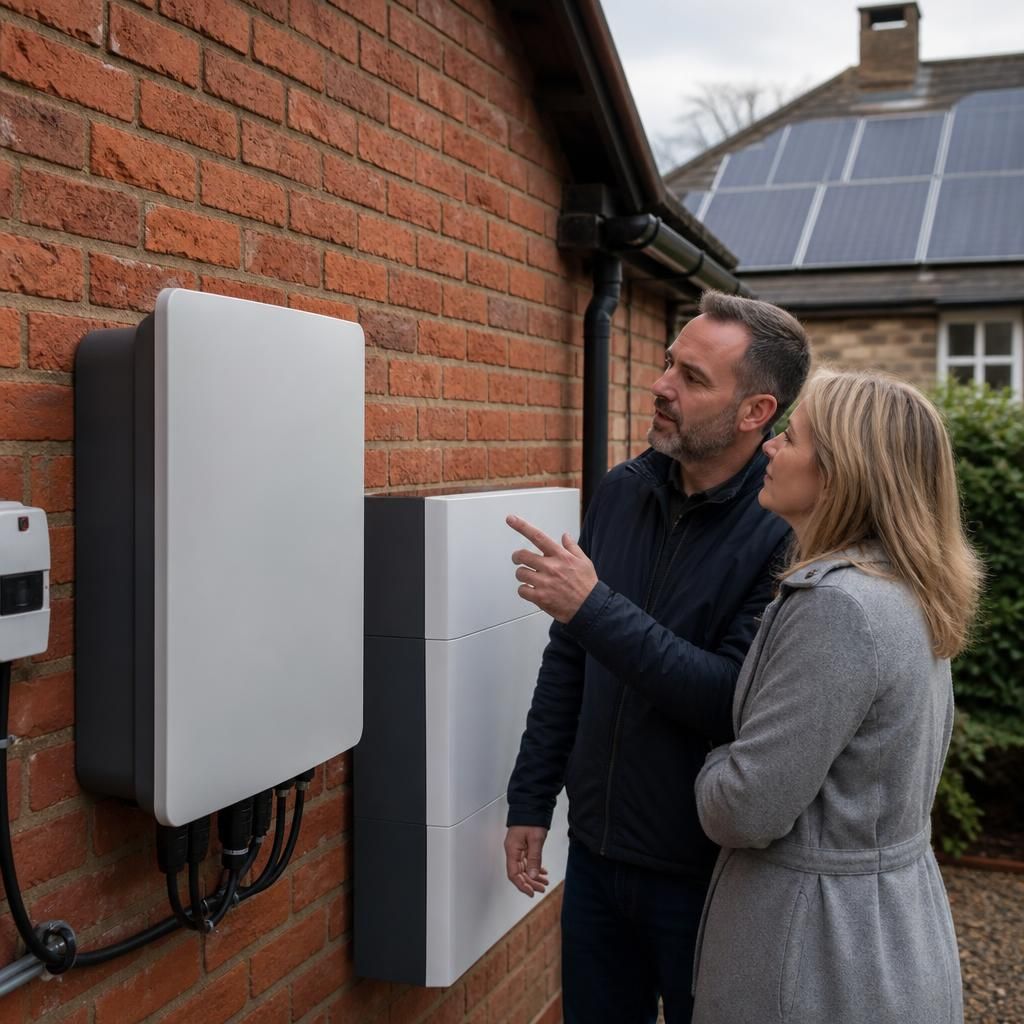
- Inverter connections: the inverter changes the panels’ DC output into AC electricity for use in the property. We install and connect it in a suitable location, allowing access for inspection and future maintenance.
- Isolation: DC and AC isolators allow the relevant parts of the system to be safely disconnected. We position them so an engineer can reach them without dismantling the installation.
- Protective devices: the system needs protection against faults and abnormal electrical conditions. The specification may include circuit protection, surge protection and other devices identified by the design.
- Connection to the consumer unit: we connect the solar circuit to the property’s distribution board in accordance with the electrical design. The existing board must have enough capacity and suitable protection for the new circuit.
- Earthing and bonding: we check that the earthing arrangement is suitable for the installation. If the existing arrangement needs attention, the quotation will explain the required work.
- Generation metering and monitoring: where the design includes monitoring equipment, we connect it so the system can record generation and show how electricity is being produced and used.
The cable route often has the greatest effect on the electrical labour. A nearby inverter and consumer unit may need only a straightforward internal connection. A detached garage, thick stone walls, several floors or an outbuilding can require additional containment, drilling or trenching. We assess this during the survey rather than assuming the simplest route.
Older properties need a closer look before we connect new generation equipment. A board may have limited space, older protective devices or an earthing arrangement that is not suitable for the proposed system. Solid-wall houses, barn conversions and listed buildings can also restrict where cables and equipment may be placed. We record these points and price any necessary alteration before work starts.
An existing consumer unit does not automatically need replacing. If it can safely accept the new circuit and meets the requirements for the installation, we use it. If it cannot, we explain whether the answer is a replacement board, additional protection or another electrical alteration. This keeps essential work separate from optional changes.
The price can also change when the panels are not close to the main electrical intake. Long AC cable runs may need additional cable, containment and protection. A route through an outbuilding may require underground ducting. If the inverter or battery is in a separate building, we assess the connection between the buildings as part of the design.
Battery storage adds further electrical work when it forms part of the quotation. We connect the battery system to the agreed point in the installation, fit the required isolation and protection, and set up the monitoring and control equipment. The design must account for the battery’s location, cable route and interaction with the solar inverter and property supply.
Solar panels can also affect how electricity flows through the property. We consider the incoming supply, the proposed generation capacity and any existing equipment that may share the connection. If the network operator needs notification or approval, we handle the technical information and required electrical documentation for the installation.
Before handover, we carry out electrical tests and commissioning checks. These confirm that the circuits, protective devices, isolation and earthing arrangements are operating as intended. We configure the monitoring equipment where included and explain the basic readings, isolation points and shutdown procedure.
We provide the installation paperwork needed for the completed electrical work. MCS certification also matters for a solar system because it supports eligibility for the Smart Export Guarantee. We complete the relevant commissioning information so the system can be registered in line with the applicable requirements.
Items such as a consumer unit replacement, an unusual cable route, trenching, remedial earthing work or an additional outbuilding connection are not always part of the basic solar price. Our written quotation lists these separately, so the final cost does not rely on an assumption about the property’s existing wiring.
The final connection may require a brief isolation of the property’s electrical supply. We explain when this is needed before work starts, then restore and test the supply before handing the system back to you.
A standard grid-connected solar system does not normally keep the property powered during a power cut. If you want selected circuits to remain live, the quotation must include a separately designed backup arrangement, with the extra switching, protection and wiring shown clearly.