
What guarantees come with a solar panel installation?
A solar installation usually has separate product guarantees for the panels, inverter and mounting equipment, plus a workmanship guarantee from the installer. We set out the specific cover, exclusions and claim process in your written quotation, so you can compare guarantees rather than relying on headline terms.
The main protection is usually divided into three parts: a guarantee for the installation work, manufacturer warranties for the equipment, and a separate performance warranty for the solar panels. They do different jobs. The written quotation should identify each one, state its duration and explain what could invalidate it.
Installation workmanship guarantee
If a fault results from how the system was fitted, the installation guarantee is the relevant protection. This can include poor cable connections, incorrect mounting, water entering through a roof fixing or an issue with the way the panels, inverter or consumer unit were connected.
It does not usually cover a component that has failed internally. That is normally dealt with under the equipment manufacturer’s warranty. We separate these responsibilities in the quotation, so you can see who deals with each type of problem rather than being passed between companies.
For a roof-mounted system, the installation guarantee should also explain what happens if a fitting causes damage to the roof covering. The survey and installation method matter here. We look at the roof construction, covering and cable route before work starts, rather than treating every property as if it has the same fixing requirements.
Equipment warranties
Panels, inverters, batteries, mounting rails and monitoring equipment are separate products. Each may have its own manufacturer’s warranty and its own claim process. A panel warranty does not automatically cover the inverter, and an inverter warranty does not automatically cover the roof fixings or labour needed to replace it.
When a component fails, the manufacturer may provide a replacement part while the installer deals with diagnosis, removal and refitting. The paperwork needs to make clear whether labour is included. A replacement inverter is not the same as a completed repair if there are additional costs for access, testing, programming or disposal of the old unit.
The equipment warranty may require the product to be registered after commissioning. We record the installed equipment and provide the handover information needed for future claims. Keep these documents with the property records, particularly if you may sell the house or transfer responsibility to a new owner.
Panel performance warranties
A performance warranty is different from a promise that the system will produce a particular amount of electricity or reduce a particular bill. It normally relates to the panel’s ability to produce power against a manufacturer’s stated output level over time, measured under defined conditions.
Your actual generation changes with roof direction, shading, weather, dirt, temperature and electricity use. A performance warranty does not normally cover a lower-than-expected bill saving where the system is working as designed. We can investigate unusual readings through the monitoring system, but the warranty terms determine whether a panel has fallen outside its stated specification.
Read the wording carefully. Some manufacturers offer a single product warranty covering faults in the panel, while others provide separate product and performance warranties. The period can also vary between the panels and the other equipment on the same installation.
What is normally excluded
Guarantees and warranties cannot cover every cause of damage. Common exclusions include storm or impact damage, animal damage, unauthorised alterations, misuse, faults caused by another contractor and problems with the electricity supply outside the installation. A battery warranty may also contain operating limits linked to temperature, charging patterns or usable capacity.
Roof maintenance can affect the position of the panels and the fixings. If another contractor works around the system, ask them to avoid disconnecting or altering it without proper testing. Keep records of any work carried out after installation, since an installer or manufacturer may need to establish what caused a later fault.
Cleaning is not automatically required for every array, and cleaning the panels will not correct a failed inverter or damaged cable. The relevant warranty terms should state any maintenance obligations. We explain what needs monitoring and what should be reported, rather than recommending work that the equipment does not need.
How a claim is handled
If the monitoring shows a fault, or the system stops producing as expected, record the date, the warning message and any changes you have noticed. Do not open the inverter or battery enclosure. These contain electrical equipment that requires suitable isolation and testing.
We first establish whether the problem is with the generation equipment, the electrical installation, the monitoring connection or the wider supply. That diagnosis matters because a warranty claim for a failed component will not resolve a tripped protective device or an internet connection that has stopped sending monitoring data.
Where a manufacturer’s decision is needed, the claim may involve photographs, serial numbers, commissioning records and test results. Keep the original quotation, electrical certificates, product details and handover documents together. They reduce delay when someone needs to verify the installation.
What happens if the property changes hands?
Some protections transfer to a new owner, while others require registration or written notification. The transfer rules may differ between the installation guarantee, panel warranty, inverter warranty and battery warranty. Check this before completing a sale, and pass the system records to the buyer.
A guarantee is also different from an insurance policy. It may cover defects in workmanship without covering accidental damage, and it may depend on the installer or manufacturer remaining responsible under its published terms. Ask who backs each protection and what happens if the original installer no longer trades.
What MCS certification tells you
MCS certification confirms that the renewable installation is assessed against the relevant installation standards. It is not, by itself, a promise that the system will achieve a particular saving or that every future fault is covered.
For an eligible installation, MCS certification allows us to make a Boiler Upgrade Scheme grant application where the scheme requirements are met, and it supports eligibility for the Smart Export Guarantee. Those scheme arrangements are separate from the product and workmanship protections, so the grant or export paperwork should be kept alongside the guarantee documents.
Before accepting a quotation, ask for the exact wording rather than relying on a single headline period. Check who covers labour, which equipment is included, whether registration is required, what maintenance is expected, how roof damage is treated and whether the protection transfers with the property. Those details tell you far more about the practical value of a solar installation guarantee than the length stated on the front page.
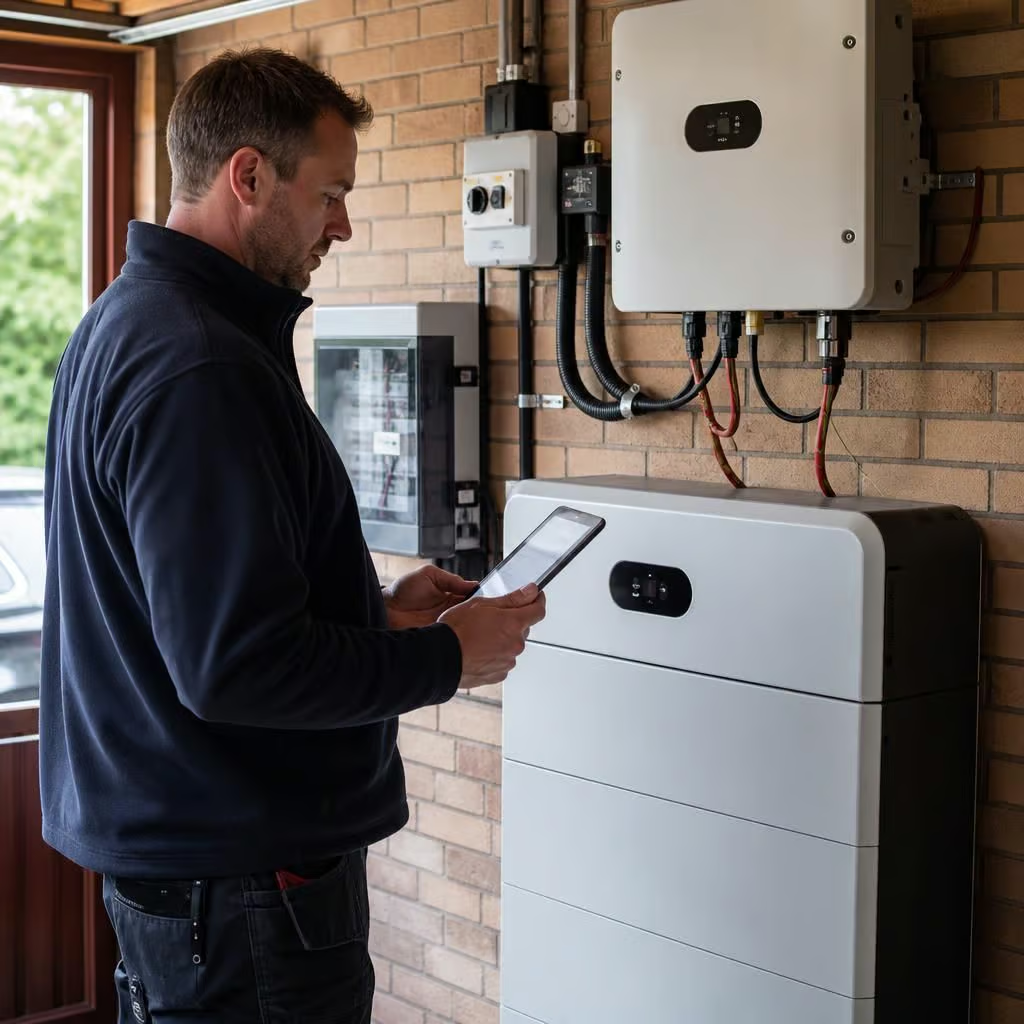
A long guarantee period doesn’t tell you what you’ll receive if something fails. The important detail is the remedy. The written terms should say whether the installer will diagnose the fault, supply replacement parts, remove failed equipment, refit it and test the system afterwards.
They should also explain who pays if access equipment is needed, or if roof tiles, cable routes or internal finishes need making good. This prevents a component warranty from leaving you with a separate labour bill. We set out these responsibilities in the quotation, so the practical value of each protection is clear before you commit.