
How often do solar panels need maintenance?
Most domestic solar panels need little routine maintenance and do not require servicing at a fixed interval. Check the system monitoring regularly, then arrange a professional inspection if output drops, a warning appears, damage is visible or the manufacturer’s guidance calls for it.
There is no single maintenance interval that suits every solar panel system. The right schedule depends on the roof, the age of the installation, the inverter, any battery storage and the conditions around the property. A well-installed domestic system is usually managed through occasional professional inspections and regular checks of its monitoring data, rather than frequent servicing.
Manufacturer guidance comes first. Your inverter and battery may have specific inspection requirements, and following them can matter for warranty support. We review the system design and available records before recommending work, rather than booking unnecessary visits.
Monitoring can reveal a problem between inspections. A gradual fall in generation may point to shading, a connection issue, inverter trouble or a fault within the array. A sudden change is more urgent. We compare the readings with weather and seasonal conditions, then inspect the relevant parts instead of assuming the panels themselves are at fault.
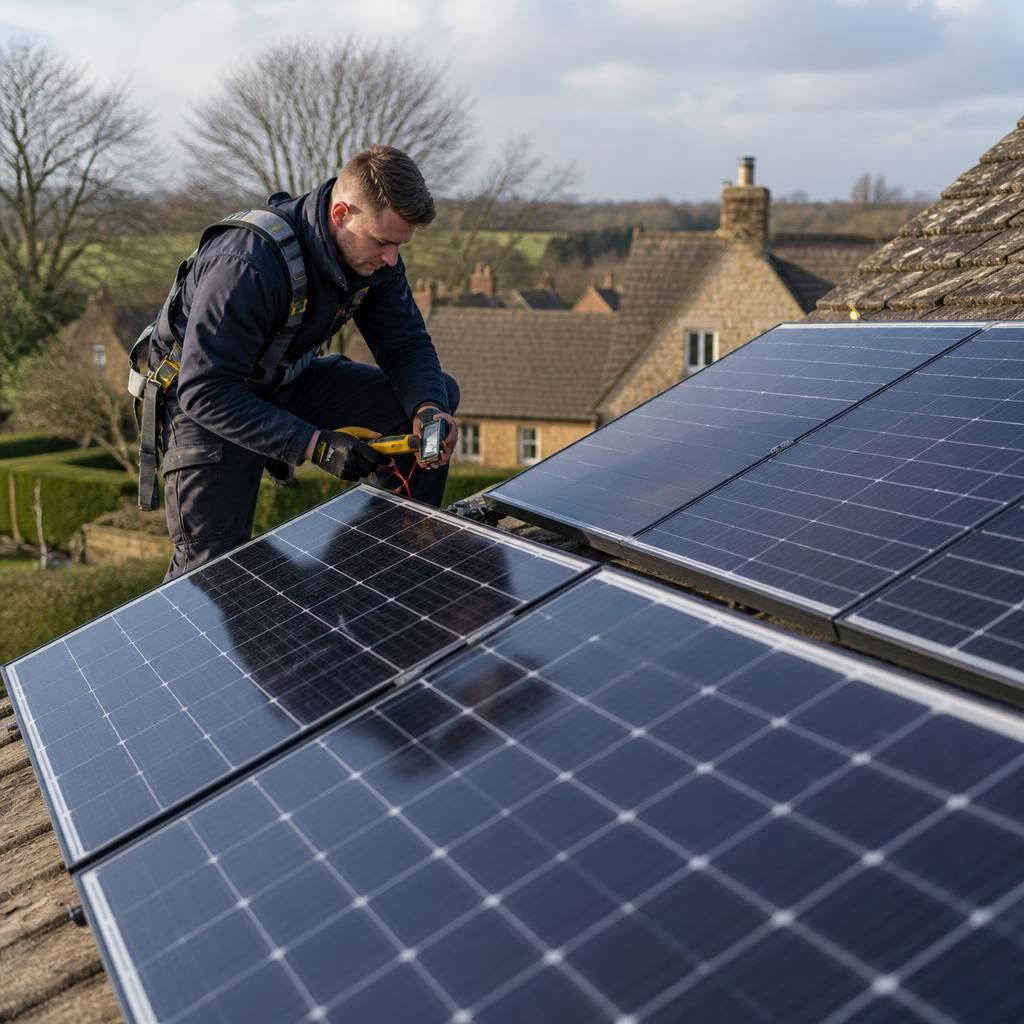
A professional inspection looks beyond the glass. We check the panels, mounting points, cable routes, connectors, isolators and inverter. On a property with a battery, we also check the storage unit, its connections and the way it communicates with the solar system. The aim is to identify heat damage, corrosion, water entry, loose fixings or cable deterioration before they affect safety or generation.
The roof itself affects how often the system deserves attention. Panels beneath trees may collect leaves, pollen or bird fouling. Coastal or exposed sites can see more corrosion, while older roofs may need separate attention to tiles, slates and flashing. We record defects that belong to the roof or mounting arrangement so you know what needs dealing with and what does not.
Cleaning is condition-led rather than automatic. Rain removes much of the ordinary dust from sloping panels. Heavy deposits, persistent bird fouling or nearby building work can justify cleaning, but climbing onto the roof without suitable access is unsafe. We can advise whether cleaning is likely to improve output before you pay for it.
After severe weather, a visual check from ground level is sensible. Look for displaced panels, hanging cables, broken glass or new water staining around the installation. Do not touch damaged equipment or switch covers. If the monitoring system reports a fault, leave the electrical equipment alone and arrange an inspection.
Older installations may need a different approach. Changes to the roof, additions to the electrical installation or a replacement inverter can alter the system’s safety requirements. We check the original paperwork where it is available and explain any work needed to bring the installation into a safe, maintainable condition.
Keep the commissioning information, electrical certificates, warranty documents, monitoring details and records of any repairs together. They help us understand the installation quickly and can support a future claim or property sale. If you are unsure when the last inspection took place, a review of the system and its paperwork is a sensible starting point.
Solar generation naturally changes with the seasons. A lower winter reading does not, by itself, mean the panels need servicing. Shorter days, low sun and overcast weather all reduce output.
Look for a change that does not fit the weather or the system’s previous pattern. If generation stays unusually low on clear days, or the monitoring platform shows repeated alerts, we can investigate before arranging wider maintenance work.