
Can solar panel cleaning damage the panels?
Yes, solar panel cleaning can cause damage if abrasive tools, harsh chemicals, excessive pressure or careless access are used. Proper cleaning with suitable equipment should not harm the panels, but damaged seals, loose cables or cracked glass need inspection rather than washing.
Solar panels are not damaged simply because they are cleaned. The risk comes from putting force, heat, chemicals or water in places the panel was not designed to tolerate. Most problems affect the glass, frame, seals, junction box or cables rather than the solar cells alone.
Pressure on the panel can create hidden damage. A panel may appear strong, but its glass and internal cells are not designed to carry a person’s weight. Leaning equipment against it or using it as a foothold can cause tiny cracks in the cells. These cracks may not be visible after cleaning, but they can reduce output or allow faults to develop later.
The frame also matters. A bent edge can stop the panel sitting correctly in its mounting system. That may leave stress concentrated in one corner, particularly during strong winds or changes in temperature. We treat the panel surface and frame as separate parts of the installation, rather than assuming the frame can support cleaning equipment.
Temperature changes can stress the glass. Solar panels can become very hot in direct sunlight. Applying cold water to hot glass creates a sudden temperature change, which can worsen an existing weakness or cause cracking. The same applies in reverse when warm water is used on a cold panel. Cleaning conditions therefore matter as much as the tool being used.
Water can cause electrical problems if it reaches the wrong components. The panel itself is designed to withstand normal weather, but the junction box, connectors and cable routes still need careful treatment. Water directed into a connector or damaged seal can contribute to corrosion, insulation faults or nuisance trips. Solar systems can continue producing DC electricity in daylight, so connectors should not be unplugged as part of an ordinary cleaning job.
Signs of a problem after cleaning can include a visible crack, a cloudy patch beneath the glass, water inside a junction box, loose cable clips or a sudden change in generation. An inverter warning is another reason to stop and arrange an electrical inspection. Do not attempt to open the panels or reconnect cables yourself.
Some cleaning methods are more likely to cause surface damage.
- Hard brushes or dirty pads can leave fine scratches in the glass.
- Loose grit trapped in a cloth or brush can act like sandpaper.
- Strong detergents may affect seals, coatings or the finish of the frame.
- High-pressure water can force moisture behind seals and into electrical connections.
- Scrapers can chip the glass if they catch on dried deposits.
- Ordinary tap water may leave mineral marks when it dries, especially where the water is hard.
Scratches and mineral deposits do more than affect appearance. They can alter how light reaches the cells and make later cleaning more difficult. Residue left around the frame can also hold moisture against components that should drain freely.
Cleaning can be unnecessary as well as risky. Light dust or rain marks may have little practical effect on generation. Bird droppings, moss, heavy pollen and thick deposits are more likely to justify cleaning because they can shade part of the panel. Before work starts, we look at the condition of the panels, their position, nearby trees and the effect of visible soiling. If cleaning is unlikely to make a useful difference, leaving the system alone may be the better choice.
Access is part of the damage assessment. A roof that looks straightforward from the ground may have fragile tiles, a steep pitch, awkward edges or panels close to other roof fittings. Moving across the roof can damage tiles and fixings even when the panels themselves are left untouched. Working from a suitable access position also reduces the temptation to lean on the array.
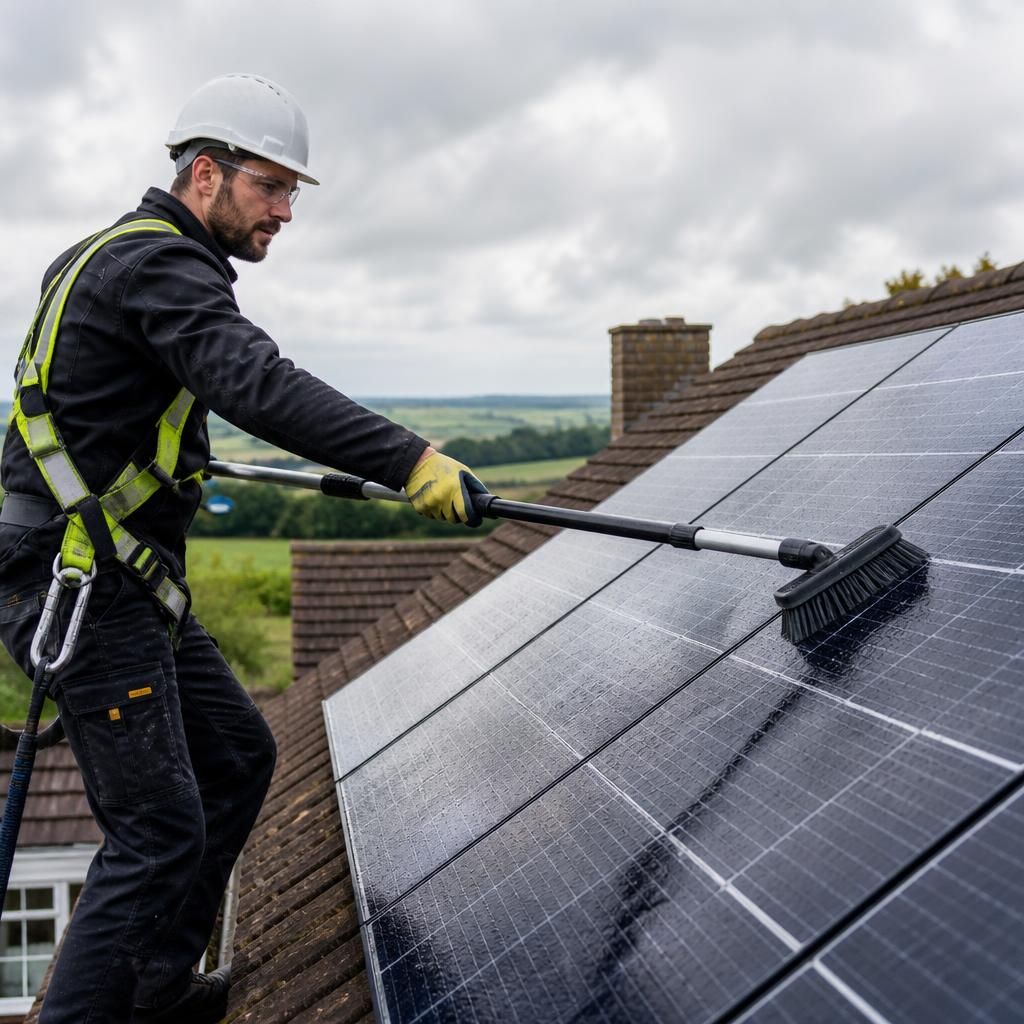
For a safe clean, the method should suit the panel condition and the access available. We use equipment that avoids putting weight on the panels and take care around the frame, cable clips and connectors. We also check for cracked glass, loose fittings and visible cable damage before starting. Finding those defects first matters because cleaning a damaged panel can allow water into an existing weakness.
Cleaning does not repair degraded cells, faulty connectors or an inverter problem. If generation has fallen, compare the system’s recent readings with its normal pattern before assuming dirt is responsible. Shading, a monitoring fault or an electrical defect may need attention instead. A professional inspection can separate a cleaning issue from a fault and prevent unnecessary work on an otherwise sound array.
If a panel is cracked, a cable is loose, or an inverter shows a fault after cleaning, switch off the system only in line with the manufacturer’s normal shutdown instructions and keep clear of damaged components. Arrange an inspection by a suitably qualified solar electrician. Do not wash the area again to test whether the warning disappears.
A lower reading after cleaning doesn’t automatically mean the panels have been damaged. Solar output changes with cloud, temperature, shading and household demand, so compare readings under similar conditions rather than relying on one afternoon’s figure.
Look for a continuing change in the system’s normal pattern, not just a single unusual reading. If generation remains lower or the monitoring system reports a fault, arrange an inspection instead of cleaning the panels again. That helps identify an electrical problem without adding further risk to the array.