
Are solar panel maintenance costs different for systems with battery storage?
Battery storage can add maintenance costs because there is extra equipment to inspect, monitor and repair, but the panels themselves do not usually need more routine maintenance. The total depends on the battery system, installation layout, age and any faults, so we assess the complete installation rather than applying a standard battery surcharge.
Usually, yes, but the difference depends on what needs checking rather than on the battery alone. A panel-only system may need an inspection, performance check or repair. A system with storage can also need battery-specific testing, fault diagnosis and control checks.
Your panels may still be producing electricity while the battery stops charging or discharging. We then trace the system from the panels through the inverter, battery and household controls to find where the problem starts. An app warning does not always identify the failed part.
Routine work on a battery storage system can include:
- checking the battery enclosure, isolation equipment and visible connections;
- reviewing charge and discharge behaviour against the system design;
- checking inverter and battery error records;
- confirming that monitoring and control settings are communicating correctly;
- looking for signs of heat, moisture, physical damage or restricted ventilation; and
- checking that the system is operating within the manufacturer’s requirements.
Those checks can make a maintenance visit longer than a basic solar inspection. If the battery, inverter or control equipment needs testing separately, we may need more diagnostic time before a repair can be priced. Replacement parts can also affect the final cost, particularly when a battery or inverter has reached the end of its serviceable life.
The location of the equipment matters as well. A battery in an accessible utility room is simpler to inspect than equipment in a crowded plant room, loft or difficult-to-reach outbuilding. Roof access may still be needed if the original fault appears to be with the panels or their connections.
Some apparent battery faults are caused by the wider installation. For example, a failed meter connection, incorrect control setting or inverter fault can prevent the battery from responding properly. We test the connected system rather than replacing the battery based only on an app message.
Warranty terms can also change what you pay for. A manufacturer may cover a faulty component, while diagnosis, access or installation work is treated separately. The battery warranty may have different conditions from the panel or inverter warranty. Keeping the installation records and following the manufacturer’s maintenance requirements helps us establish what is covered.
Not every system needs frequent physical servicing. Solar panels have no moving parts, and a battery may continue operating without an obvious problem. Regular checks are still useful when performance changes, an alert appears, the system is altered or the installation is approaching the end of a warranty period. Cleaning is only worthwhile when dirt, debris or bird fouling is affecting the panels; it is not a substitute for electrical testing.
We can assess the panel and battery system together, identify whether the issue is routine maintenance or a repair, and provide a written quotation before work starts. That gives you a clearer view of the likely cost than treating every battery warning as a battery replacement.
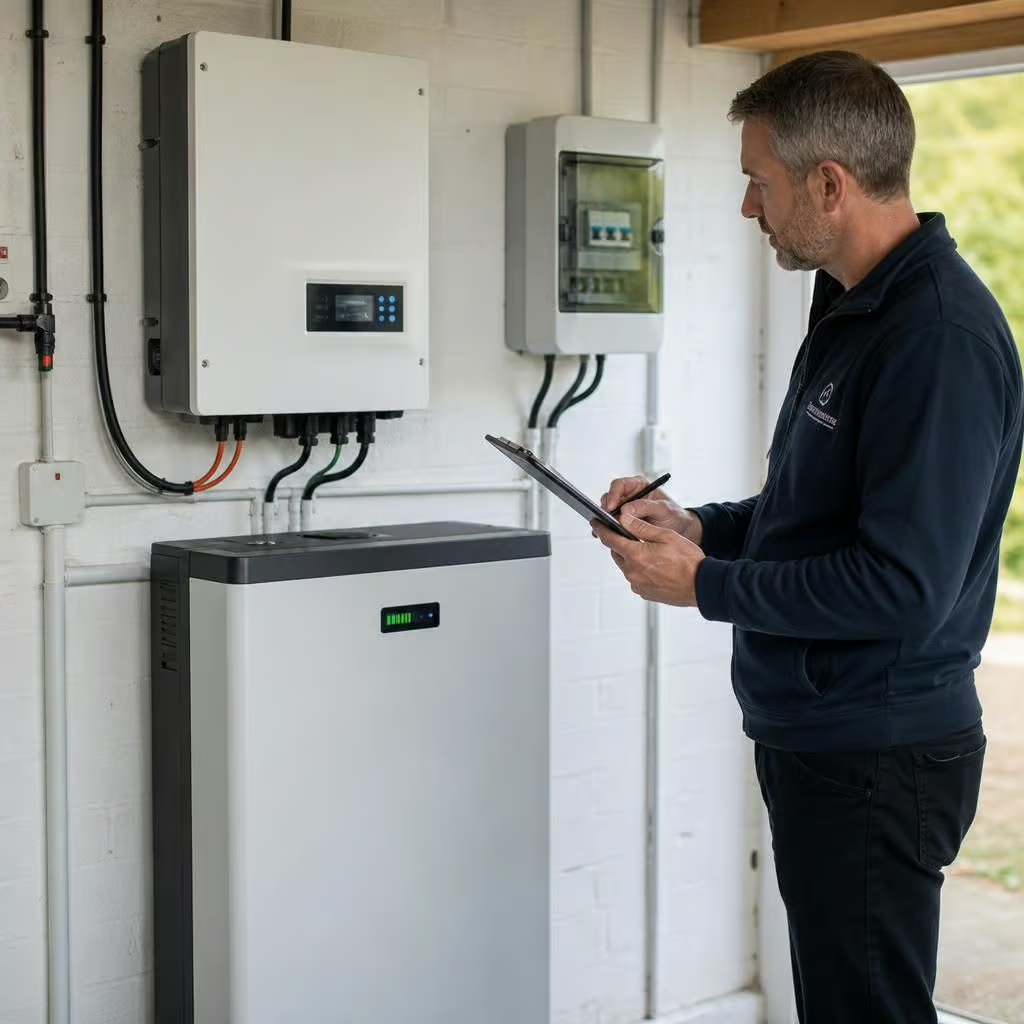
When comparing maintenance prices, check what the visit includes. A lower price may cover only a visual inspection, while a battery fault can require separate testing before anyone can identify the failed component.
We separate the inspection, diagnosis, parts and remedial work in the quotation. That shows whether you’re paying for routine maintenance or for time spent investigating a fault, rather than treating every battery system as needing the same service.