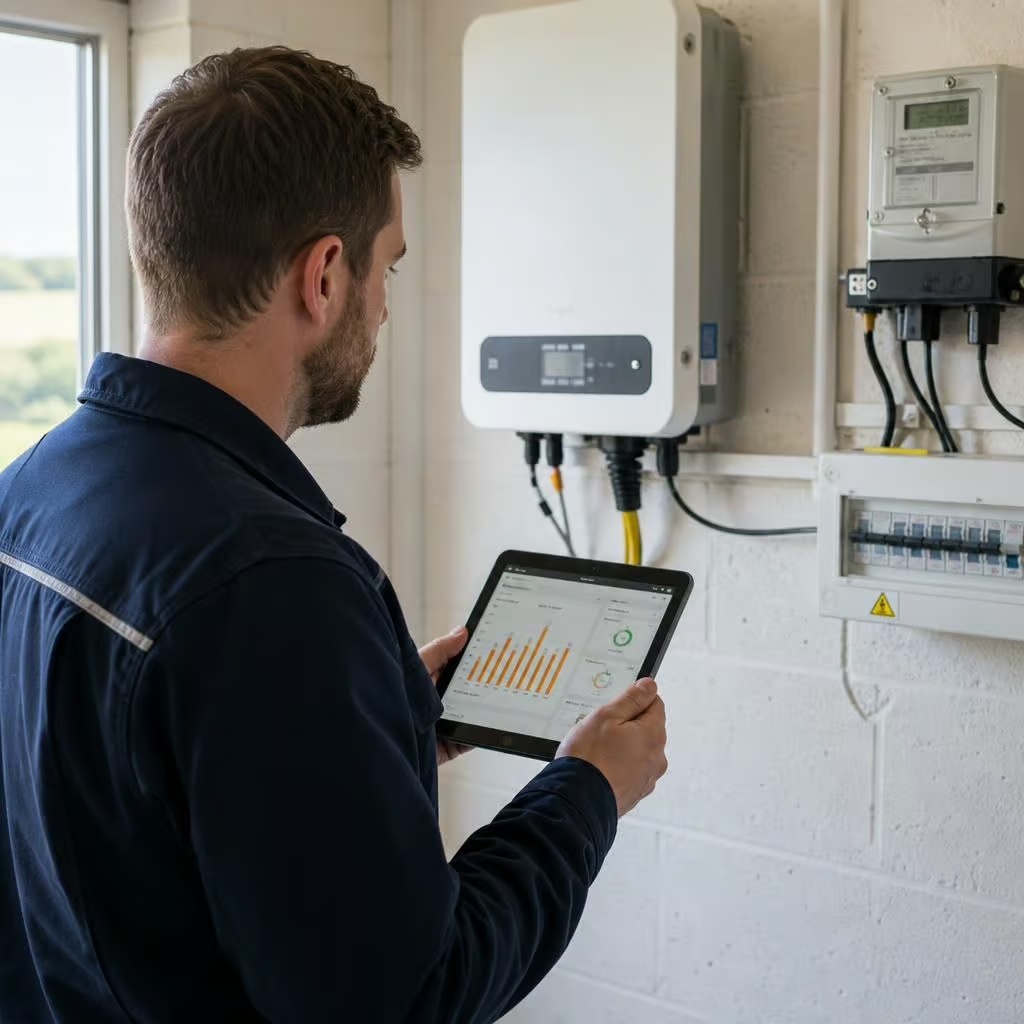
Can a solar panel performance check be completed without roof access?
Yes, much of a solar panel performance check can be completed without roof access by reviewing monitoring data, inverter readings and generation figures, then carrying out electrical tests at accessible equipment. If those checks point to panel damage, shading or a roof-level wiring fault, we’ll explain why a separate roof inspection is needed.
Yes. A useful solar panel performance check can usually begin without anyone stepping onto the roof. We start with the system’s monitoring history, inverter readings and generation meter, then carry out safe checks from ground level and at the electrical equipment.
Your monitoring portal may show when output fell, whether the change affects the whole array or one string, and whether the inverter has recorded an alarm. A gradual decline points to a different type of problem from a sudden loss of generation. We compare the pattern with daylight and weather conditions so that a cloudy day is not mistaken for a system fault.
If the monitoring has stopped updating, that does not necessarily mean the panels have stopped working. The internet connection, data logger or monitoring platform may have failed while the array continues to generate electricity. We check the inverter display, communications equipment and generation meter to separate a reporting problem from a production problem.
The inverter can also provide useful information without roof access. Its readings may show whether the DC supply from the panels is reaching the equipment correctly and whether one part of the array is behaving differently. Electrical tests at the inverter and consumer unit can then help narrow the fault to the generation side, the inverter, the cabling or the monitoring system.
That approach can identify several common causes of poor output, including an inverter fault, a disconnected string, a tripped protection device or a communications failure. It may also show that the system is producing normally and that the concern relates to an inaccurate app reading or an unusually low-sun period.
Roof access is more likely to be needed when the electrical results suggest a physical problem. A ground-level check cannot confirm whether panels are heavily soiled, shaded by new growth, damaged by weather, affected by birds or affected by a loose connector beneath a panel. It also cannot fully assess mounting points, roof penetrations or cable routes hidden behind the array.
In those cases, we explain why a roof inspection is needed before arranging that part of the work. The roof type, pitch, access, condition and the presence of fragile tiles all affect how an inspection should be carried out. On an older, listed or barn-conversion property, avoiding unnecessary access can reduce disruption and prevent avoidable damage.
We do not recommend climbing onto the roof to check the panels yourself. Solar arrays remain electrically live in daylight, and a roof can be unsafe even when the panels look undamaged. Readings taken at ground level or at the inverter are safer starting points, but they still need interpreting alongside the system design and installation history.
If the system has no remote monitoring, we can use the inverter and generation meter as the main sources of information. A performance check may still establish whether the array is generating, but it may not identify the exact panel responsible for a reduced result without further testing. Similarly, a clean electrical result cannot rule out every physical problem above the roof.
The practical outcome is a clearer decision about the next step. If the evidence points to the inverter, controls or electrical connections, the fault can be investigated from accessible equipment. If it points to the panels, roof-mounted wiring or mounting system, we can distinguish that need from a problem that can be dealt with without roof access.
If roof access is difficult, the first assessment can still establish whether the system is generating as its design suggests. We use the available readings to separate a genuine production fault from a problem with reporting or system controls.
That gives you a sensible basis for deciding what happens next. We explain which findings can be dealt with from accessible equipment and which would need someone to inspect the array itself, so roof work is considered only where the evidence justifies it.