
How long does a solar panel repair take?
A straightforward solar panel repair can often be completed in one visit, while faults involving cabling, the inverter or roof access may need diagnosis first and a return visit. We assess the system, explain what is needed and give you a clear timescale before repair work starts.
Most minor solar panel faults can be diagnosed and repaired during one engineer’s visit. A repair takes longer when the fault is concealed, safe roof access needs arranging, or a replacement component has to be sourced.
Your system may have stopped generating because of a loose connection, damaged cable, failed isolator, inverter fault or a problem with a panel. We begin by checking the monitoring information and system controls, then carry out electrical tests to narrow down the cause. This avoids replacing working equipment unnecessarily.
If the fault is accessible and the required part is available, we can usually complete the work after testing the affected circuit. We then check the system again under operating conditions and confirm that generation has restarted. You should not need to guess whether the repair has worked.
A roof-level fault needs more preparation than an issue inside the property. The time on site can increase if we need to reach a particular panel, trace cabling beneath the panels or inspect the mounting area. We assess the access before starting so the work can be carried out without damaging the roof or surrounding equipment.
Some repairs cannot be completed on the first visit. This may happen when:
- the inverter, panel or protection equipment needs replacing;
- a cable runs behind the panels and cannot be reached safely without partial removal;
- the system uses an uncommon component that needs to be identified and ordered;
- the roof access available does not allow safe work; or
- the damage extends beyond the original fault.
In these cases, we explain what has failed, what access or parts the repair needs and what will happen next. We do not treat a temporary reset as a completed repair if the underlying fault remains.
Where a component has failed, the repair timescale depends on finding a suitable replacement and checking that it matches the existing system. A replacement panel may need to meet the system’s electrical requirements and fit the existing array. An inverter or protection device may also require configuration and testing after installation.
After the work, we check the relevant electrical connections, protective devices and system operation. If the repair affects the installation’s electrical safety, we provide the appropriate paperwork for the work completed. This gives you a clear record of what we found and changed.
For an accurate timescale, we need details of the symptoms, any inverter messages, whether the whole array has stopped generating and whether the panels can be reached safely. Photos of the inverter display, meter readings and visible damage can also help us prepare for the visit.
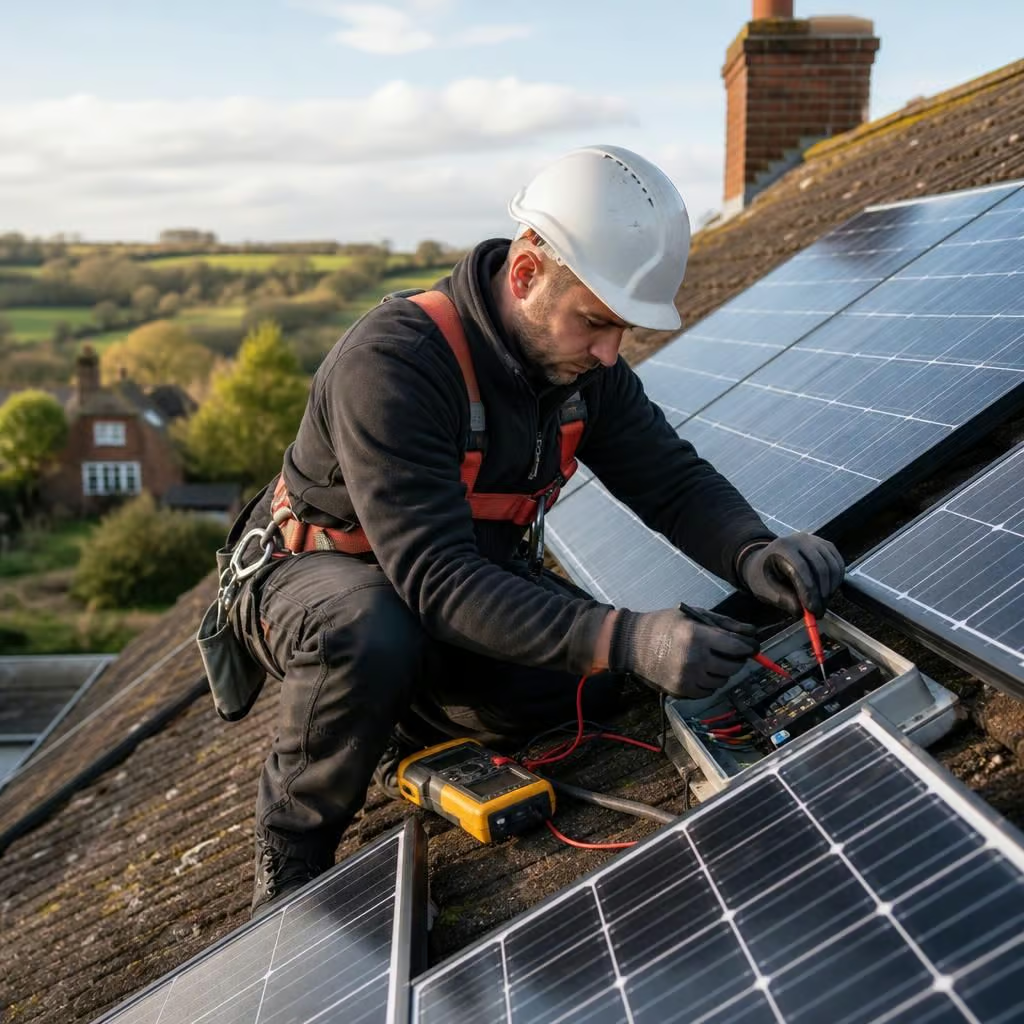
Roof work can take longer to arrange than an indoor repair. Wet, icy or windy conditions may make it unsafe to work at height, so we may need to return when the roof can be accessed safely. We’ll explain any change to the expected timescale rather than start work in unsuitable conditions.