
How much roof access is needed for solar panel repairs?
The roof access needed depends on the fault: some repairs can be completed at the inverter or isolators, while panel or cabling work requires safe access to the roof. We assess the layout, roof condition and access route first, then explain whether ladders, a scaffold tower or fuller roof access is needed.
The roof access needed depends on the panel layout, roof construction and location of the fault. A repair may involve working beside the array, lifting a small number of tiles or reaching equipment below the panels. It does not automatically mean removing the whole installation.
Before arranging access equipment, we look at:
- the position of the affected panel, cable, connector or mounting point;
- the roof pitch and the condition of the tiles or covering;
- nearby rooflights, chimneys, valleys and other features that restrict movement;
- the safest route from ground level to the working area;
- whether the inverter, isolators or cable routes can be inspected from inside the property.
This matters on older homes, barn conversions and properties with fragile or uneven roof coverings. A roof that looks straightforward from the garden may need extra protection once we account for its pitch, tiles and the position of the panels.
Where roof work is needed, we choose access equipment based on the risk and the part of the array being repaired. This may include a scaffold, access tower or roof ladder. A roof ladder is not suitable for every roof, and we won’t ask anyone to walk on the panels or use an unsafe route. If the repair requires panels or roof tiles to be lifted, the equipment must give the engineer stable access while keeping the roof covering protected.
Scaffolding can be more involved than a ladder, particularly where the panels sit above a conservatory, extension or narrow side passage. It may affect access to a door, driveway or garden while the work takes place. We explain what is needed before the repair is arranged, so you know whether equipment will stand at the front, side or rear of the property.
Access inside the property can still be useful. Clear access to the inverter, isolators and loft space may allow us to trace a cable fault or check readings without going onto the roof. It doesn’t replace safe external access when the problem is beneath a panel or within the mounting system, but it can reduce unnecessary work at roof level.
To prepare, make sure we can reach the inverter and electrical isolators, and clear any stored items around the loft hatch if the cable route needs checking. Please tell us about known leaks, damaged tiles, fragile roof coverings or previous roof work. Don’t climb onto the roof or attempt to move a panel before the inspection.
Once we know the access method, we can separate the repair into the work needed on the solar system and any roof work needed to leave the covering sound. If we find damaged tiles, loose fixings or a wider issue than the original fault, we explain that before carrying out additional work.
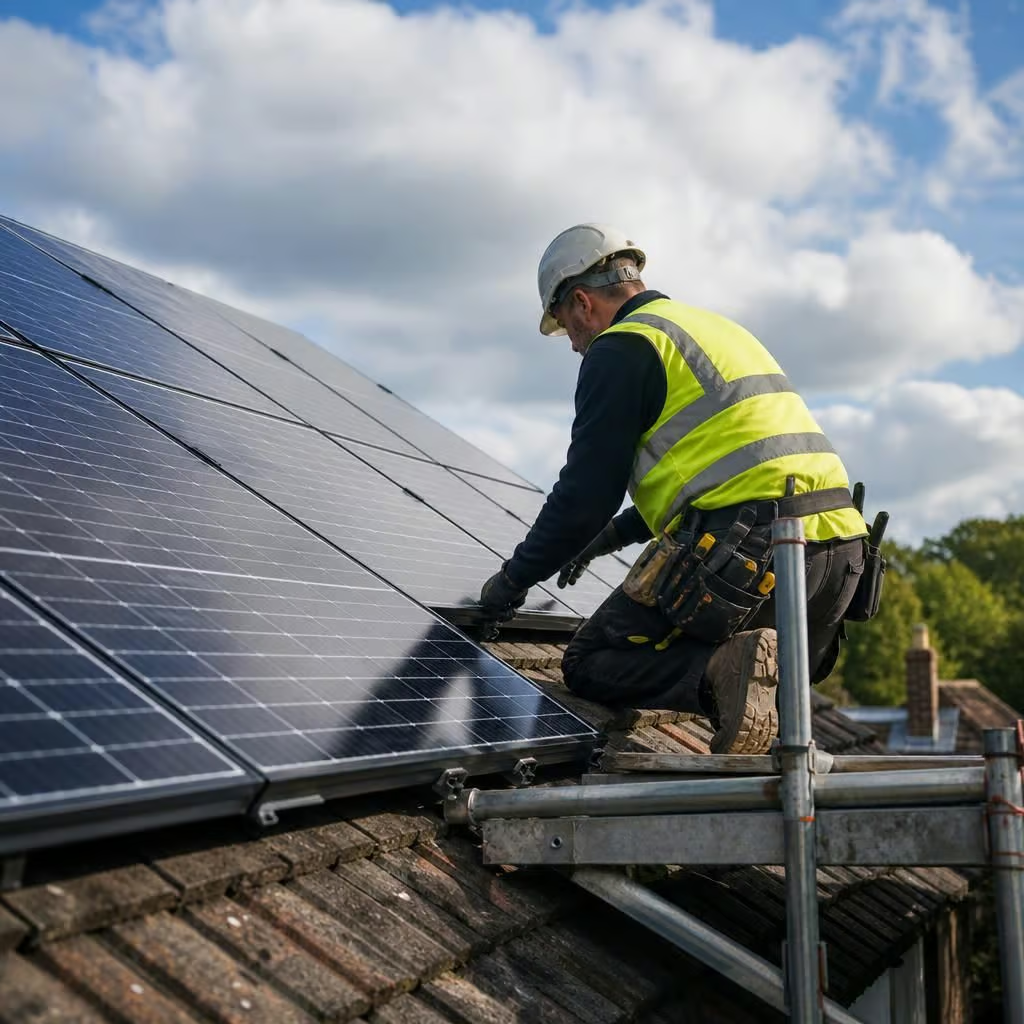
If the roof covering or structure cannot safely support the planned access, we stop and explain the limitation before starting the repair. We may need to separate the electrical fault from roof work, so the covering can be assessed and made safe before the panel system is disturbed.
This is particularly relevant on older tiled roofs, barn conversions and listed properties, where access equipment must protect both the solar installation and the building. You’ll know what needs checking, what access is required and which parts of the work are separate before the repair goes ahead.