
Does solar panel servicing help meet insurance requirements?
Regular solar panel servicing may help you meet an insurer’s maintenance requirements, but it does not automatically satisfy every policy. Check your policy wording first, then ask us to record the condition of the panels, inverter, cabling and mounting system for your insurance records.
Solar panel servicing can support an insurance claim, but the policy wording decides what you must do. Some insurers expect evidence that the installation has been maintained and kept in safe working order. Others may set specific intervals, require particular records or impose extra conditions for battery storage.
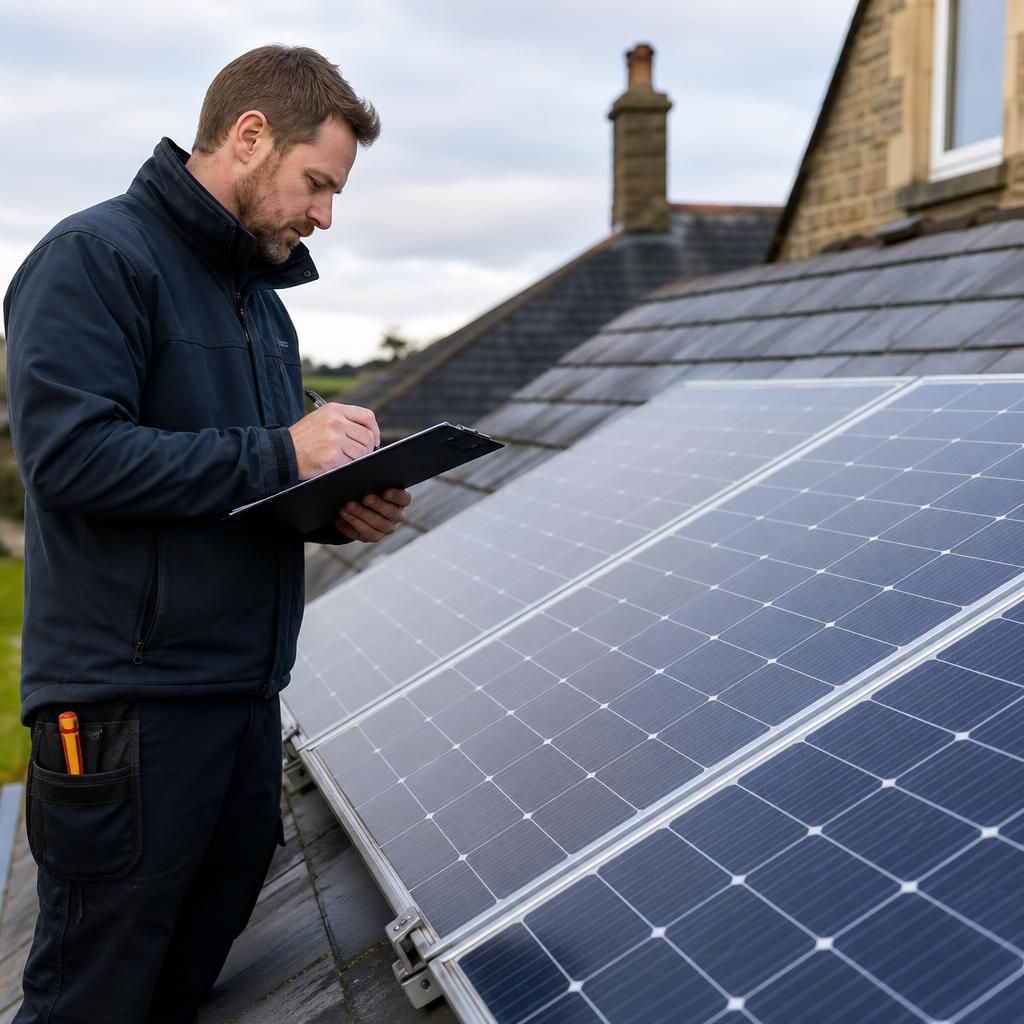
That requirement usually relates to the whole installation, not just the panels. We inspect the panels, mounting system, cabling, isolators, inverter and visible roof penetrations. Where a battery is fitted, we also check the battery equipment, connections and installation area. The inspection can identify damage, overheating signs, loose connections, water ingress and faults that could affect safe operation or generation.
Insurers may also want evidence that the original installation was carried out correctly. Keep the commissioning information, electrical certificates, equipment details and any relevant installation documentation with the service records. If an insurer asks who installed or maintains the system, these documents help show what equipment is present and what work has been completed.
A service report is useful because it creates a dated record. We record the checks carried out, any faults found and recommendations that need attention. If the inspection identifies a safety issue, the report should explain the problem and the action needed. Leaving a known defect unresolved could create difficulty if the insurer later asks about the system’s condition.
Electrical changes made after the original installation can matter too. Adding a battery, altering the inverter or modifying the consumer unit may require updated certification and notification. We can identify where the installation records no longer match the equipment on site, so you know what needs checking before you contact the insurer.
Using an appropriately qualified contractor may also form part of the policy conditions. Our electrical team works to the relevant requirements for the installation, and we explain when remedial electrical work is needed rather than treating a visual check as a full repair. MCS documentation relates mainly to the eligibility and traceability of renewable installations, so it should be kept alongside the electrical records rather than used as a substitute for servicing evidence.
Insurance requirements can change when a solar system includes battery storage. The policy may ask about the battery’s location, installation records, maintenance and any changes to the property’s electrical system. If the battery was added after the solar panels, tell the insurer and check whether the policy needs updating.
Before arranging a service, look for wording about inspection frequency, approved contractors, electrical certification, battery storage and notification of alterations. After the visit, keep the report with the original system documents and deal with any safety recommendations. That gives you a clearer record if the insurer asks how the installation has been maintained.
Insurance policies often treat sudden damage differently from gradual deterioration. Storm damage may be considered under the policy, while faults caused by age, corrosion or neglected maintenance may be excluded.
A service report gives you a dated record of the system’s condition before a problem occurs. It cannot prove the cause of damage on its own, but it can show which issues were already present and which recommendations were made. That distinction may help when you discuss a claim with your insurer.