
What does solar panel maintenance include?
Solar panel maintenance includes a visual inspection, checks on the mounting, cabling and inverter, and a review of the system’s generation data. We clean the panels when soiling is affecting output and identify faults or wear before they lead to a larger repair.
Solar panel maintenance is a planned check of the whole generating system, not just the glass panels. We examine its physical condition, electrical safety, operating data and the factors that could reduce output or create a fault.
Your system may still be producing electricity while developing a problem. A loose connection, damaged cable or inverter warning can reduce generation without being obvious from inside the house. We look for these less visible issues and explain what needs attention before recommending any remedial work.
During the inspection, we check the roof-mounted equipment for signs of movement, corrosion, cracking or damage. We look at the frame, clamps, roof penetrations and cable routes. Storms, nesting birds, vermin and gradual weathering can all affect these parts. If we find a concern, we record its location and explain whether it affects safety, weatherproofing or performance.
We also examine the electrical side of the installation. This includes the isolators, protective devices, generation meter, connections and accessible sections of the cabling. We check for heat damage, loose terminations, deterioration and signs that a component has been exposed to moisture. We carry out the checks safely and avoid disturbing equipment unnecessarily.
The inverter provides useful information about how the system is operating. We review its display, warning messages and available monitoring data, then compare the readings with the system’s expected behaviour. A fault code does not always mean the inverter itself needs replacing, so we investigate the cause before suggesting a remedy.
We assess the panels’ surface and the conditions around them. Dirt, leaves, moss, bird fouling, nearby growth and new shading can all affect generation. Cleaning is considered when it is likely to make a practical difference. The method depends on the panel surface, roof access and the condition of the installation; unsafe access or fragile roof coverings may require a separate arrangement.
Maintenance also gives us the chance to identify changes around the property. A new extension, flue, tree or roof alteration can cast shade where there was none when the panels were installed. We note anything that may explain a drop in output and separate an environmental issue from an equipment fault.
Older systems need a little more context. If the original installer is no longer available, records are incomplete or the equipment has been altered, we first establish how the installation is arranged. We do not assume that a replacement component will work safely with older equipment. That check helps avoid unnecessary changes and highlights compatibility issues before work begins.
At the end of the visit, we explain what we found in plain terms. The result may be a system that needs no further work, a recommendation for cleaning or adjustment, or a separate repair quotation. If a safety concern needs urgent attention, we explain what should be isolated or avoided rather than leaving you to interpret a technical report.
A useful maintenance record should include the date of the inspection, the equipment checked, relevant readings, defects found and any recommended action. Keep this with the installation documents, electrical test records, warranties and monitoring details. Clear records help the next engineer understand the system and make it easier to spot a change in performance.
- Inspection: We assess the panels, frame, roof interface, cable routes and accessible equipment for deterioration or damage.
- Electrical safety: We examine connections, isolators and protective equipment for signs of overheating, looseness or moisture.
- Performance review: We use available system data and inverter information to investigate unusual readings or warnings.
- Environmental checks: We consider dirt, shading, vegetation, bird activity and changes to the surrounding property.
- Cleaning assessment: We decide whether cleaning is worthwhile and whether it can be carried out safely.
- Findings: We explain any fault, risk or follow-on work and provide the relevant details for your records.
Maintenance is different from a repair. A repair addresses a known fault; maintenance looks for developing problems and confirms that the installation remains safe to operate. If the inspection finds damaged equipment or a persistent performance issue, we discuss the repair separately rather than treating unplanned replacement as part of routine maintenance.
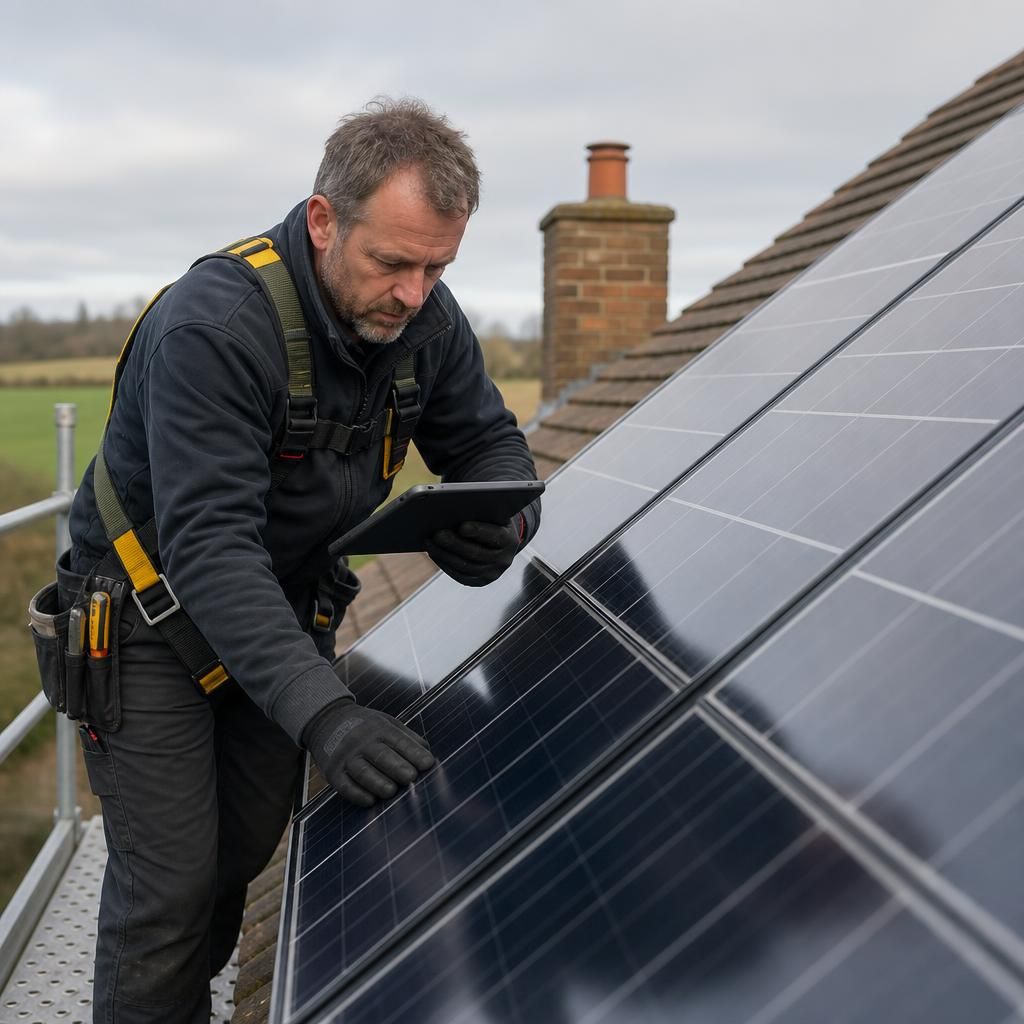
A maintenance visit should leave you with a clear decision, not a list of technical observations. If the system is operating normally, we record that and identify anything worth watching. If we find a problem, we explain its effect on generation, safety or the roof and separate essential work from lower-priority improvements.
That distinction matters on older installations. A worn component may still be working, while replacing it immediately may create compatibility or certification issues. We use the inspection findings to decide whether monitoring, cleaning, repair or a wider review is the sensible next step.