
When does my property need an EICR?
Your property needs an EICR at least every five years if you’re a private landlord, and it’s sensible before buying or selling an older home or making major electrical changes. We test the wiring, consumer unit and fixed electrical equipment, then provide a report showing any faults that need attention.
For an owner-occupied home, an EICR is usually a risk-based check rather than a fixed legal inspection. It becomes particularly worthwhile when the wiring is old, the installation has been altered, or you notice signs of electrical deterioration. For rented homes, the inspection forms part of the landlord’s legal electrical safety duties.
The age of the property alone does not decide whether the installation is safe. A newer-looking consumer unit does not prove that the cabling, connections and earthing are sound. Equally, an older installation may remain serviceable if it has been installed and maintained properly. An inspection gives you evidence instead of relying on appearance or assumptions.
Arrange an EICR if you notice:
- Repeatedly tripping circuit breakers or blowing fuses.
- Scorch marks, buzzing, crackling or a burning smell near sockets, switches or the consumer unit.
- Sockets or switches that feel hot, move when used or show signs of damage.
- Exposed cables, damaged accessories or signs of amateur alterations.
- Lights that flicker without an obvious bulb fault.
- Electric shocks or tingling from metal fittings or appliances.
These signs need attention rather than an inspection being treated as a substitute for urgent repair. If you can do so safely, stop using the affected circuit and contact an electrician. Do not remove covers or try to reset a device repeatedly to hide the fault.
An EICR can also help after a flood, leak, fire, storm damage or prolonged vacancy. Water and heat can affect insulation and connections even when the damage is not immediately visible. We may need to inspect damaged areas separately if access is restricted or parts of the installation remain unsafe to energise.
During the inspection, we examine the consumer unit, earthing and bonding, fixed wiring, switches, sockets and other permanently connected equipment. We carry out electrical tests on the circuits where safe access is available. The checks can identify poor connections, inadequate protection, damaged insulation, overloading, unsuitable alterations and risks from outdated equipment.
An EICR does not normally test portable appliances such as kettles, televisions or table lamps. Those need separate portable appliance testing where the circumstances call for it. It also does not assess the condition of a gas boiler, oil appliance or heating system.
The report records observations using standard classifications:
- C1 means there is immediate danger. We explain what must be made safe straight away.
- C2 identifies a potentially dangerous condition requiring urgent remedial work.
- C3 points out an improvement that would increase safety but is not classified as dangerous.
- FI means further investigation is needed before the inspector can reach a reliable conclusion.
A report is not automatically unsatisfactory because it contains a C3 observation. C1 and C2 findings, and some outcomes from further investigation, need appropriate action before the installation can be recorded as satisfactory. We explain the finding in plain English rather than leaving you to interpret a code.
If you are a landlord, the report should be kept with the property’s safety records and shared with the people who are entitled to receive it. Any remedial work must be completed within the period stated by the report or the applicable requirements. We can separate inspection findings from repair recommendations, so you can see which work is necessary and which work is an improvement.
For a homeowner, the report can be useful when planning a rewire, adding circuits, upgrading a consumer unit or carrying out renovation work. It can show whether the existing installation can support the proposed changes. An inspection does not automatically mean that a full rewire is needed. We look at the condition and arrangement of the installation before recommending work.
Older rural homes, barn conversions and properties with several phases of alteration often need a careful assessment. Extensions, converted outbuildings and older wiring may have been added at different times. If documentation is missing, the inspection helps establish what is present, although concealed cables and inaccessible areas can limit what any report can confirm.
The price depends on the size of the property, the number of circuits, the condition of the installation and how easily we can reach the relevant points. We identify any necessary remedial work separately rather than treating every observation as part of an assumed upgrade. You receive the findings in writing before deciding what to do next.
Our electricians carry the relevant NICEIC and ECA electrical qualifications, so the inspection and any follow-on work are handled by people working to recognised electrical safety standards. If the report identifies a fault, we can explain its practical effect and set out the repair without pressuring you into work that the installation does not need.
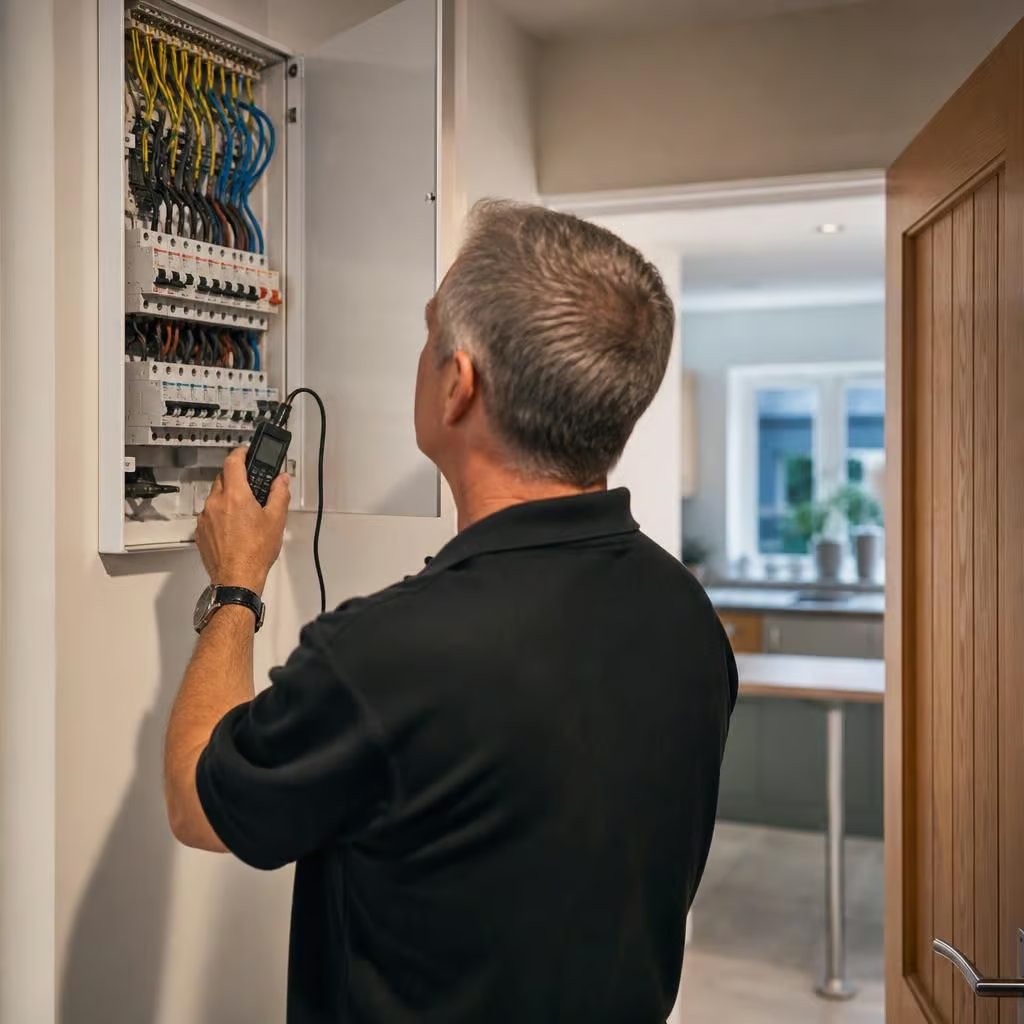
If you’re buying a property, arrange the EICR before you exchange contracts. A report supplied by the seller may pre-date later alterations or cover a different part of the installation.
We record the condition we find on the inspection date, including any areas we can’t access. That gives you a clearer basis for deciding whether to proceed, negotiate for remedial work or budget for electrical improvements after completion.